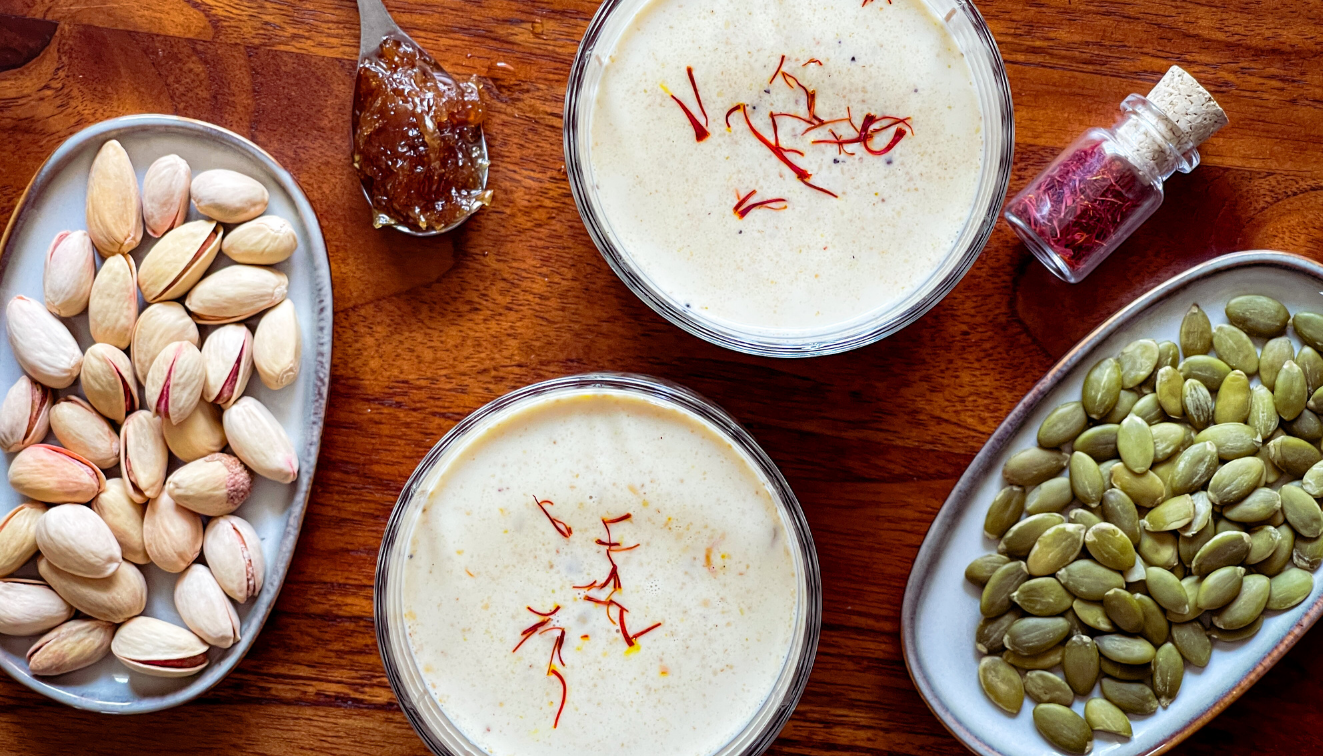
Thandai is a traditional Indian drink that is particularly popular in the northern parts of India. Thandai is often associated with major Hindu festivals. During Holi, it is consumed to offset the heat and energy of the spring festival. On Mahashivratri, it is offered to Lord Shiva as part of the ritual worship.
Traditionally, thandai is made from a mix of milk, sugar, and various spices like fennel seeds, watermelon kernels, rose petals, pepper, saffron, cardamom, and almonds.
While thandai is widely consumed across North India, regional variations exist. For example, in Rajasthan and some parts of Uttar Pradesh, the inclusion of bhang is more common due to the traditional acceptance and legal allowances of cannabis for religious purposes.
What you will need:

| Ingredient | Measure |
| Full fat Milk | 1 litre |
| Sugar | 1/2 Cup |
| Whole Almonds | 1/4 Cup |
| Pistachios | 1/4 Cup |
| Whole Cashew | 1/4 tsp |
| Pumpkin or melon seeds | 2 tbsp |
| Poppy seeds | 1.5 tbsp |
| Fennel seeds | 1 tbsp |
| Whole black peppercorn | 1/2 tbsp |
| Whole cardamom | 1 tsp |
| Dried rose petals or Gulkand | 1.5 tbsp |
| Saffron | 1 pinch |
Time Required
Soaking time – 8-12 hours
Preparation time – 15 -20 minutes
Chilling time – 1-2 hours
Estimated Calories and Yield
Calories / 100ml – 67 kcal
Total yield – 1000 ml
Equipments:
- Blender
- Fine mesh strainer or cheesecloth
- Large bowl
- Measuring cups and spoons
- Large pitcher or jug
- Serving glasses
Instructions:
Preparing the milk
- Heat the milk in a deep saucepan.
- Add ⅔ part of the total sugar and mix till it is dissolved.
- Set the milk aside to cool.
- Once at room temperature, keep the milk to chill for an hour.

Preparing the nut extract
- Soak almonds, cashews, pistachios, melon seeds, poppy seeds and fennel seeds in water overnight.
- Once soaking time is complete, drain the water.


- In a blender, combine the soaked ingredients with cardamom, peppercorns and gulkand.
- Add 200 ml of the chilled milk and blend to make a fine paste.

Most recipes use water for the extract, but I use milk, because:
Milk is an emulsion by nature, which means it has fat molecules suspended in a water medium. As the ingredients contain both polar and non-polar molecules, presence of water and fats in the milk provide an ideal chemical situation for binding of most of the molecules present in these ingredients, giving us a richer extraction.

- Transfer the paste to a large bowl, and combine it with 300ml from the remaining milk.
- Take 2 tablespoons of milk in a mortar and crush the saffron strands to create an extract.

- Combine the saffron extract with the previously made mixture of milk and paste.
- Transfer and strain the mixture to collect the extract.
- Repeat the previous steps once more, except the addition of saffron extract.

- Adjust the level of sweetness using the remaining sugar (if required)
- Refrigerate the thandai for at least an hour or two
Serve cold, garnished with a sprinkle of crushed pistachios and a few rose petals.

My Tips:
- If you are short on time, soak the ingredients in hot water to fasten the process.
- Use full-fat milk for a richer flavour.
- You can use the full sugar at the start if you are using rose petals instead of gulkand. If using gulkand, adjust the sweetness afterwards to balance it with precision as gulkand also will add sweetness to the thandai.
- The paste can be made in advance and stored in the refrigerator for up to a week.
- Consider using jaggery instead of sugar for a different flavour profile.
- For a vegan version, substitute milk with almond or coconut milk.
Troubleshooting Guide:
Bland taste
Add more sugar or rose water/gulkand to enhance sweetness and floral notes.
Too thick
Add more milk to adjust the consistency.
Grainy texture
Ensure the nuts and seeds are soaked well and finely ground; strain thoroughly. Use a finer strainer if needed to filter out the solid parts of the extract.
Don’t forget to share your results and tag @bake.hows on instagram
