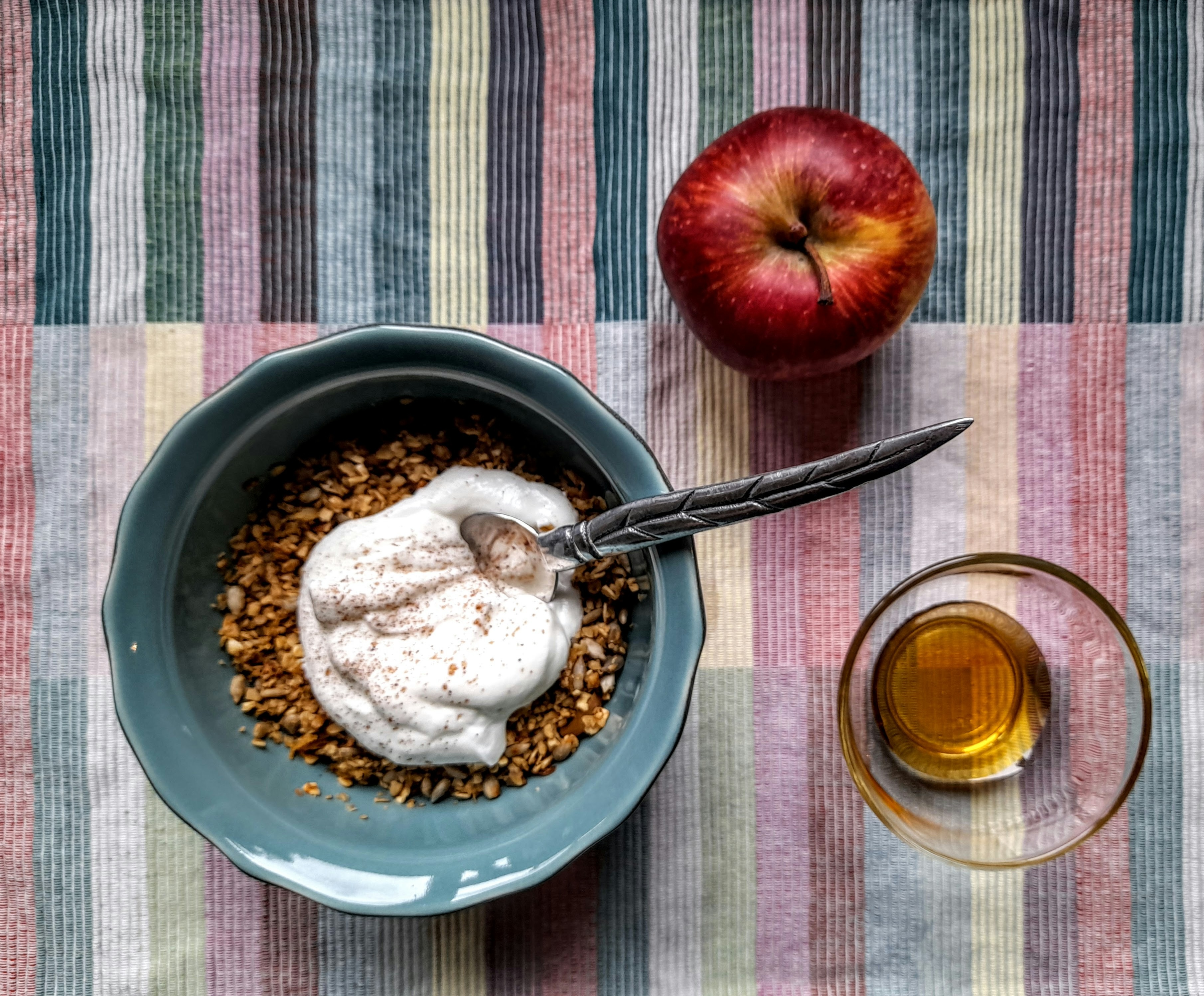
Greek yogurt, known as “strained yogurt,” has its roots in ancient Greece. Yogurt itself dates back thousands of years, with evidence of its consumption in various ancient cultures. The process of making Greek yogurt involves straining the whey from regular yogurt, resulting in a thicker, creamier product.

Greek yogurt became a staple in the diets of people in the Byzantine Empire and later the Ottoman Empire. It was valued for its nutritional benefits and long shelf life. In the 1960s and 1970s, commercial production of Greek yogurt began to take off. Companies like FAGE and Chobani played significant roles in popularizing Greek yogurt in Western markets.
What you will need:
| Ingredient | Measure |
| Fresh curd | 250 – 500g |
Time Required
Preparation time – 30-60 minutes
Water draining time – 8-10 hours
Nutritional Value
Calories: 59
Protein: 10g
Fat: 0.4g
Carbohydrates: 3.6g
Sugar: 3.6g
Calcium: 110mg
Equipments:
- Muslin cloth
- Colander
- Some weight
- A flat plate
- Container for storing yoghurt
Instructions:
Prepare fresh curd
- Follow this recipe to prepare fresh, preservative free curd at home.
Draining the curd
- Line a colander with cheesecloth or a clean kitchen towel and place it over a large bowl.
- Pour the curd into the strainer and let the first round of water drain through.
- Now tie a knot at the top of the muslin cloth to form a sack with the curd inside.
- Hang the curd to drain further for 30 minutes to 1 hour.
- After an hour, place the sack of curd back into the colander and place a plate on top of it.
- On top of the plate place some weight, enough to press against the bag of curd.
- Place the colander on a bowl and put it in the refrigerator to drain the remaining water overnight.

Storing the Yoghurt
- Once the above process is complete, gently open the sack.
- Transfer the strained yogurt to a container with a lid and refrigerate it for up to two weeks.
Today, Greek yogurt is a global phenomenon, widely available in supermarkets around the world. It is used in various recipes, from smoothies to desserts, and continues to be a staple in Mediterranean cuisine.
Serving Suggestions:
- Drizzle with honey and top with fresh fruit and nuts for a delicious breakfast.
- Use as a base for smoothies or soaked oats.
- Mix with herbs and spices to create a dip or sauce.
- Serve with granola or muesli.

My Tips:
- For a creamier yogurt, use whole milk.
- Sterilize all your equipment before starting to avoid contamination.
- Make sure the starter yogurt contains live cultures.
- The longer the yogurt incubates, the tangier it becomes, thus consuming it soon.
- The longer you strain the yogurt, the thicker it will become. Regulate the straining time to get to your desired thickness.
- To scale the recipe, you can adjust the quantity of milk and starter yogurt while maintaining the same ratios. For example: For 2 liters of milk: Use 6 tablespoons of plain yogurt.
Troubleshooting Guide:
Thin yoghurt
Strain the yogurt longer. Increase the weight if needed.
Lumpy Yoghurt
Whisk the yogurt well before storing to get a creamy texture.
Don’t forget to share your results and tag @namak.swadanusar on instagram
