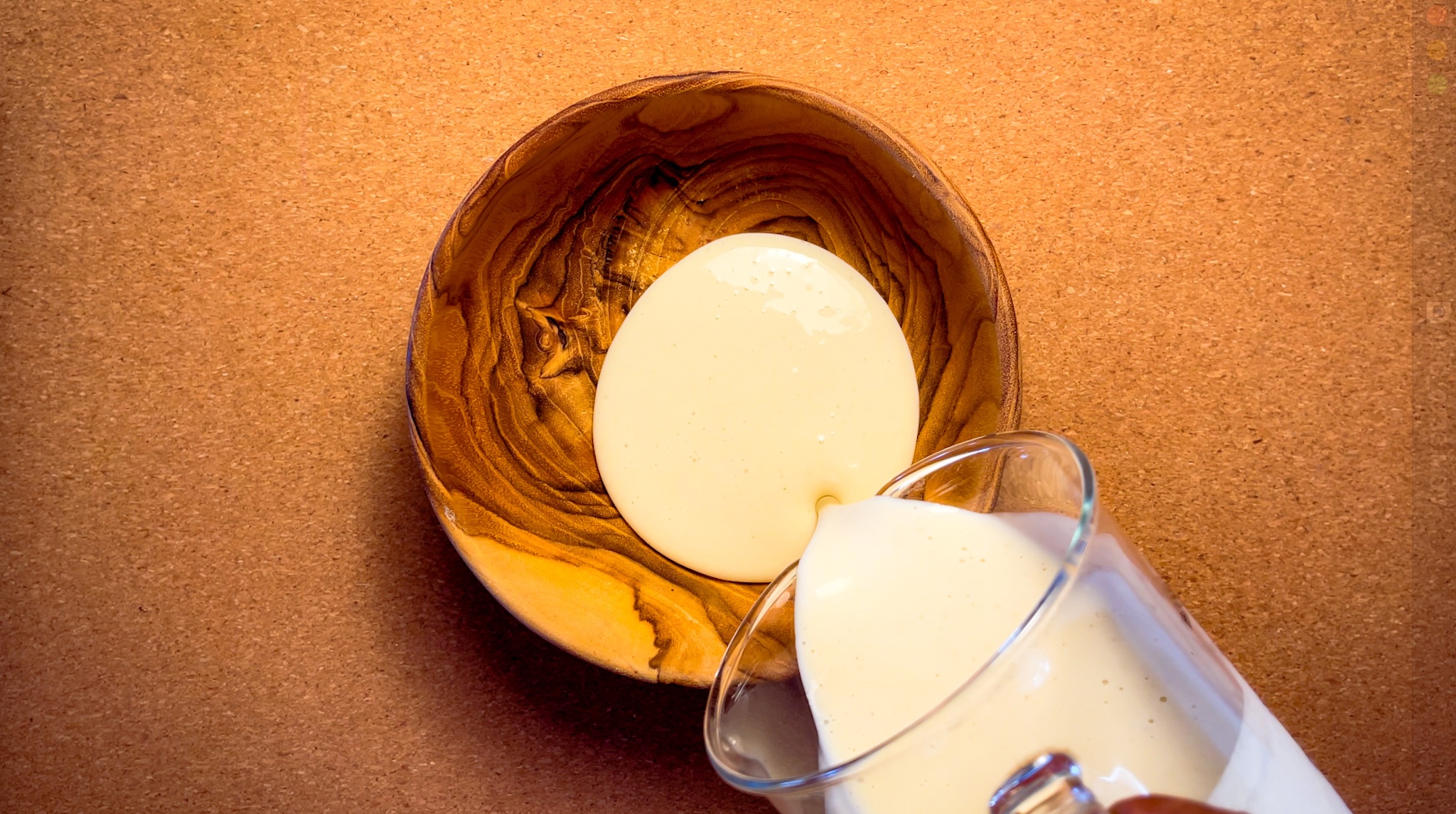
Crème Anglaise is a classic French custard sauce, beloved for its silky, rich texture and subtle sweetness. It is often served alongside desserts like chocolate soufflé, fruit tarts, or poached fruits.
This versatile sauce dates back to the 17th century and is a cornerstone of classic French pastry, used both as a standalone sauce and as a base for ice creams or mousses.
The name “crème anglaise” literally translates to “English cream” in French, though this sauce is distinctly French in its execution and has no direct English counterpart. The custard is sometimes referred to as a “stirred custard” since it is cooked on the stove and stirred constantly, as opposed to baked custards like crème brûlée.
In professional kitchens, mastering crème anglaise is essential for perfecting the art of custard.
What you will need:

| Ingredient | Measure |
| Whole Milk | 350g |
| Egg Yolks | 4 |
| Superfine Sugar | 85g |
| Kosher or table salt | 1/4 tsp |
| Vanilla Pod or Paste | 1/3 portion or 1/2 tsp |
Time Required
Prep Time: 10 minutes
Cook Time: 15 minutes
Chill Time (optional): 30-60 minutes
Nutrition Profile / 100g
Calories: 158 kcal
Protein: 4.7g
Carbohydrates: 20.3g
Fat: 6.5g
These values are estimates and can vary slightly based on the exact ingredients used.
Equipments:
- Digital Scale
- Heavy-bottom saucepan (prevents hot spots)
- Heatproof mixing bowl
- Whisk
- Fine mesh strainer
- Thermometer (preferred for precision)
- Rubber spatula
Instructions:
Prepare the vanilla milk base:
- Split the vanilla bean lengthwise, scrape out the seeds, and add both the seeds and the pod to the milk in a heavy-bottom saucepan.
- Slowly heat the mixture over medium-low heat until it reaches a gentle simmer, then remove from heat.
- Allow it to steep for 10 minutes to infuse the milk with the vanilla flavor. (If using vanilla extract, add it later, after cooking).
Whisk the egg yolks and sugar:
- In a separate bowl, whisk together the egg yolks and sugar until the mixture turns pale and thick.
- This process is called “blanching” the yolks and helps the sugar dissolve properly, creating a creamy custard texture.

Temper the eggs:
- Gradually whisk in about 1/3 of the warm milk into the yolk-sugar mixture, whisking constantly to prevent the eggs from curdling.
- This process is called tempering, and it helps slowly raise the temperature of the eggs without scrambling them.

Combine and cook the custard:
- Pour the tempered egg mixture back into the saucepan with the remaining milk.
- Cook over low heat, stirring constantly with a spatula (scraping the bottom) until the custard thickens. This will take 8-10 minutes.
- The sauce is ready when it coats the back of a spoon, and you can draw a line through it with your finger.
- For precision, the ideal temperature is 82-84°C. Do not let the mixture boil, as this will cause it to curdle.

Strain, chill and serve:
- Immediately strain the crème anglaise through a fine mesh strainer into a clean bowl to remove any cooked egg bits or vanilla pod.
- Once cooled to room temperature, cover with plastic wrap (placing the wrap directly on the surface to avoid skin formation) and refrigerate until ready to use.
- Serve chilled or at room temperature.

Serving suggestions
Serve it poured over a decadent chocolate soufflé, a warm apple tart, or as a sauce for poached fruits like pears or for floating islands. For an elegant presentation, drizzle the sauce in artistic patterns on a plate, or serve in a small jug for guests to pour themselves.

Base for ice cream!
Freeze the custard to create a smooth, creamy ice cream base. Add flavors like chocolate, caramel, or fresh fruit.
My Tips:
- Avoid curdling: Always cook crème anglaise over low heat and stir constantly. Using a thermometer is key for accuracy, as exceeding 85°C can cause curdling.
- Straining: This is crucial to ensure a smooth, velvety texture. Any bits of cooked egg will be removed in this step.
- Flavor variations: Experiment with flavors like coffee (by steeping coffee beans), citrus (adding zest), or liquors (such as Grand Marnier or rum).
- If you’re short on time, you can cool the custard faster by transferring it to a wide, shallow container before placing it in an ice bath.
Troubleshooting Guide:
Curdled custard
If you accidentally overheat and curdle the sauce, immediately transfer it to a cold bowl and whisk vigorously to smooth it out. If this doesn’t work, you may need to start again.
Too runny
If your crème anglaise is too thin, it may not have been cooked long enough. Return it to low heat and cook a little longer, ensuring the temperature doesn’t exceed 85°C.
Skin formation
To prevent skin from forming, always press plastic wrap directly onto the surface of the custard.
Crème anglaise is a foundation of classic French pastry, used both as a sauce and as a base for more complex desserts such as ice creams, bavarois, and soufflés. Mastering this custard sauce is essential for any pastry chef, as it highlights precision and control over heat and texture in a professional kitchen.
Don’t forget to share your results and tag @bake.hows on instagram
