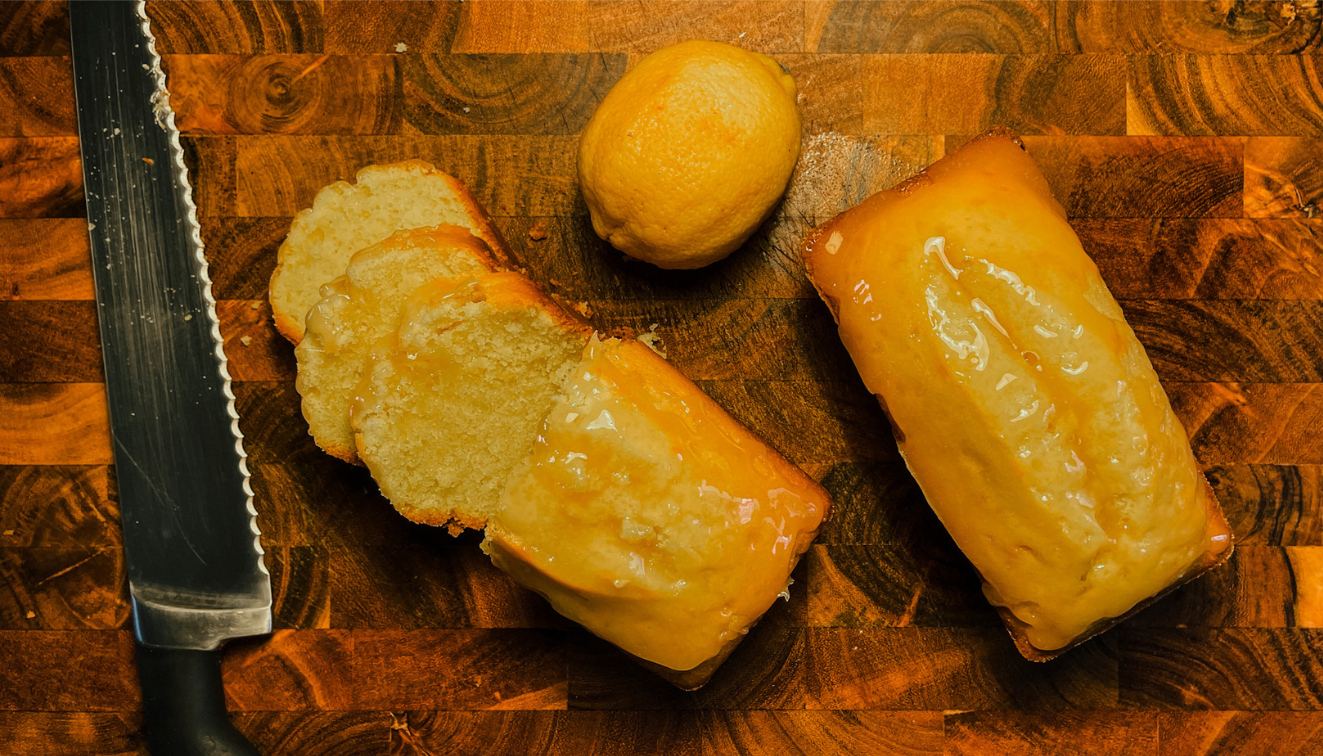
The Lemon Pound Cake traces its origins back to 18th-century Europe, where “pound cakes” were so named because they traditionally used a pound each of four ingredients: flour, butter, sugar, and eggs. This dense, buttery cake was a symbol of simplicity and balance in baking.
Over time, variations like the Lemon Pound Cake emerged, infusing citrus zest and juice to add brightness and a refreshing tang. Today, it is celebrated globally as a versatile treat, often enjoyed with tea or coffee or as a standalone dessert.
Lemon pound cakes are a type of Gâteaux de Voyage. Some of the other common examples of such cakes would be Madeleines, Financiers, Marble Cakes, Quatre-Quarts (Pound Cake), Pain d’Épices (Spiced Bread), Brioche Loaf etc.
What you will need:

| Ingredient | Measure |
| Plain Flour | 170g |
| Melted unsalted butter | 160g + 20g |
| Superfine Sugar | 170g |
| Baking powder | 1/2 tsp |
| Lemon Zest | of 4 lemon |
| Kosher or table salt | 1/4 tsp |
| Eggs | 200g |
| Icing sugar | 150g |
| Lemon Juice | 2 tbsp |
Time Required
Prep Time: 20 minutes
Baking Time: 45–50 minutes
Cooling and Glazing: 30 minutes
Nutrition Profile / 100g
Calories: ~345 kcal
Protein: 5.2 g
Fat: 18.5 g
Carbohydrates: 40.5 g
Sugar: 28.3 g
Equipments:
- Digital Scale
- Mixing bowls (at least 2, medium and large)
- Whisk and silicone spatula
- Microplane or fine grater (for zesting lemons)
- 14 x 6 cm loaf tins (2)
- Parchment paper or non-stick baking spray
- Cooling rack
- Plastic dough scrapper
- Pastry brush (for even glaze application)
Instructions:
Prepare Ingredients and Equipment:
- Preheat the oven to 180°C.
- Melt 20g of the butter, brush the loaf tins and dust with flour.
- Zest 4 lemons using a microplane, ensuring you avoid the bitter white pith.
- Melt the butter and let it cool slightly.

Prepare the Batter
- In a medium bowl, sift the flour, pinch of baking powder, and sift the mixture.
- In a large mixing bowl, add the lemon zest and sugar, mix them by hand.
- Add the eggs and whisk the mixture together until it turns thick and pale, about 3–4 minutes. Use an electric mixer if possible.
- Fold the dry ingredients into the wet ingredients in batches using a spatula.
- Gradually add the melted butter and whisk until smooth.

One for the trip!
Gâteaux de Voyage are a category of French cakes traditionally known as “travel cakes” or “cakes for the journey”. The term originates from French culinary traditions, where these cakes were designed to withstand travel while remaining fresh and delicious over several days.
Characteristics of Gâteaux de Voyage –
Long Shelf Life, Dense and Moist Texture, Compact Shape and Simple Glazes or Finishes.

Bake
- Pour the batter into the prepared pans and smooth the surface with a spatula.
- Dip the plastic dough scrapper in the oil and lightly press into the centre of the batter in each tin to make a line.
- Bake in the preheated oven for 30 minutes.
- Check for doneness by inserting a skewer in the center; it should come out clean.


Glazing
- Turn the cakes out of the tin and let them cool. Leave the oven temperature at the same.
- While the cake cools, prepare the glaze by heating lemon juice and icing sugar while stirring constantly till it turns a little pasty.
- Brush the sides and top of the cake with the glaze.
- Return to the oven for 1 minute.
- Allow the cake to cool before serving.

Variations to try:
- Orange Pound Cake: Substitute lemon zest and juice with orange zest and juice.
- Poppy Seed Lemon Cake: Fold 2 tbsp of poppy seeds into the batter for added texture.
- Gluten-Free: Use almond flour or a gluten-free baking mix as a substitute for plain flour.

Serving suggestions
Serve slices with whipped cream, fresh berries, or a scoop of vanilla ice cream
My Tips:
- Room Temperature Ingredients: Ensure eggs and butter are at room temperature for a smoother batter.
- Even Zesting: Use gentle pressure while zesting to avoid bitterness from the pith.
- Moist Cake: Do not overbake. The cake will continue to cook slightly after being removed from the oven due to residual heat.
- Enhanced Flavor: Substitute part of the lemon juice in the glaze with limoncello or lemon extract for a more intense citrus profile.
- Use leftover slices for making a lemon trifle by layering with custard and cream.
- Crumble and toast as a crunchy topping for yogurt or ice cream.

Troubleshooting Guide:
Dry Cake
Cause: Overbaking or insufficient butter.
Fix: Use a skewer test and remove the cake once it comes out clean.
Dense Cake
Cause: Overmixing the batter, activating the gluten.
Fix: Mix only until ingredients are just combined. Use cake flour or any flour with low gluten content.
Runny Glaze
Cause: Incorrect icing sugar to liquid ratio.
Fix: Sift and measure icing sugar carefully before mixing.
Don’t forget to share your results and tag @bake.hows on instagram
