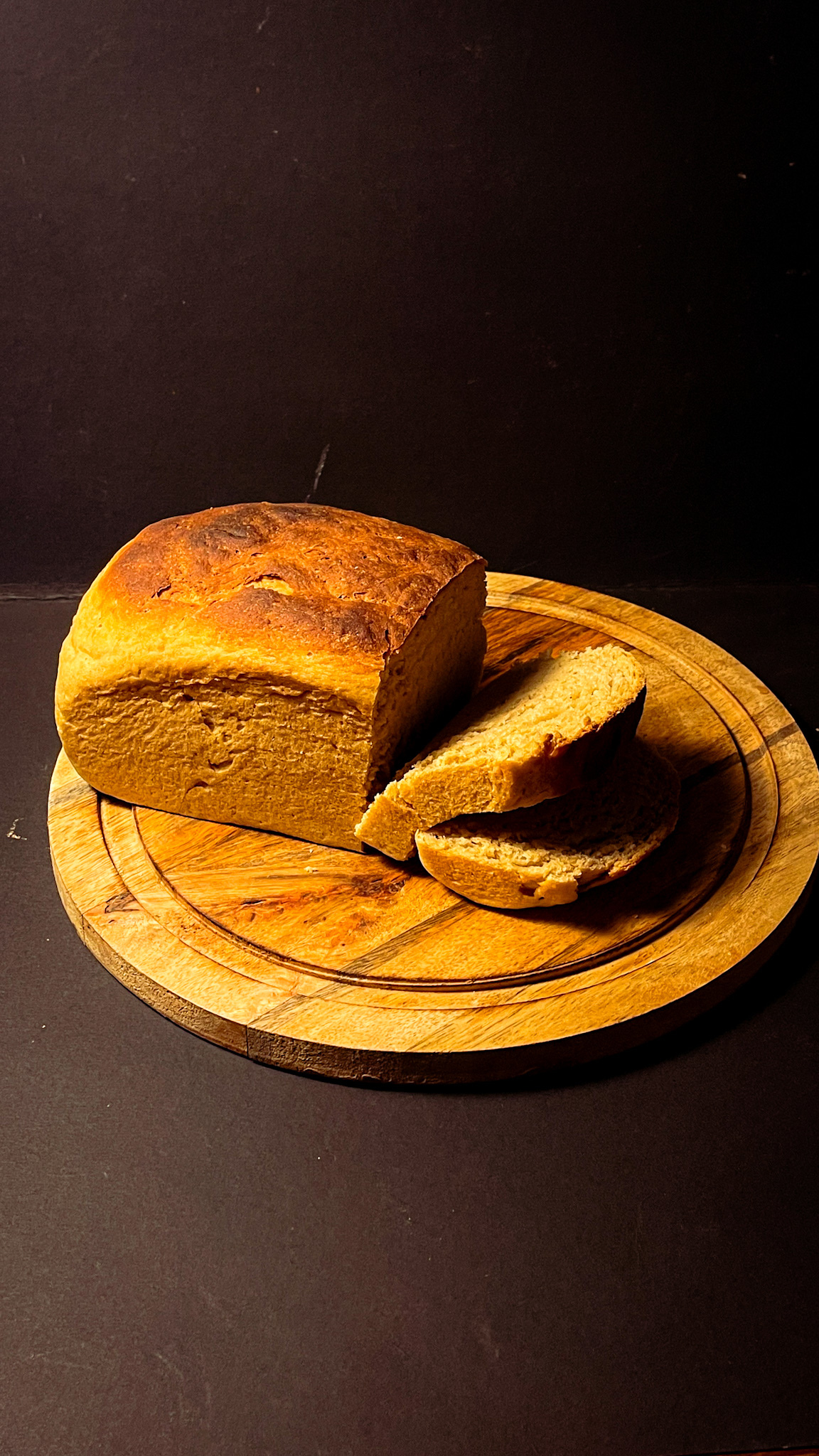
A classic in wholesome baking, this whole wheat bread offers a dense yet tender crumb, hearty flavor, and a rustic charm. Perfect for morning toasts or gourmet sandwiches, this loaf balances nutrition and artisan flair. The sponge method enhances flavor depth and texture, yielding a bread that’s as satisfying to make as it is to eat.
Origin Story
Whole wheat bread has roots tracing back to ancient Egypt, where the discovery of leavened bread transformed the culinary landscape. In Europe, whole grains were once considered peasant food, while white bread was a symbol of aristocracy. The resurgence of whole grain baking in the 20th century was fueled by health-conscious movements.
Today, whole wheat bread is celebrated globally not just for its nutritional profile but for the craftsmanship required in its making.
What you will need:

| Ingredient | Measure |
| Whole Wheat Flour | 430g |
| Water | 240g |
| Butter | 40g |
| Yeast | 7g |
| Milk | 80g |
| Salt | 9g |
| Honey (Optional) | 63g |
Equipments:
- Digital Scale
- Flour sifter
- Large mixing bowl or stand mixer with dough hook
- Whisk
- Silicone spatula or wooden spoon
- Bench scraper
- Rolling pin
- 9×5-inch (23×13 cm) loaf pan
- Plastic wrap or proofing cover
- Oven thermometer
- Instant-read thermometer
- Wire rack
Time:
Sponge Fermentation: 30 minutes
Mixing & Kneading: 12–15 minutes
First Rise: 90-120 minutes
Shaping & Second Rise: 45–60 minutes
Baking: 36–40 minutes
Cooling: Minimum 1 hour
Instructions:
Prepare the Sponge:
- In a large bowl or stand mixer, whisk together, part of the lukewarm water, whole milk, honey (if using) and active dry yeast.
- Stir in small portion of the whole wheat flour.
- Cover and ferment at room temperature for 30 minutes, or until doubled in volume.


Mix the Dough:
- Mix the remaining flour and water and set aside for 30 mins for autolyse.
- To the sponge, add salt and the flour-water mixture
- Using the dough hook or mixing by hand, mix until dough pulls away from the bowl sides, ~3 minutes. Add the butter half way and Continue kneading: 8–10 minutes on medium speed (standmixer) or ~12 minutes on a lightly floured surface (by hand).
- Add additional flour, 1 tbsp at a time, if too sticky.


First Rise:
- Grease a large bowl with oil or nonstick spray.
- Place dough inside, turn to coat, and cover.
- Let rise in a warm place for 1.5–2 hours, until doubled.

Shape and Second Rise:
- Punch down dough to deflate.
- Roll into a 20×38 cm (8×15-inch) rectangle.
- Roll tightly into an 8-inch log, tucking ends under.
- Place seam-side down into a greased loaf pan.
- Cover loosely and let rise until dough domes 2.5 cm (1 inch) above pan rim, ~45–60 minutes.

Bake:
- Preheat oven to 180°C.
- Bake for 36–40 minutes.
- Tent loosely with foil if top browns too quickly.
- Bread is done at an internal temperature of 90–93°C (195–200°F).
- Remove from pan immediately and cool on a wire rack for at least 1 hour before slicing.

Variations
Seeded Loaf: Add flax, sunflower, and sesame seeds to dough or top crust.
Honey-Oat Wheat: Mix in rolled oats and honey for softer crumb and aroma.
Nut & Fruit Bread: Add chopped walnuts and dried cranberries for a rustic twist.
Serving Suggestions
Serve with compound butters (herb, honey-cinnamon).
Make artisanal sandwiches with aged cheddar, sprouts, and roasted vegetables.
Toast and top with avocado, poached egg, or fruit preserves.
Nutrition Profile / 100g
Energy: 269 kcal
Protein: 8.1 g
Fat: 5.4 g
Saturated Fat: 2.9 g
Carbohydrates: 44.6 g
Sugars: 5.8 g
Dietary Fiber: 4.1 g
Note: These values are approximate and can vary based on the specific brands and types of ingredients used, as well as portion sizes.

Tips for Best Results:
- Sponge Fermentation: Extend to overnight (in fridge) for deeper flavor.
- Hydration Control: Whole wheat flour absorbs more water; let dough rest 20 minutes after mixing (autolyse).
- Windowpane Test: Use to check gluten development.
- Baking Stone: Place beneath the pan for even bottom heat.
Troubleshooting Guide:
| Issue | Cause | Solution |
|---|---|---|
| Dense Texture | Under-kneading or low hydration | Knead thoroughly; check flour absorption levels |
| Flat Top | Overproofing or weak shaping | Shorten second proof; reshape with more tension |
| Sour Flavor | Overfermented sponge | Shorten sponge time or reduce yeast |
| Cracks on Surface | Inadequate proofing or oven spring | Proof longer; ensure oven is fully preheated |
| Dough Too Sticky | High humidity or inaccurate flour measure | Rest dough (autolyse) and adjust flour as needed |
Don’t forget to share your results and tag @bake.hows on instagram
