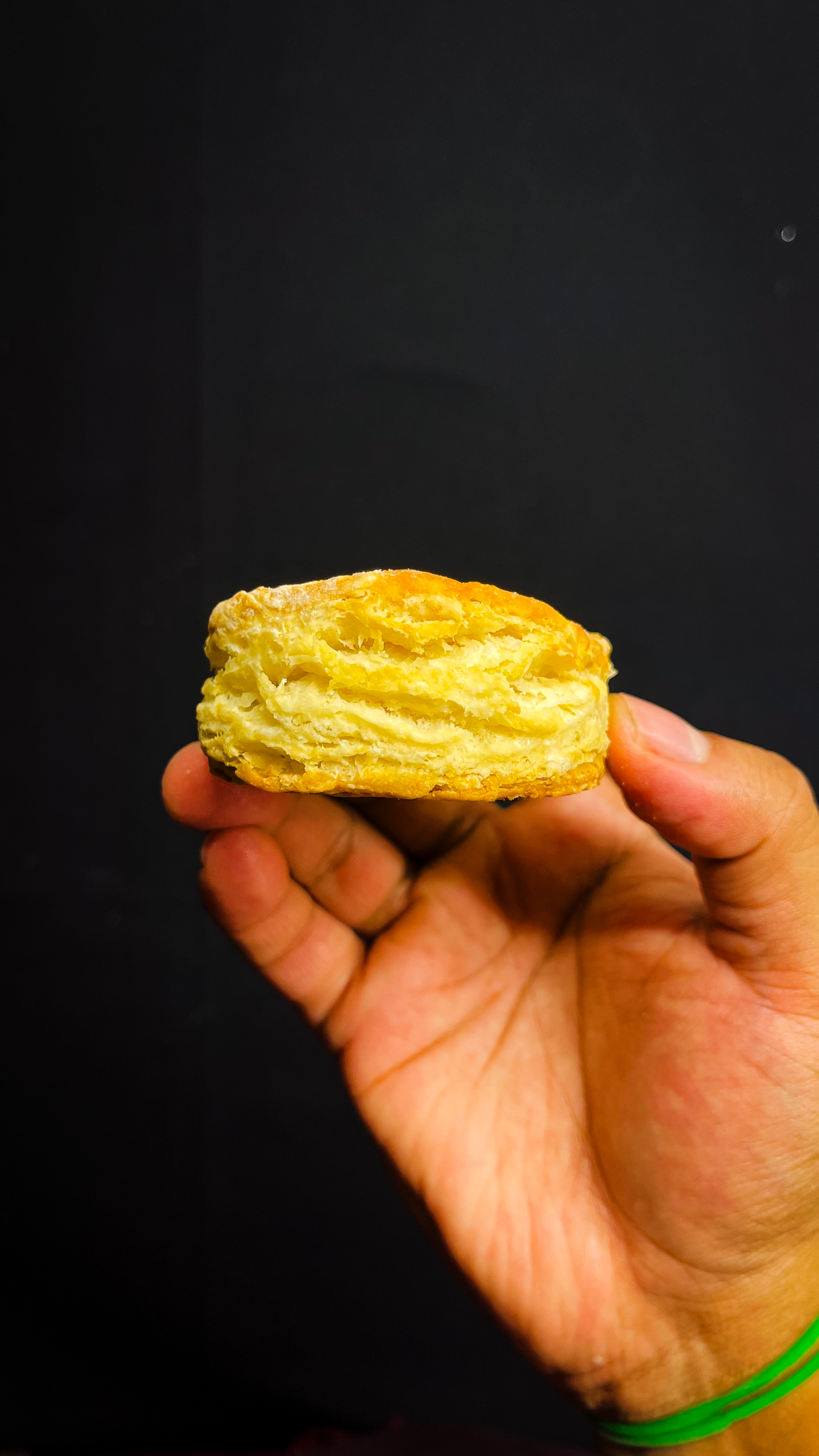
Buttermilk biscuits are a treasured component of British and American baking alike, but in the UK context, these flaky, buttery rounds—often simply called “scones” or “savory scones”—bridge the gap between rustic comfort and refined teatime fare. Unlike American-style biscuits, which lean more heavily on leavening and fat for a puffier crumb, British buttermilk biscuits tend toward a tighter structure, ideal for pairing with clotted cream, preserves, or savory spreads.
This version blends traditional British technique with the moist tang of buttermilk for a tender, golden-crusted biscuit that’s as fit for elevenses as it is for a rustic afternoon snack.
What you will need:
| Ingredient | Measure |
| Flour (Bread + Pastry / 1:1) | 360g |
| Salt | 3-4g |
| Sugar (Caster) | 18g |
| Baking Soda | 4g |
| Baking Powder | 14g |
| Butter (Unsalted) | 72g |
| Milk or Butter Milk (Unsalted) | 240g |

Equipments:
- Digital Scale
- Flour sifter
- Bench scraper (for dough folding and handling)
- Food processor or pastry blender (for cutting butter) or Grater
- Cookie cutter (5–6 cm ring)
- Heavy baking tray or cast iron pan
- Parchment paper or silicone baking mat
- Pastry brush
- Cooling rack
Time:
Preparation time – 15 minutes
Chilling time – 15 minutes
Baking time – 12 to 15 minutes
Total time – 45 minutes
Instructions:
Prepare Dry Ingredients:
- Sift together flour, baking powder, baking soda, salt, and sugar into a large mixing bowl.
- Ensure ingredients are evenly combined for a consistent rise.


Add Butter:
- Freeze your block of unsalted butter for 10–15 minutes.
- Grate butter directly into the sifted flour mixture using the coarse side of a box grater.
- Mix the butter to the dry ingredients using a pastry paddle attachment or by hand until the mixture resembles coarse breadcrumbs.
- Leave some pea-sized butter pieces intact for steam-assisted lift.
- This produces a flakier biscuit.

Combine Dry and Wet Ingredients:
- Gradually pour in cold buttermilk.
- Stir gently with a fork or spatula, just until the ingredients are combined and a soft dough is formed.
- Do not overmix.

Laminate the Dough:
- Bring the dough to the lightly floured bench and knead it lightly by pressing it out and folding it in half.
- Rotate the dough 90 degrees between folds.
- Repeat the fold-and-press process 6 to 10 times, or for about 30 seconds.
- The dough should be soft and slightly elastic but not sticky.
- Over kneading toughens the biscuits.

Makeup:
- Roll out the biscuit dough into a sheet about 1/2 inch (1 cm) thick, being careful to roll it evenly and to a uniform thickness. Biscuits approximately double in height during baking.
- Dip a straight-edged round cutter into flour.
- Cut biscuits with a straight downward motion — do not twist.
- Place the biscuits 1/2 inch (1 cm) apart on greased or paper-lined baking sheets.
- Brush the tops with egg wash or milk to aid browning.
- Bake in a preheated oven at 220°C (425°F) for 12–15 minutes, or until risen and golden brown.


Variations
Cheddar & Chive: Add 100g sharp cheddar and 10g minced chives to dry mix.
Sweet Vanilla Scones: Increase sugar slightly, add 1 tsp vanilla extract, and top with coarse sugar before baking.
Spelt Flour Version: Replace 25% of flour with wholegrain spelt for a nutty note.
Serving Suggestions
Classic: Split warm and serve with clotted cream and jam.
Savory: Pair with sharp cheddar and onion chutney.
Elevated: Top with smoked salmon, herbed crème fraîche, and chives for a canapé twist.
Nutrition Profile / 100g
| Nutrient | Amount |
|---|---|
| Energy | ~310 kcal |
| Protein | ~7.5 g |
| Fat | ~9.8 g |
| – Saturated Fat | ~6.1 g |
| Carbohydrates | ~47 g |
| – Sugars | ~4.8 g |
| Fibre | ~1.8 g |
| Sodium | ~960 mg |
| Calcium | ~80 mg |
Note: These values are approximate and can vary based on the specific brands and types of ingredients used, as well as portion sizes.

Tips for Best Results:
- Use European-style butter (82%+ fat) for superior layering.
- Weigh your ingredients—even minor deviations affect hydration and texture.
- For ultra-tender biscuits, consider replacing half the buttermilk with full-fat yogurt.
- Avoid over-kneading; minimal gluten development preserves tenderness.
- Chill everything: warm dough collapses in the oven instead of puffing.
- Avoid fluted cutters for biscuits—straight-edge rings ensure optimal vertical lift.
- Cut straight down. Do not twist the cutter.
- Space the cuts as closely as possible, to minimize scraps.

Troubleshooting Guide:
| Issue | Likely Cause | Solution |
|---|---|---|
| Flat biscuits | Warm dough or twisting cutter | Chill dough; press cutter straight |
| Tough texture | Overmixing or over-kneading | Mix just until combined |
| Uneven rise | Dough rolled unevenly | Use a guide or ruler when rolling |
| Pale tops | No glaze or underbaked | Use cream + egg glaze; bake fully |
| Spread too much | Excess hydration or no chilling | Reduce liquid; chill before baking |
Don’t forget to share your results and tag @bake.hows on instagram
