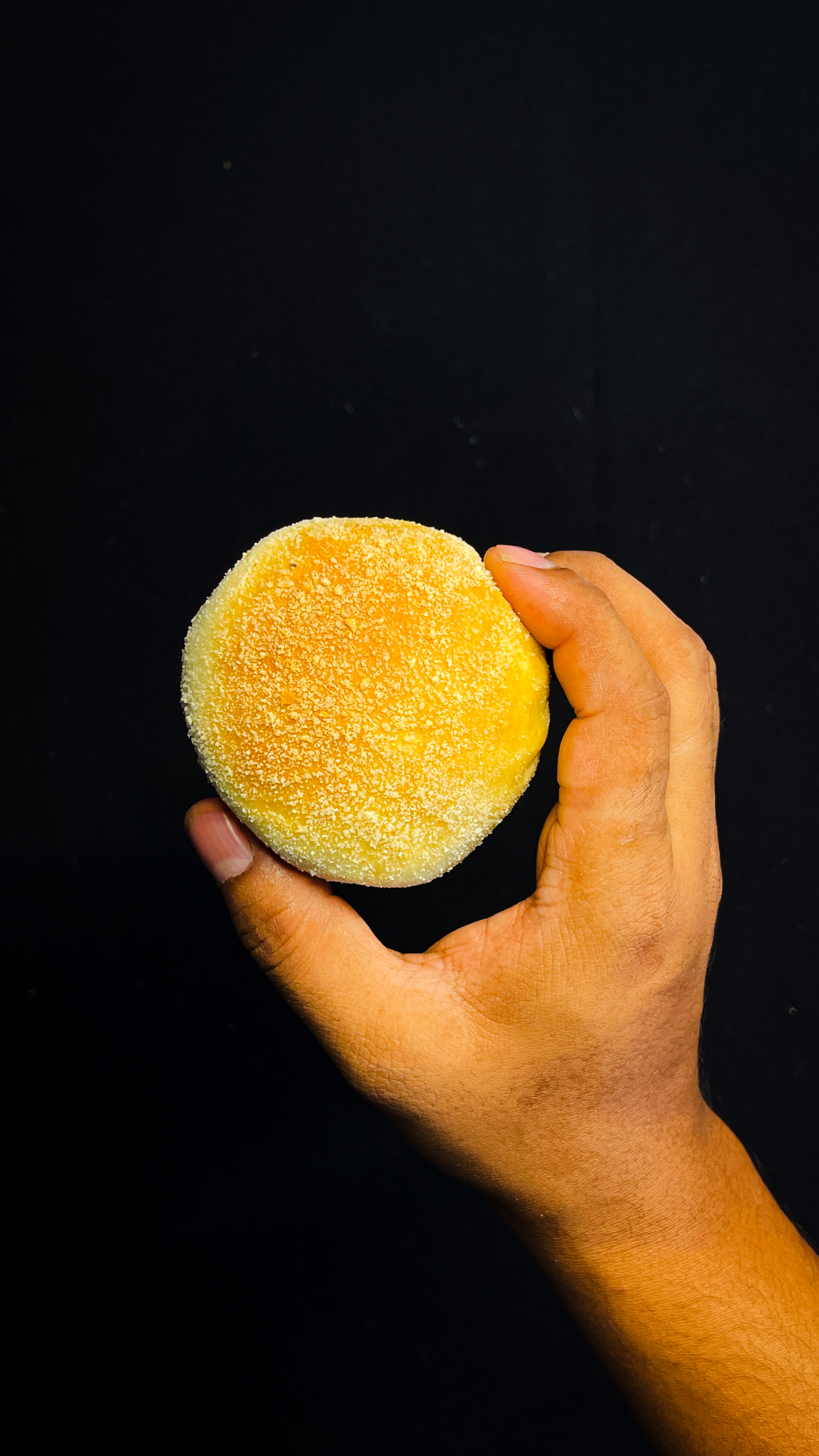
Filipino Bread Roll
Pan de sal, or “bread of salt,” is the quintessential Filipino bread roll—lightly sweet, pillowy-soft inside with a delicately crisp breadcrumb-coated crust. Traditionally served warm at breakfast or merienda (snack time), it’s a staple that evokes a deep sense of nostalgia across generations in the Philippines.
Originally influenced by Spanish baking traditions, Pan de Sal has evolved into a uniquely Filipino creation, often filled with cheese, corned beef, or simply dipped into hot chocolate or coffee.
What you will need:

| Ingredient | Measure |
| AP Flour | 350g |
| Milk | 150g |
| Eggs | 50g |
| Sugar (Caster) | 5g |
| Salt | 2g |
| Butter (Unsalted) | 30g |
| Active Yeast | 4g |
| Bread Crumbs | As needed |
Equipments:
- Digital Scale
- Flour sifter
- Stand mixer with dough hook (or clean surface for hand-kneading)
- Mixing bowls (medium and large)
- Dough scraper
- Sheet pans or baking trays
- Clean kitchen towel or plastic wrap (for proofing)
- Oven thermometer (for accurate temperature)
- Pastry brush (optional, for light butter finish post-bake)
Time:
Preparation time : 5 minutes
Bulk Fermentation time : 45 minutes
Shaping and Proofing time : 45 minutes
Baking time : 15-18 minutes
Instructions:
Dough Preparation:
- In a medium mixing bowl, combine the bread flour, instant dry yeast, and sugar.
- Stir to evenly distribute.
- Slowly mix in beaten eggs, warm milk, and salt. Mix until the dough starts coming together.
- Knead for about 5 minutes until a shaggy dough forms.
- Add butter and continue kneading for 15 more minutes (if using stand mixer) or 20-25 mins by hands.


Bulk Fermentation:
- First Rise: Transfer the dough to a greased bowl, cover, and let rise at room temperature for 45 minutes, or until doubled in size.
- De-gas: Punch down the dough to release trapped gas.


Shaping & Proofing:
- Divide dough into 35–40g balls using a kitchen scale for consistency.
- Shape & Coat: Shape each into smooth rounds, roll each ball in breadcrumbs, and place them on a parchment-lined pan with a slight gap between.
- Final Proof: Cover loosely and let rise for 30–45 minutes, or until doubled.

Bake:
- Preheat Oven: Preheat to 175°C (350°F) during final proofing.
- Bake: Place the rolls in the oven and bake for 15–18 minutes or until golden brown on top.

Variations
Ube Pan de Sal: Incorporate ube halaya or flavoring into the dough for a vibrant twist
Cheese-filled: Wrap each dough ball around a cube of cheddar or cream cheese
Whole Wheat Version: Substitute 30% of bread flour with whole wheat flour for added fiber
Sweet Pan de Coco Style: Fill with sweetened coconut mixture before shaping
Serving Suggestions
Serve warm with queso de bola, salted butter, or ube halaya
Excellent alongside hot drinks like tsokolate eh, brewed coffee, or ginger tea (salabat)
Slice and fill with scrambled eggs and longganisa for a hearty sandwich

Further Applications
Use the enriched dough recipe as a base for ensaymada, Spanish bread, or sticky buns.
The breadcrumb coating technique also works well for savory rolls like cheese buns. Mastering this dough’s elasticity and fermentation gives a foundation for other Southeast Asian enriched breads
Nutrition Profile / 100g
| Nutrient | Amount |
|---|---|
| Calories | 294 kcal |
| Carbohydrates | 48.6 g |
| Protein | 7.2 g |
| Fat | 7.4 g |
| Saturated Fat | 3.2 g |
| Fiber | 1.4 g |
| Sugar | 7.8 g |
| Sodium | 227 mg |
| Cholesterol | 32 mg |
Note: These values are approximate and can vary based on the specific brands and types of ingredients used, as well as portion sizes.
Tips for Best Results:
- Use bread flour for better gluten development and fluffier texture
- Shortening vs. Butter: Shortening creates a softer crumb; butter adds flavor but may alter texture
- Use untoasted fine breadcrumbs to maintain the signature soft crust after baking
- Place a small pan of hot water in the oven during baking for a softer crust finish

Troubleshooting Guide:
| Issue | Likely Cause | Solution |
|---|---|---|
| Dense or heavy rolls | Under-kneading or weak flour | Knead longer; ensure bread flour is used |
| Rolls not rising enough | Inactive yeast or cold environment | Use fresh yeast; proof in warm, draft-free area |
| Crust too hard | Overbaked or oven too hot | Reduce baking time or lower oven temperature |
| Pale surface | Low oven heat or underproofing | Ensure oven is properly preheated; extend proof |
| Flat rolls | Overproofing or poor shaping | Stick to 30–45 min proof; shape with tension |
Don’t forget to share your results and tag @bake.hows on instagram
