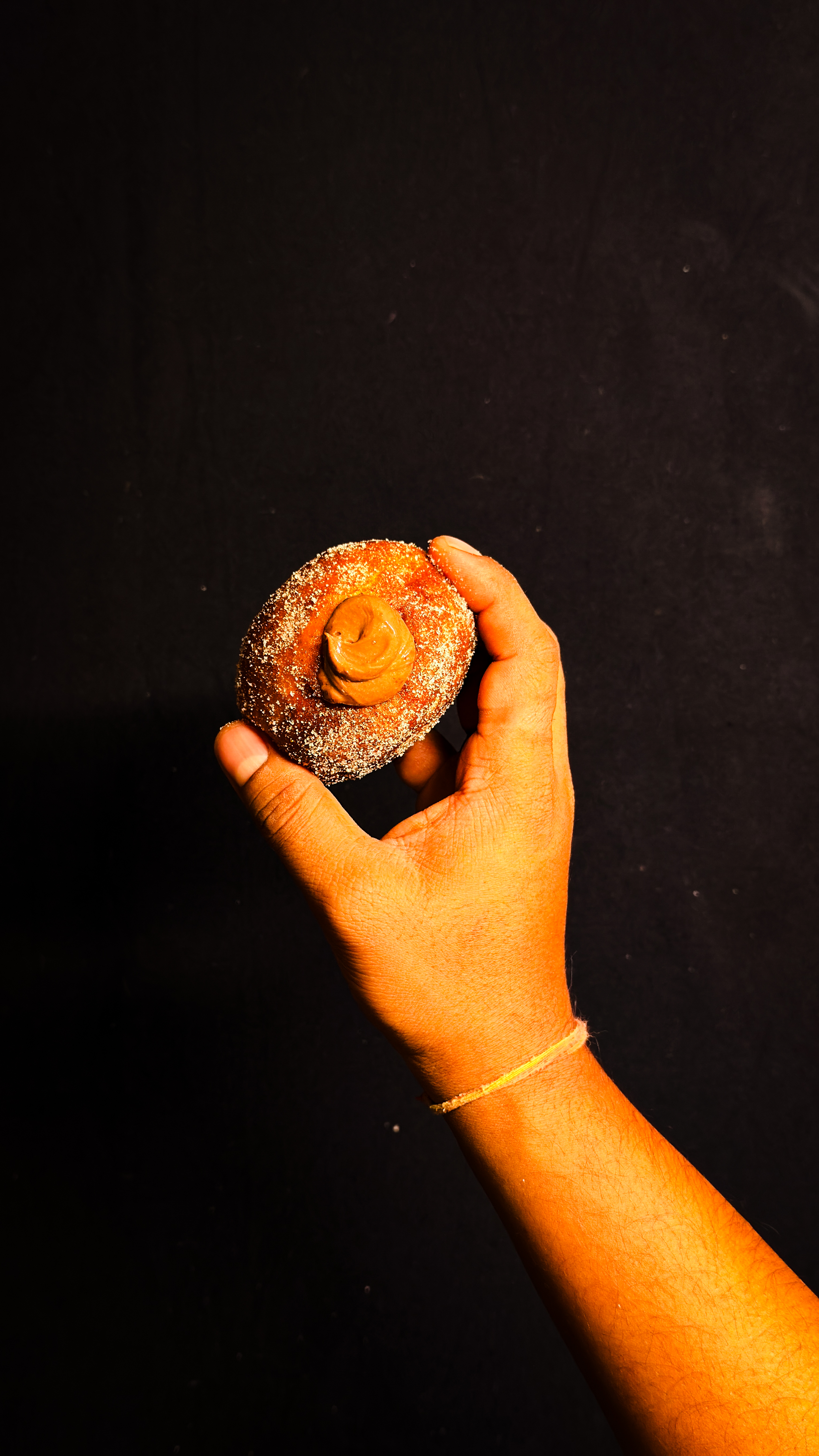
Italian Brioche Donuts

Bombolonis are Italy’s luxurious answer to the classic donut — golden, sugar-dusted spheres filled with velvety pastry cream, chocolate ganache, or fruit preserves. With their pillowy interior and rich brioche flavor, bombolonis are the epitome of indulgent breakfast pastries and a street-food favorite in Tuscany.
Traditionally served plain or with a burst of filling inside, their origins date back to post-WWII Italy, when enriched breads symbolized festive abundance. Today, they hold a cherished spot in both bakeries and modern patisseries.
What you will need:

| Ingredient | Measure |
| Bread Flour | 500g |
| Milk | 280g |
| Eggs | 95g |
| Yeast | 10g |
| Sugar (Caster) | 50g |
| Salt | 6g |
| Vanilla essence | 10g |
| Unsalted Butter | 50g |
Equipments:
- Digital Scale
- Flour sifter
- Stand mixer with dough hook
- Mixing bowls (non-metal for proofing)
- Dough scraper or bench knife
- Parchment paper
- Rimmed baking tray
- Kitchen thermometer (for oil)
- Slotted spoon or spider skimmer
- Cooling rack
- Shallow dish for vanilla sugar
Time:
Preparation time : 10 minutes
Autolyse time : 30 minutes
First Rest time : 30 minutes
Cold Bulk Fermentation time : Overnight
Final Proofing time : 1.5 – 2 hours
Frying time : 1-2 minutes each side
Instructions:
Prepare the Dough
- In a stand mixer bowl, combine flour and 80% of the milk and leave it for 30 minutes for Autolyse.
- Separately combine sugar, salt, instant yeast, vanilla and eggs to the remaining milk.
- Add the egg-milk mixture to the autolysed flour and mix on low speed until no visible flour remains. Scrape down sides as needed.
- Cover bowl with a cloth or wrap and rest at room temperature for 30 more minutes.


Bulk Fermentation (Cold)
- Knead on high speed for 7–10 minutes.
- Add butter by cubes and combine in the dough.
- Dough should become shiny, elastic, and pull cleanly from the bowl.
- Stretch a small piece to do windowpane test
- Place dough into a lightly greased bowl.
- Cover and ferment in the fridge for 12–24 hours.

Shape and Proof
- Remove dough and gently press out gas while still cold.
- Divide into 45-50g portions using a scale.
- Round each piece into a taut ball and place on parchment-lined tray.
- Cover tray with plastic wrap or a damp cloth.
- Let rise at room temperature (24–26°C) for 1.5 to 2 hours, until doubled.

Fry the Bombolonis
- In a deep pot, heat neutral oil to 165°C (330°F).
- Gently lower 2–3 donuts at a time. Fry 1.5–2 minutes per side until golden brown.
- Remove with slotted spoon and transfer to a cooling rack.

Fill the Bombolonis
- While still warm, roll donuts in a mix of caster sugar and vanilla powder.
- Load your desired filling (pastry cream, ganache, jam, etc.) into a piping bag fitted with a round tip or simply snip the bag’s end.
- Use clean kitchen scissors to make a small incision on the side of each donut, about 2–3 cm deep, creating a visible pocket.
- Insert the piping bag into the cut and squeeze until the filling plumps the bomboloni and becomes slightly visible at the opening.
- Pipe a decorative swirl or rosette at the opening for visual appeal and extra indulgence.


Variations
Chocolate Bombolonis: Add 10g cocoa powder to dough; fill with hazelnut spread.
Cinnamon Sugar Bombolonis: Swap vanilla sugar for cinnamon sugar for a warmer profile.
Citrus Zest Infused: Add lemon or orange zest into the dough for brightness.
Savory Option: Omit sugar and vanilla; fill with ricotta and sun-dried tomato pesto.
Serving Suggestions
Classic: Serve warm with espresso or cappuccino.
Filled: Inject with pastry cream, chocolate ganache, or raspberry jam.
Seasonal: Pair with roasted stone fruits or citrus zest-infused fillings.
Nutrition Profile / 100g
| Nutrient | Amount per 100g |
|---|---|
| Energy | 288 kcal |
| Carbohydrates | 47.2 g |
| Sugars | 5.6 g |
| Protein | 7.6 g |
| Fat | 6.3 g |
| Saturated Fat | 3.6 g |
| Salt | 0.64 g |
| Fiber | 1.9 g |
Note: These values are approximate and can vary based on the specific brands and types of ingredients used, as well as portion sizes.

Tips for Best Results:
- A stand mixer is essential due to the dough’s high fat content.
- Use stainless steel or ceramic bowls to retain consistent fermentation temperatures.
- Add butter in chunks during the last third of kneading for optimal gluten structure.
- Shaping while cold ensures cleaner handling and better definition.
- Fry in small batches to avoid temperature drops.
- Infuse caster sugar with a spent vanilla bean pod for a deep, aromatic coating.

Troubleshooting Guide:
| Issue | Cause | Solution |
|---|---|---|
| Dough tears during kneading | Under-kneaded or too dry | Knead longer; check hydration level |
| Flat or oily donuts | Oil too cool; overproofed dough | Maintain oil at 165°C; reduce final proof time slightly |
| Greasy texture | Excess oil absorption | Ensure rapid frying; drain on rack not paper towels |
| Crust too dark | Oil too hot | Lower temperature and test with thermometer |
| Uneven shape | Poor shaping technique | Practice tension-building rounds |
Don’t forget to share your results and tag @bake.hows on instagram
