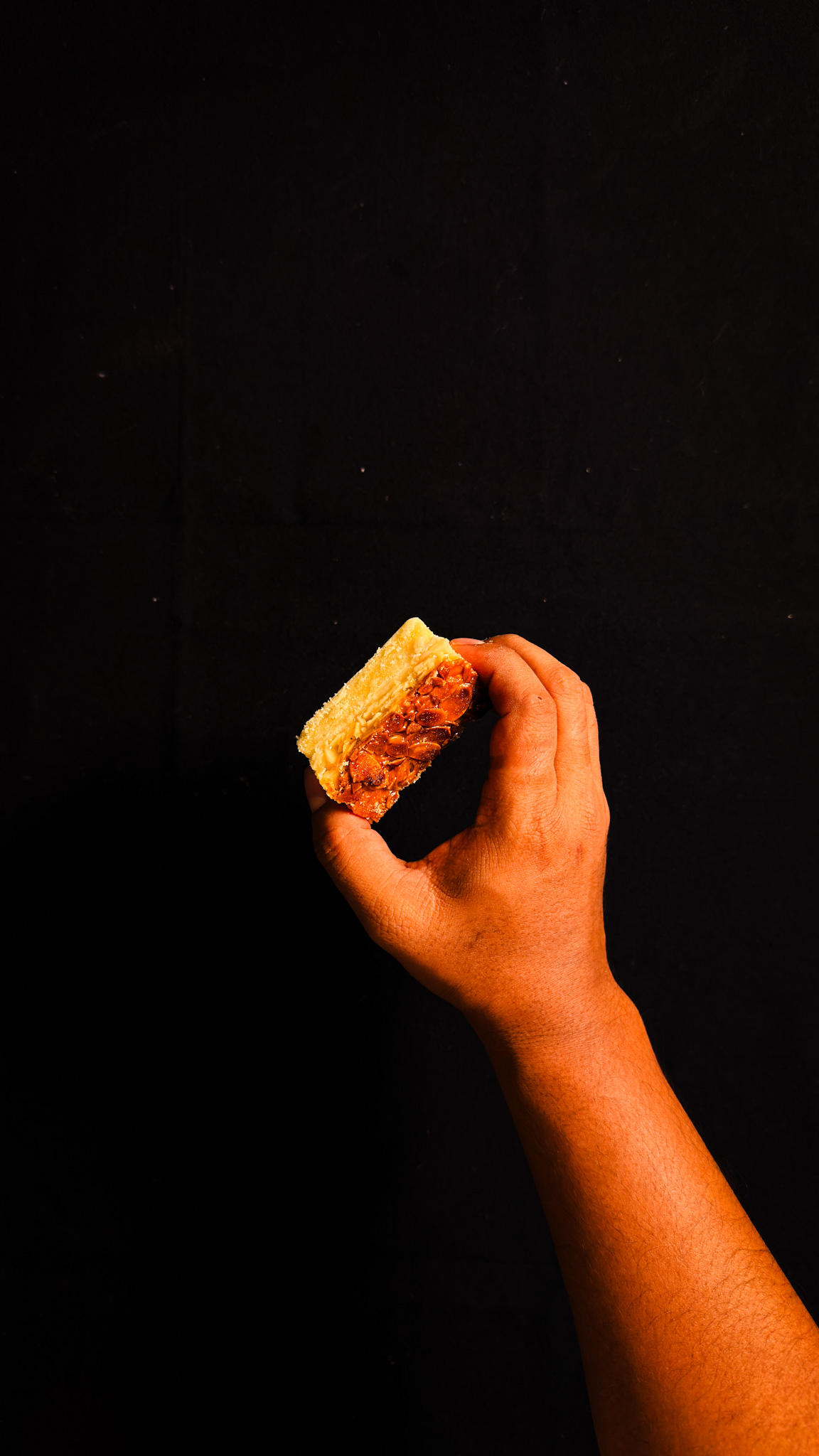
Professional Pastry Foundation
Short crust pastry, known in classical French pâtisserie as pâte sucrée, evolved from European butter-rich doughs designed for tart shells and layered desserts. The creaming method used here creates a fine crumb through controlled aeration while limiting gluten development.

This buttery short crust base is engineered for layered almond crisp bars. With a lower sugar ratio and controlled creaming method, it produces a tender yet stable structure ideal for Florentine-style toppings.
What you will need:
| Ingredient | Quantity (g) |
|---|---|
| Flour | 235 g |
| Icing sugar | 60 g |
| Unsalted butter (softened 18–20°C) | 145 g |
| Whole egg (room temperature) | 30 g |
| Baking powder | 2 g |
| Salt | 2 g |

Equipments:
- Digital Scale
- Stand mixer with paddle attachment
- Stainless steel bowl
- Bench scraper
- 28 cm square tray
- Pastry docker
- Offset spatula
- Parchment paper
Time:
Mixing: 15 minutes
Chilling: 15 minutes
Blind bake: 10 minutes
Total active time: 25 minutes
Instructions:
Sanding
- Sift flour, icing sugar, baking powder, and salt together into mixing bowl.
- Add cold cubed butter to dry ingredients.
- Mix on low speed until mixture resembles fine sand or breadcrumbs.
- Ensure butter is fully dispersed with no large visible pieces.


Add Wet Ingredients
- Add room-temperature egg.
- Mix on low speed just until dough begins to come together.
- Stop mixing immediately once combined.
- Do not overwork the dough.

Chill and Bake
- Press dough together gently by hand if needed.
- Roll dough to a 27 × 27 cm square between parchment sheets.
- Chill or freeze for 15 minutes to stabilize structure.
- Transfer to 28 cm square tray.
- Dock evenly across entire surface.
- Bake at 180°C (top and bottom heat) for 10 minutes.
- Bake for 15 mins to use only as short crust without any addition topping or second baking.
- Remove from oven and allow to cool slightly before applying topping.

Variations to Try
Add 15 g almond flour for nut depth
Replace 10% flour with rice flour for added crispness
Add lemon zest for aromatic lift
Add 1 g vanilla powder for subtle sweetness
Serving Suggestions
Slice into 3 × 9 cm bars
Serve at 20–22°C
Pair with espresso or cappuccino
Light dusting of icing sugar for plated desserts
Further Application
Base for Florentine almond crisps
Nut caramel slice foundation
Tart shells requiring blind baking
Structured shortbread bars
Nutrition Profile / 100g
| Nutrient | Approximate Value |
|---|---|
| Energy | 455 kcal |
| Fat | 26 g |
| Saturated Fat | 16 g |
| Carbohydrates | 48 g |
| Sugars | 9 g |
| Protein | 6 g |
| Sodium | 115 mg |
Note: These values are approximate and can vary based on the specific brands and types of ingredients used, as well as portion sizes.
Tips for Best Results:
Butter must remain cool to maintain proper sanding structure.
- Avoid overmixing after egg addition to prevent gluten formation.
- If dough feels sticky, chill 10 minutes before rolling.
- Dock thoroughly to prevent bubbling during blind bake.
- For extra crispness, extend blind bake by 2 minutes.
Troubleshooting Guide:
| Issue | Solution |
|---|---|
| Tough crust | Overmixed after egg addition |
| Greasy texture | Butter too warm during sanding |
| Shrinkage | Insufficient chilling |
| Cracking during rolling | Dough too cold; rest 5 minutes |
| Pale base | Extend blind bake slightly |
Don’t forget to share your results and tag @bake.hows on instagram
