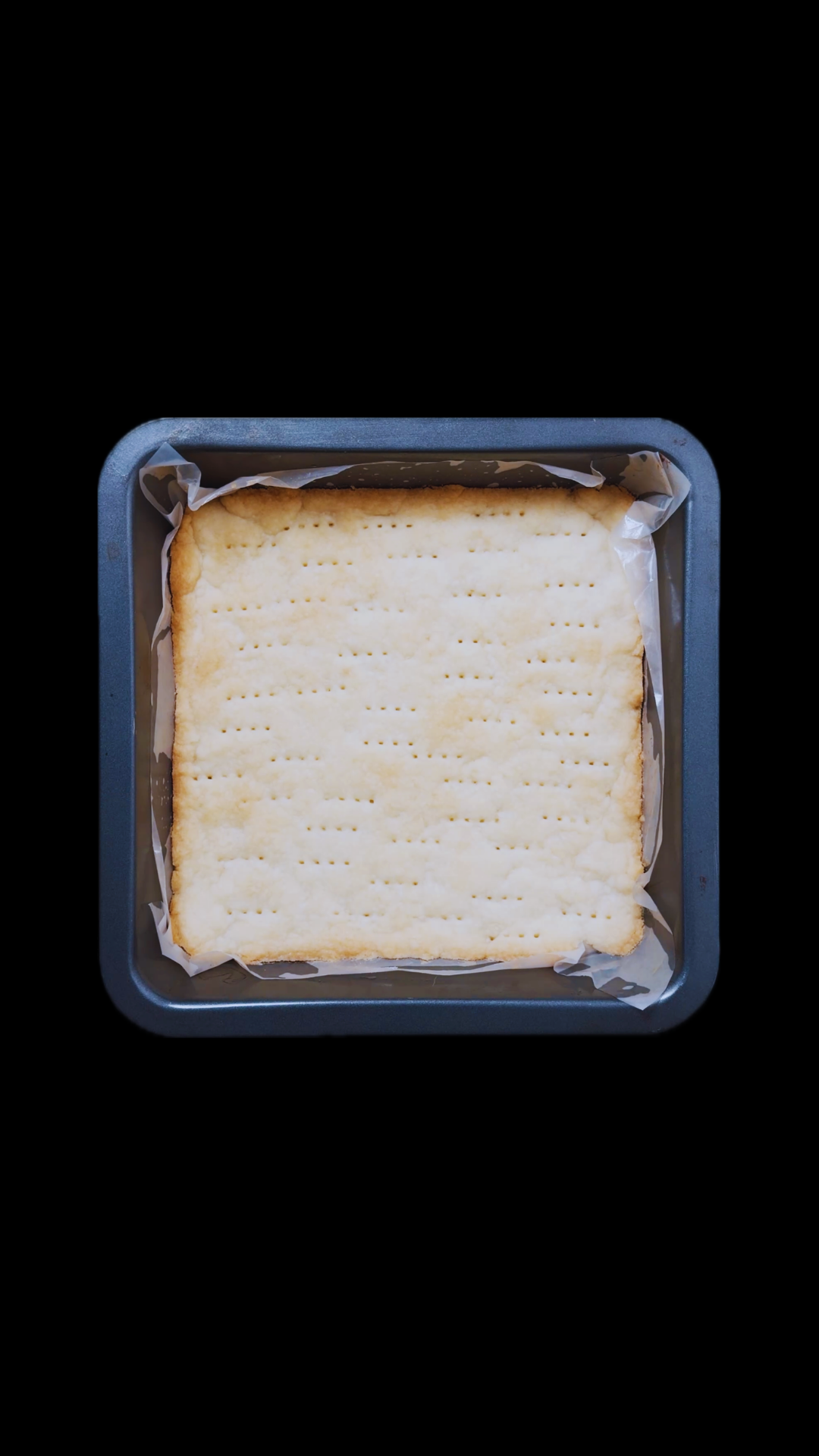
Traditional High-Fat Short Dough Method
Shortbread is a classic Scottish butter biscuit defined by its high fat content, minimal gluten development, and characteristic sandy, melt-in-the-mouth texture. Unlike standard cookies, shortbread contains no chemical leavening, relying entirely on proper fat dispersion and controlled gluten inhibition for structure.

Shortbread originates from medieval Scotland and evolved from leftover bread dough dried in low ovens. Over time, yeast was replaced by butter, producing a “short” (crumbly) texture due to fat’s ability to coat flour proteins and inhibit gluten formation.
The key to superior shortbread lies in:
• High butter percentage
• Minimal mixing
• Controlled baking temperature
• Proper resting to prevent spreading
What you will need:
| Ingredient | Quantity (g) |
|---|---|
| All-purpose flour | 303 g |
| Granulated sugar | 100 g |
| Fine salt | 4 g |
| Unsalted butter (cold, 16–18°C) | 226 g |
| Vanilla extract | 8 g |

Yield
- Total dough weight: 641 g
- 25 g portions: approximately 25 biscuits
- One half-sheet tray
Equipments:
- Digital scale (1 g precision)
- Planetary mixer with paddle attachment
- Rubber spatula
- Bench scraper
- Rolling pin
- 10–12 mm rolling guides
- Sheet pan
- Parchment paper or silicone baking mat
- Fork (for docking)
- Wire cooling rack
Time:
| Stage | Time |
|---|---|
| Mise en Place | 8 minutes |
| Mixing | 6–8 minutes |
| Resting | 30 minutes |
| Shaping | 12 minutes |
| Chilling | 15 minutes |
| Baking | 18–22 minutes |
| Cooling | 25 minutes |
Total Production Time: ~1 hour 45 minutes
Instructions:
Mise en Place
- Scale all ingredients precisely.
- Bring butter to cool-plastic consistency (about 18–20°C) so it is pliable but not greasy.
- Line a sheet pan with parchment or a silicone mat.
- Preheat oven to 160°C (convection 150°C).
- Cut cold butter into 1–2 cm cubes.

Prepare the Dough
- Place butter, sugar and salt in mixer bowl.
- Cream on low to medium-low until the mixture is cohesive and slightly lighter, 2–3 minutes.
- Scrape bowl and paddle.
- Add vanilla extract. Mix on low for 10–15 seconds to distribute.
- Add flour all at once.
- Mix on low just until the dough comes together and no dry flour remains, 20–40 seconds.
- Stop immediately to avoid gluten development.

Shape
- Flatten dough into a disc (for faster, even chilling).
- Rest 30 minutes at 18–20°C (or 15–20 minutes chilled if your room is warm).
- Line with one piece of parchment paper covering the base and sides. Set aside.
- Roll to 10–12 mm thickness using guides.
- Dock lightly with a fork (do not pierce aggressively through the base).
- Cut into fingers/rounds/wedges and transfer to the prepared pan.
- Chill shaped pieces 15 minutes before baking.

Bake
- Bake 18–22 minutes at 160°C (150°C convection).
- Aim for a pale top with light golden edges.
- Cool on the pan 5 minutes, then move to a rack to cool fully before handling.

Try these!
- Rice Flour Addition: Replace 20% flour with rice flour for finer crumb.
- Brown Sugar Version: Substitute 50% sugar with light brown sugar for caramel notes.
- Citrus Shortbread: Add 3 g lemon or orange zest during creaming.
- Chocolate Shortbread: Replace 20 g flour with 20 g cocoa powder.
- Piped Viennese Style: Increase butter by 5–8% and pipe with star tip.
- Spiced Version: Add 1 g ground cardamom or cinnamon.
Serving Suggestions
- Serve with espresso or black tea.
- Pair with citrus curd or berry compote for plated dessert.
- Dip half in tempered dark chocolate for contrast.
- Dust lightly with caster sugar or fine sanding sugar post-bake.
- Sandwich with ganache or dulce de leche for premium retail item.
Applications
- Retail packaged butter cookies
- Base for cheesecake crust (pressed and pre-baked)
- Tart shell adaptation (blind bake at 170°C)
- Layered dessert component (crumb base)
- Petit fours sec
Nutrition Profile / 100g
| Nutrient | Amount |
|---|---|
| Energy | 502 kcal |
| Fat | 29 g |
| Saturated Fat | 18 g |
| Carbohydrates | 55 g |
| Sugars | 16 g |
| Protein | 5 g |
| Sodium | 120 mg |
Note: These values are approximate and can vary based on the specific brands and types of ingredients used, as well as portion sizes.
Tips for Best Results:
Butter temperature controls texture: too cold won’t cream smoothly; too warm causes spread and greasy mouthfeel.
- Keep mixer speed conservative—over-aeration can produce a cakier, less “short” crumb.
- Use rolling guides to maintain uniform thickness for even baking.
- Dock lightly to prevent blistering but avoid piercing completely through.
- If dough cracks while rolling, rest an additional 10 minutes.
- If the dough feels sticky after mixing, chill 10 minutes before rolling.
- For sharper edges, cut while cold and bake immediately.
- Rotate the tray halfway through baking for even edge coloration.
- For premium finish, brush lightly with clarified butter and dust with caster sugar post-bake.

Troubleshooting Guide:
| Issue | Likely Cause | Professional Fix |
|---|---|---|
| 1. Excessive spreading | Butter too warm; over-creaming; insufficient chilling | Condition butter to 18–20°C; cream on low speed; chill shaped pieces 15–20 minutes before baking |
| 2. Tough or bready texture | Overmixing after flour addition; gluten development | Mix flour only until combined; stop immediately once cohesive |
| 3. Crumbly, won’t hold shape | Under-creamed butter; dough not fully cohesive | Ensure butter is cool-plastic before creaming; mix until dough just binds |
| 4. Greasy surface | Butter too warm or oven too cool | Chill before baking; verify oven temperature accuracy (160°C standard bake) |
| 5. Uneven browning | Inconsistent thickness; hot spots in oven | Use rolling guides (10–12 mm); rotate tray halfway through baking |
Don’t forget to share your results and tag @bake.hows on instagram
