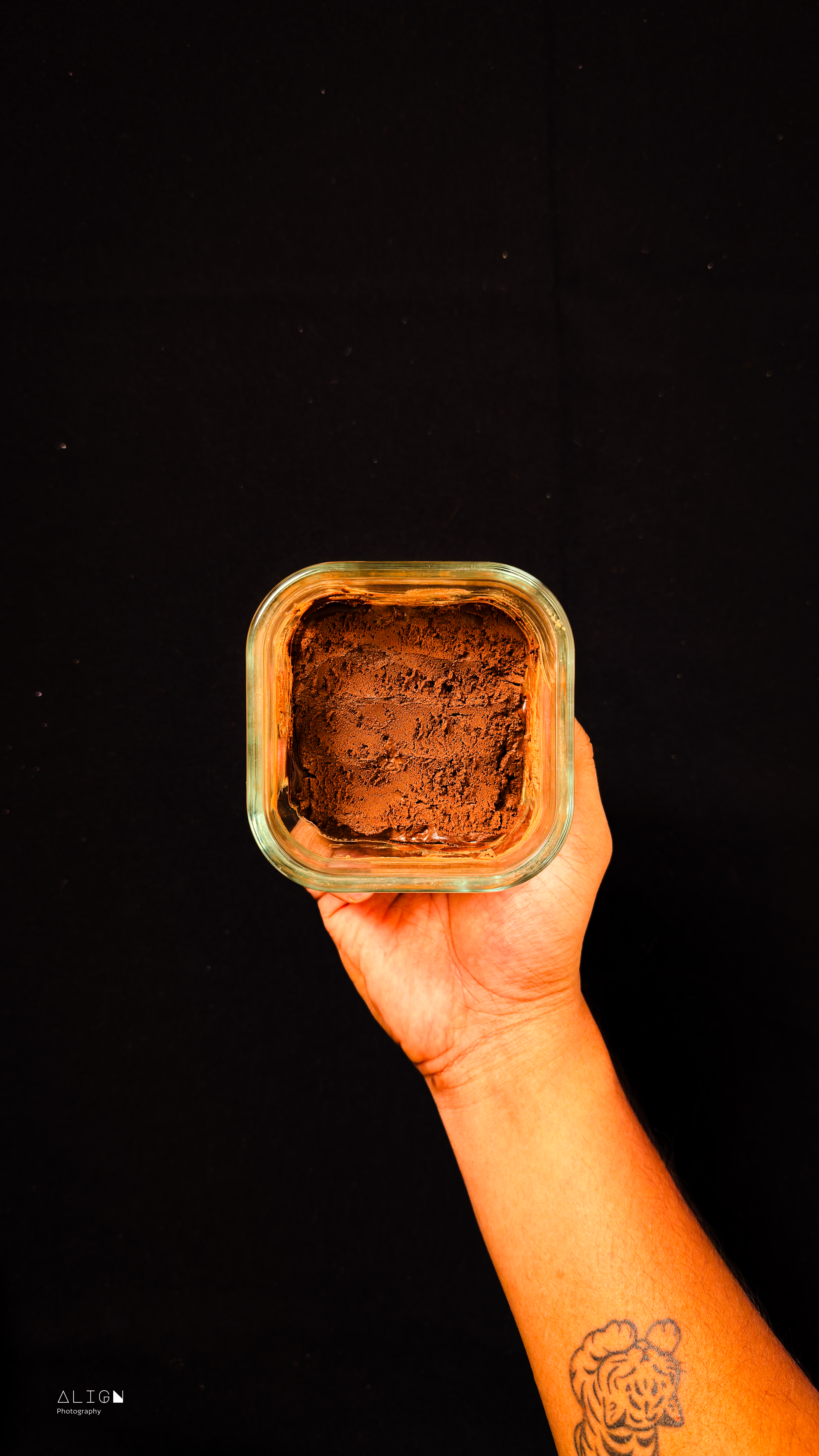
Two Ingredients
This two-ingredient dark chocolate mousse recipe proves that the richest, silkiest textures in pastry don’t need cream, eggs, or gelatin, just chocolate, water, and an understanding of emulsion science. Also known as chocolate chantilly or water ganache, the method works because melted chocolate is itself an emulsion of cocoa solids and cocoa butter, and whipping it cold traps air the same way whipped cream does.

The technique has circulated in modern pastry kitchens for over a decade as a dairy-free, low-fuss alternative to classic mousse au chocolat, sometimes called chocolate water ganache or whipped chocolate ganache. It’s a favourite for plated desserts where a clean, intensely chocolatey element is needed without competing with other components, like a fruit compote.
What you will need:
| Ingredient | Quantity |
| Dark Chocolate (78% cocoa) | 200g |
| Water | 156g (156mL) |

Equipments:
- Digital Scale
- Heatproof mixing bowl
- Large bowl filled with ice water
- Whisk (hand or electric)
- Instant-read thermometer (optional)
General Details:
Prep Time: 10 minutes
Cook Time: 0 minutes
Total Time: 20 minutes (includes whipping and chilling)
Yield: 356g, about 4 servings
Difficulty: Beginner
Cuisine: French
Category: Dessert
Storage: Best used immediately after whipping; if needed, cover and refrigerate up to 4 hours, then re-whip briefly to restore volume
Instructions:
Melt the Chocolate
- Chop the dark chocolate into small, even pieces for fast, even melting.
- Bring the water to a near boil, then pour it over the chopped chocolate in a heatproof bowl.
- Let sit 1 minute, then whisk from the centre outward until fully smooth and glossy, this forms the base emulsion.

Whip to Mousse
- Set the bowl of melted chocolate over a larger bowl of ice water.
- Whisk continuously, scraping the sides and base, as the mixture cools and thickens.
- Whip for about 5 minutes, until the mixture holds soft peaks and looks aerated and mousse-like.
- Stop as soon as it holds shape, overwhipping will cause it to seize and turn grainy.

Pipe or Portion
- Transfer immediately to a piping bag or spoon into serving glasses while still soft.
- Pipe or quenelle into portions right away, the mousse continues to firm up as it sits and becomes harder to shape.

More Variations
- Milk Chocolate Version : Use 40 percent milk chocolate with a reduced water ratio, closer to 60 percent, since milk chocolate has less cocoa solids to emulsify
- Espresso Mousse : Replace the water with equal parts strong brewed espresso for a coffee-chocolate finish
- Orange Mousse : Infuse the water with orange zest before boiling, then strain before using
- Spiced Mousse : Steep the water with cinnamon, star anise, or chili before combining with the chocolate
Serving Suggestions
- Spoon into small glasses layered with crushed biscuit and fresh cherries
- Serve as a quenelle alongside a warm dessert for temperature contrast
- Dust with cocoa powder or top with a few flakes of sea salt just before serving
Nutrition Profile / 100g
| Nutrient | Amount |
| Calories | 295 kcal |
| Total Fat | 20.8 g |
| Saturated Fat | 12.6 g |
| Carbohydrates | 24.1 g |
| Sugars | 17.2 g |
| Protein | 3.4 g |
| Fiber | 4.8 g |
| Sodium | 6 mg |
Note: These values are approximate and can vary based on the specific brands and types of ingredients used, as well as portion sizes.
Tips for Best Results:
- The water-to-chocolate ratio must scale with cocoa percentage, higher cocoa content needs more water, or the emulsion won’t hold air
- Use good quality couverture chocolate; compound chocolate with vegetable fat substitutes will not whip properly
- Work quickly once whipping begins, the window between soft peaks and seized chocolate is narrow
- If the mixture seizes and turns grainy, it usually means it sat too long before whipping or was overwhipped, there is no fixing it once this happens, only starting again
- Keep the ice water bath genuinely cold, refresh the ice if it starts to melt through, since a slow chill gives an inconsistent whip
- Never use untempered or previously overheated chocolate, it will not emulsify cleanly with water
- Whisk by hand for better control over texture, an electric mixer can overwhip this in seconds

Troubleshooting Guide:
| Issue | Possible Cause | Fix |
| Mousse won’t whip up | Chocolate and water not fully emulsified before chilling, or wrong water ratio for the cocoa percentage used | Rewarm gently to re-melt, whisk until fully smooth, then re-chill and whip again |
| Mixture turns grainy or seizes | Overwhipped, or left too long in the ice bath before whipping started | Cannot be rescued once seized; start over with a fresh batch |
| Mousse is too soft to hold shape | Not whipped long enough, or ice bath wasn’t cold enough | Return to ice bath and continue whisking until soft peaks form |
| Mousse hardens too fast to pipe | Left standing too long after whipping | Pipe or portion immediately after reaching soft peaks; work in small batches if needed |
| Grainy texture from the start | Chocolate was untempered or previously overheated before use | Always start with fresh, properly tempered couverture chocolate |

You Might Also Like
This is a precise recipe: the water-to-chocolate ratio must match the cocoa percentage of your chocolate, or the emulsion won’t whip properly. Use it as a quenelle on a plated dessert, piped into glasses, or as a component alongside fruit compotes and crumbles.
Don’t forget to share your results and tag @bake.hows on instagram
