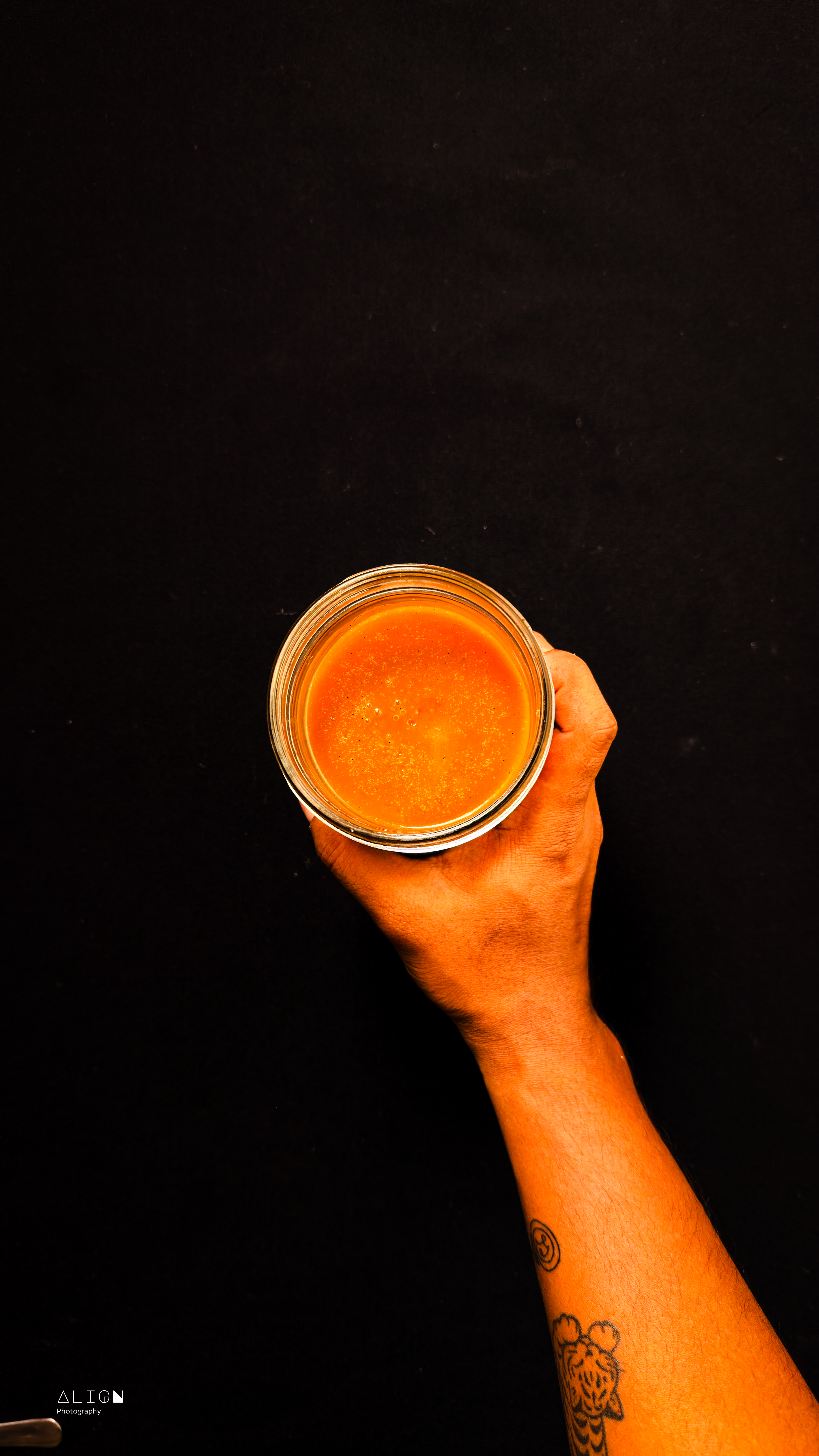
Dry Caramel Method
This salted caramel recipe makes a glossy, deep amber sauce with a balance of bittersweet caramel, rich cream and butter and a clear note of salt. A little glucose syrup keeps it silky and stops the sugar from crystallising, so the caramel stays smooth in the jar for weeks.
Salted butter caramel, caramel au beurre salé, comes from Brittany in France, a region famous for its salted butter. In 1977 the Quiberon chocolatier Henri Le Roux created his celebrated salted butter caramels, and since then salted caramel has become one of the most popular flavours in pastry worldwide.

Drizzle it over ice cream, cakes and brownies, use it to fill tarts, macarons and choux, swirl it into buttercream or simply eat it with a spoon. It is a useful base recipe to keep on hand all through the festive season.
What you will need:
| Ingredient | Quantity |
| Sugar | 200g |
| Glucose syrup (liquid glucose) | 40g |
| Heavy cream (35% fat or more) | 160g (160mL) |
| Unsalted butter, cold, cubed | 60g |
| Salt (fine sea salt or flaky) | 3g |
| Vanilla extract | 1g (1/4 tsp) |

Equipments:
- Digital Scale
- 2 Heavy-bottomed stainless steel saucepan (at least 2 litres)
- Small saucepan or microwave-safe jug for the cream
- Heatproof silicone spatula
- Whisk
- Digital thermometer
- Immersion blender (optional, for an extra-smooth emulsion)
- Sterilised glass jar
General Details:
Prep Time: 5 minutes
Cook Time: 15 minutes
Total Time: 1 hour (including cooling)
Yield: About 420g
Difficulty: Intermediate
Cuisine: French
Category: Sauces and Fillings
Storage: Airtight in the fridge for up to 3 weeks; warm gently before using as a pourable sauce
Instructions:
- Warm the cream with the split vanilla pod and its seeds and the salt until steaming but not boiling.
- Take off the heat, stir in the glucose until dissolved, then remove the pod and keep the cream warm.
- In the other heavy saucepan prepare a dry caramel (at about 175-180°C)


- Take the pan off the heat and whisk in the hot cream in three additions, standing back from the steam.
- Return to medium heat and boil, stirring, until the caramel reaches 104°C.
- Take off the heat and let it cool for 5 minutes.
- Whisk in the cold butter a few cubes at a time, until glossy and smooth.
- Then pour into a jar and cool.


Serving Suggestions
- Drizzle warm over vanilla ice cream with a scatter of toasted, chopped nuts.
- Pour over warm brownies, sticky toffee pudding or a slice of Welsh honey cake.
- Pipe into baked tart shells and top with dark chocolate ganache for a millionaire’s tart.
- Beat into buttercream or whipped ganache for a salted caramel frosting.
- Fill choux buns, macarons, doughnuts or layer cakes.
- Stir a spoonful into hot milk or coffee for a salted caramel latte.

More Variations
- Thick Caramel Filling – Cook to 108°C after adding the cream for a caramel that sets for tarts and macarons.
- Brown Butter Caramel – Brown the butter until nutty, cool it slightly and whisk it in for a toasty, hazelnut-like flavour.
- Miso Caramel – Replace the salt with a tablespoon of white miso, whisked in with the butter.
- Spiced Caramel – Infuse the cream with cinnamon, star anise and orange peel for a festive caramel.
- Coffee Caramel – Dissolve a teaspoon of instant espresso in the warm cream.
Nutrition Profile / 100g
| Nutrient | Amount |
| Calories | 447 kcal |
| Total Fat | 25.3 g |
| Saturated Fat | 16.1 g |
| Carbohydrates | 56.3 g |
| Sugars | 52.6 g |
| Protein | 1.2 g |
| Fiber | 0.0 g |
| Sodium | 289 mg |
Note: Calculated per 100g of finished caramel (about 420g total), assuming part of the cream’s water evaporates during the final boil.
Approximate values based on recipe formula. Actual nutrition may vary.
Tips for Best Results:
- In a dry caramel, swirl rather than stir until the sugar has melted; stirring undissolved sugar can trigger crystallisation and lumps.
- Dissolving the salt in the cream spreads it evenly through the caramel; for little bursts of saltiness, stir a pinch of flaky salt into the cooled caramel as well.
- Use a light-coloured stainless pan; it lets you judge the caramel’s colour accurately, which matters as much as the temperature.
- Take the caramel as dark as you dare: a deep amber gives the bittersweet depth that balances the salt and cream, while pale caramel tastes only sweet.
- Always add warm cream; cold cream makes the caramel seize into hard lumps and spits violently.
- The final boil to 104°C sets the consistency: cook to 102°C for a looser sauce, or to 108°C for a thick caramel that holds its shape in tarts.
- Adding cold butter off the heat and whisking hard creates an emulsion; it keeps the caramel glossy and stops butterfat separating as it cools.
- Molten sugar causes serious burns; keep children away and keep a bowl of cold water nearby while cooking.

Troubleshooting Guide:
| Issue | Possible Cause | Fix |
| Caramel crystallises and goes grainy | Sugar added too fast or stirred roughly | Add sugar in thirds and swirl rather than stir until melted |
| Caramel tastes burnt and bitter | Cooked past dark amber | Take it off at deep amber, around 175-180°C |
| Cream causes hard lumps | Cream added cold | Keep the cream warm and return to low heat, stirring until smooth |
| Sauce too thin | Not boiled to temperature | Return to the heat and boil to 104°C |
| Too thick once cold | Cooked too high | Warm gently and stir in a spoonful of hot cream |
| Butter separates | Butter added to very hot caramel | Cool 5 minutes before adding butter; blend to re-emulsify |
| Sugar won’t melt evenly | Heat too high or pan too thin | Use medium heat and a heavy-bottomed pan |

Snapshot Recipe
| Weigh everything before starting | ||||||
| Heavy Cream | warm to steam | off heat stir in remove pod | add cream in 3 | boil to 104°C cool 5 min | whisk in | jar cool |
| Vanilla Pod | ||||||
| Salt | ||||||
| Glucose Syrup | ||||||
| Sugar | melt dry in 3 | cook to amber 175- 180°C | ||||
| Unsalted Butter | ||||||
You Might Also Like
- Gianduja – Homemade Hazelnut Spread
- Edible Soil – Crunchy Chocolate Crumble
- No-Bake Date Bars with Dark Chocolate
Don’t forget to share your results and tag @bake.hows on instagram
