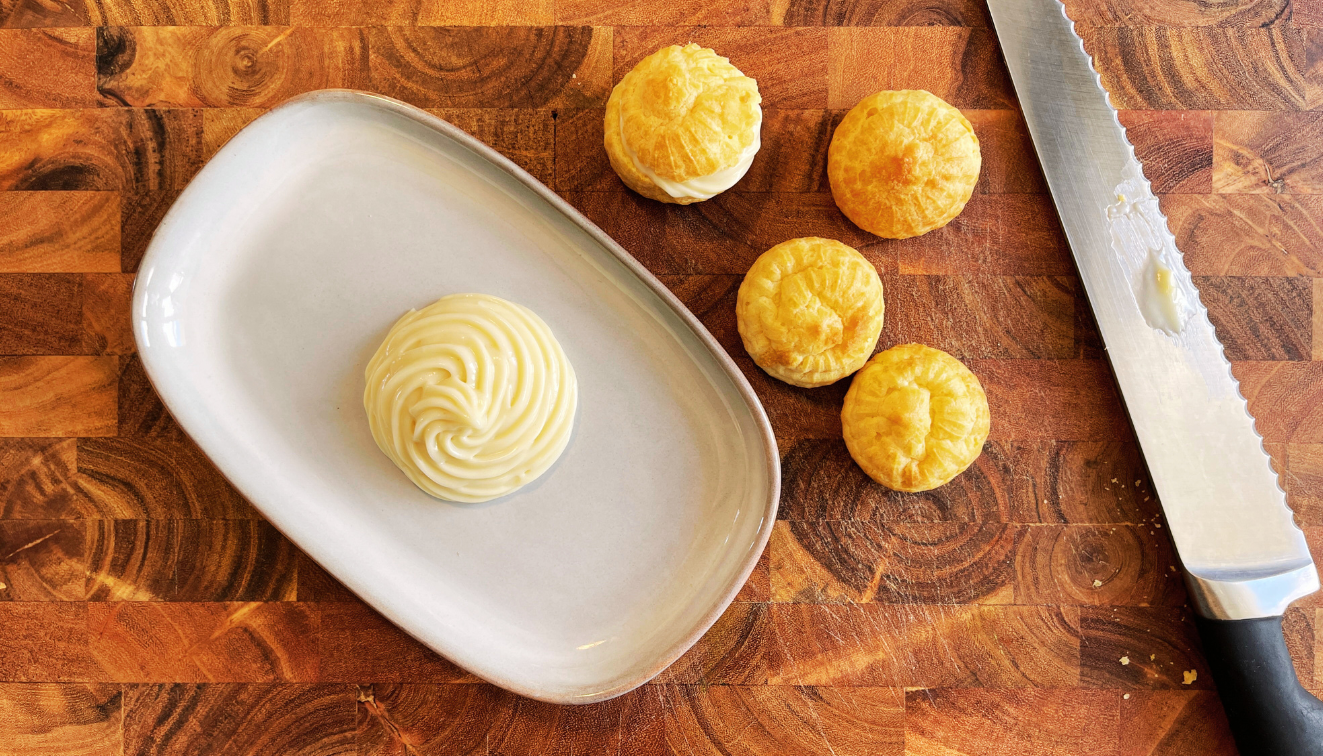
Crème Pâtissière, or pastry cream, is a cornerstone of French patisserie, frequently used as a filling for éclairs, tarts, choux pastries, and mille-feuille. Its origin traces back to 17th-century France, where it was developed as part of the haute cuisine that flourished during the reign of Louis XIV. Traditionally, it reflects the French art of combining simple ingredients—milk, sugar, eggs, and starch—into refined, versatile components of more complex desserts.
Crème Pâtissière, or pastry cream, is one of the most versatile components in pastry-making, serving as a base for various fillings, desserts, and layered confections. Below are some key applications of pastry cream in the world of patisserie:

Pastry cream serves as the base for various cream variations used in patisserie, as discussed in detail below.
Filling for Choux Pastry:
Pastry cream is the traditional filling for éclairs, profiteroles (cream puffs), and Paris-Brest. It adds a creamy contrast to the light, crispy shell of the choux pastry.
Fruit Tarts:
Crème Pâtissière is often used as a base for fresh fruit tarts. It acts as a sweet, creamy layer between the buttery tart crust and the vibrant fruits, balancing sweetness and tartness.
Mille-Feuille:
Also known as Napoleon, mille-feuille consists of layers of puff pastry and pastry cream. The combination of crispy puff pastry and rich Crème Pâtissière creates a luxurious texture.
Danish Pastries:
Danish pastries are often filled with Crème Pâtissière before baking. It adds a sweet, rich element to the flaky dough.
Layered Cakes and Entremets:
Pastry cream is used in layered cakes like génoise or in more elaborate multi-layered entremets, where it is often combined with other components such as mousses or jellies.
Pithiviers and Galette des Rois:
These traditional French puff pastry desserts can be filled with Crème Pâtissière, either alone or mixed with almond cream (frangipane).
What you will need:

| Ingredient | Measure |
| Whole Milk | 370ml |
| Egg Yolks | 3 (70g) |
| Corn Starch | 25g |
| Super Fine Sugar | 70-80g |
| All Purpose Flour | 20g |
| Vanilla | 3g |
Time Required
Preparation Time: 15 minutes
Cooking Time: 10 minutes
Total Time: 25 minutes
Nutrition Profile / 100g
Calories: 165 kcal
Protein: 4.5g
Carbohydrates: 23.7g
Fat: 5.7g
These values provide an estimate and can vary based on exact ingredient brands and preparation methods.
Equipments:
- Medium saucepan
- Whisk
- Mixing bowl
- Heatproof spatula
- Fine sieve (optional for a smoother texture)
- Cling film
Instructions:
Infuse the Milk (Optional if using vanilla extract):
- If using a vanilla bean, split it lengthwise and scrape the seeds into the milk.
- Add half of the sugar in the milk and heat the milk in a saucepan over medium heat until it starts to steam (do not boil).
- Remove from heat, cover, and allow the vanilla to infuse for 10 minutes.

Mix Yolk and Sugar:
- In a separate bowl, whisk together the egg yolks and remaining sugar until pale and slightly thickened.
- This helps dissolve the sugar and prevent curdling when adding hot milk.

Add Corn Starch and Flour
- Sift in the cornstarch and flour, and whisk until smooth.
- This step is crucial for avoiding lumps and ensuring a smooth final cream.

Temper the Egg Mixture:
- Gradually pour half of the hot milk into the egg mixture while whisking constantly.
- This tempers the eggs, slowly raising their temperature to prevent curdling.

Cook the Cream:
- Return the egg mixture to the saucepan with the remaining milk.
- Cook over medium heat, whisking constantly, until the mixture thickens and comes to a boil.
- Keep whisking for about 1–2 minutes after the first bubble to ensure the flour or cornstarch is fully cooked.
- Remove from heat and strain it through a sieve to remove any lumps.


Cool and Whip the Cream:
- Transfer the cream to a bowl. Press cling film directly onto the surface to prevent skin from forming.
- Allow to cool to room temperature before refrigerating for at least 2 hours or until firm.
- Let it cool for at least 6 hours before using it for filling.
- Once the cooling is complete, take out the cream and whip it to a creamier pipe-able consistency.


My Tips:
- Temperature Control:
The most common issue with Crème Pâtissière is curdling. Constant whisking and moderate heat are key to avoiding this. - Texture Refinement:
To achieve an ultra-smooth texture, use a fine sieve after cooking to strain out any lumps or tiny bits of cooked egg. - Cooling Process:
- Pressing cling film onto the surface is essential to prevent a skin from forming. Once cooled, give the pastry cream a quick whisk to restore its smooth texture before use.

Pastry cream can be transformed into a variety of other creams such as
- Crème Diplomat
- Crème Chiboust
- Frangipane (Almond Cream)
- Crème Mousseline
- Crème Légère
- Crème Anglaise
- Crème Bavaroise (Bavarian Cream)

Troubleshooting Guide:
Lumpy Texture
Whisk vigorously while cooking and make sure to sift the cornstarch to avoid lumps. If lumps appear, pass the pastry cream through a fine sieve while it’s still hot.
Curdled Eggs
Temper the eggs properly by slowly adding the hot milk to prevent scrambling. Use a moderate heat and whisk continuously.
Too Runny
Ensure the mixture boils for at least 1–2 minutes to activate the starches. If it’s still runny, it can be returned to the heat and whisked until thickened.
Too Thick
Reduce the cooking time slightly and consider decreasing the starch slightly next time. If the cream is overly thick after cooling, whisk in a small amount of cold milk to adjust the consistency.
Pastry cream is a versatile, foundational element in French patisserie, with applications across various desserts and pastries. Its ability to be modified into Crème Mousseline, Crème Diplomat, and more makes it indispensable for pastry chefs and home bakers alike. Each of these cream variations offers unique textures and flavors, catering to different dessert styles—from rich and decadent to light and airy. By mastering Crème Pâtissière, you open the door to an array of classic and creative dessert possibilities!
Don’t forget to share your results and tag @bake.hows on instagram
