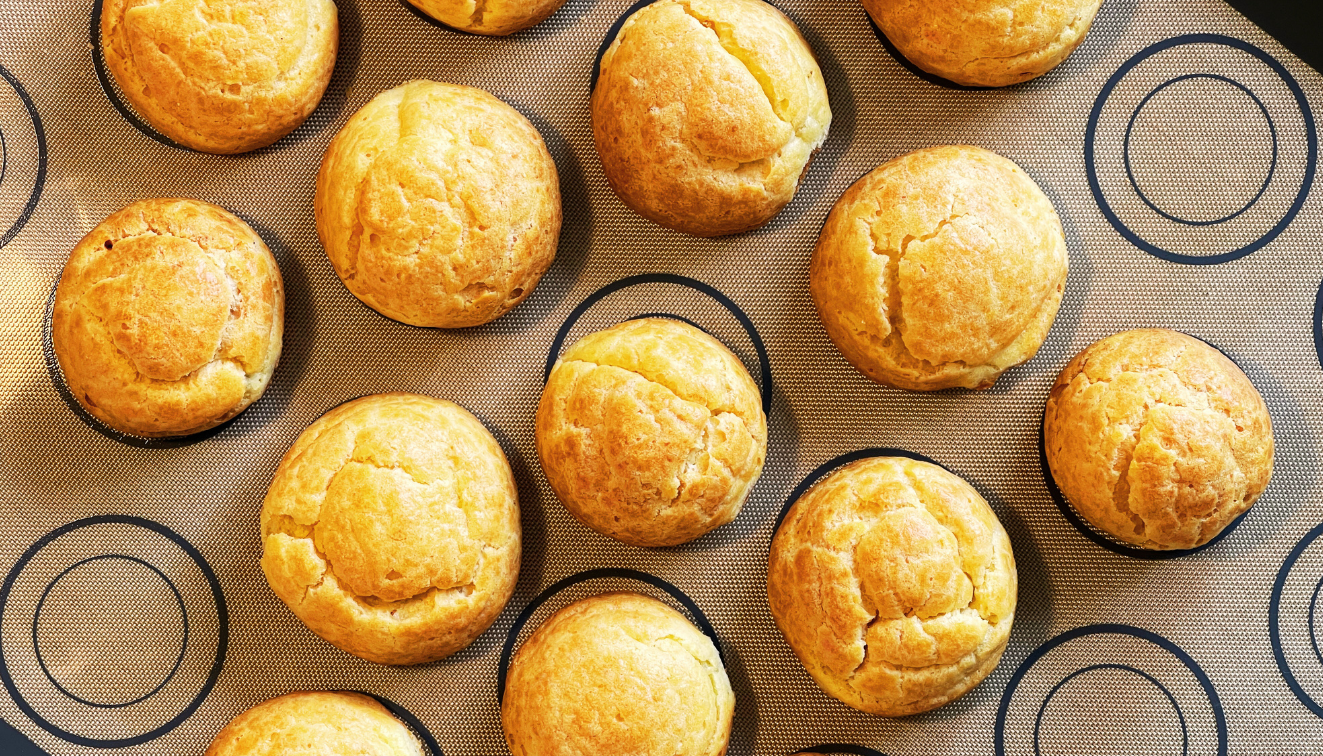
Pâte à Choux, also known as choux pastry, has its roots in the 16th century, credited to an Italian chef named Pantarelli (or Pantanelli) who served Catherine de Medici when she became Queen of France. Pantarelli is believed to have invented a dough called “pâte à Pantanelli,” which eventually evolved into what we know today as pâte à choux. The name “choux” refers to the dough’s appearance after baking, resembling little cabbages (“choux” in French).
Over the centuries, pâte à choux became a cornerstone of French pâtisserie, with its application in creating a variety of classic desserts such as éclairs, profiteroles, and cream puffs. The dough’s versatility and ability to be both light and crisp have made it popular across Europe and, eventually, worldwide.
What you will need:

| Ingredient | Measure |
| Flour (All Purpose) | 65g |
| Whole Milk | 65g |
| Water | 65g |
| Salt | 2g |
| Eggs | 120-125g |
| Butter | 60g |
Time Required
Preparation: 20 minutes
Cooking: 30-35 minutes
Total: 50-55 minutes
Nutrition Profile
Pâte à choux itself is relatively simple in terms of ingredients, which means its nutritional profile is straightforward. The dough is primarily composed of flour, butter, water, and eggs. Here’s a general breakdown of the nutritional content per 100 grams of prepared choux pastry:
Calories: 233-237 kcal
Carbohydrates: 14.7 g
Protein: 5.7-6.3 g
Fat: 16.8-17.0 g
Saturated Fat: 8.9 g
Cholesterol: 135-146 mg
Sodium: 214 mg
Fiber: 0.54 g
Calcium: 21.2 mg
These values can vary depending on the exact recipe and the fillings or toppings used.
Some of the telltale signs of knowing your Choux dough is ready!
Smooth and glossy: Dough should look shiny and smooth.
Holds its shape: Dough should keep its shape on the baking sheet.
Spoon test: Dough should cling to a spoon and slowly fall off.
Puffs up in oven: Dough should rise within the first 10 minutes of baking.
Equipments:
- Medium-sized saucepan
- Wooden spoon or silicon spatula
- Sifter for flour
- Parchment paper or silicone baking mat
- Piping bag with a round tip (around 1 cm in diameter)
- Mixing bowl
- Whisk or stand mixer
- Measuring cups and spoons
Instructions:
Prepare the Dough – Part 1:
- In a medium-sized saucepan, combine water, butter, salt, and sugar (if using).
- Bring the mixture to a rolling boil over medium heat.
- Ensure that the butter is fully melted before proceeding.
- Once the mixture is ready, remove the saucepan from the heat and immediately add the sifted flour all at once.

- Stir vigorously until the dough comes together and pulls away from the sides of the pan, forming a smooth ball.
- Return the saucepan to low heat and cook the dough, stirring constantly, for about 2-3 minutes till the temperature reaches 70-80°C.
- This step helps to dry out the dough slightly, which is important for achieving the correct texture in the finished choux.

Prepare the Dough – Part 2:
- Transfer the dough to a mixing bowl or stand mixer and let it cool for a few minutes till the temperature reaches 40-50°C.
- Begin adding the eggs one at a time, taking 20 secs of gap between each addition.
- The dough will initially look like it’s separating, but continue mixing until it becomes smooth and glossy.
- It should form a V shaped tip when a spatula is pulled out of the dough.
- Let it rest for an hour or more.


Baking the Dough:
- Transfer the dough to a piping bag fitted with a round tip.
- Pipe small mounds (about 2.5 cm in diameter) onto the prepared baking sheet, spacing them about 3 cm apart.


- Bake the choux pastry at 180°C for 20 minutes, then reduce the oven temperature to 160°C and continue baking for another 20-25 minutes, or until the choux are golden brown and crisp.
- Do not open the oven door during the baking process, as this can cause the pastries to deflate.
- Once baked, turn off the oven, open the oven door slightly, and let the choux pastry cool in the oven. This helps to prevent the pastries from collapsing.

Crème Pâtissière or Pastry cream is the traditional filling for Choux pastry. It adds a creamy contrast to the light, crispy shell of the choux pastry. You can get the pastry cream recipe here.


My Tips:
- Melt the butter with milk or water at a low temperature, only to a rolling boil
- Ensure that the piped dough is of consistent size to promote even baking.
- Ripples in the dough will give rise to cracks. This is especially true for profiteroles.
- Use silicone mat for better results. Choux tends to stick to parchement.
- Do not open the oven door while the Choux is baking. It will deflate them.
- Do not over-mix the dough, as it will develop a strong gluten network, preventing it from rising properly.
- Add eggs one at a time and thoroughly incorporate each before adding the next. The exact number of eggs needed can vary slightly depending on factors like humidity and flour, so the final dough should be smooth and glossy but not too runny.
- After baking, a small hole can be made in each choux to release steam and prevent them from becoming soggy inside.
Troubleshooting Guide:
Collapsed Choux
This can happen if the dough is too runny or the oven door is opened during baking. Ensure your dough is thick enough to hold its shape, and avoid opening the oven too early.
Silpat can also cause the Choux to collapse. Use Parchment paper.
Dough is too thick
This occurs if not enough eggs were incorporated. Gradually add more egg until the dough reaches the correct consistency.
Uneven Baking
This is often due to uneven piping or inconsistent oven temperature. Use an oven thermometer to ensure accurate temperature settings.
Pâte à choux is a timeless pastry base that serves as the foundation for a myriad of delicious creations. With practice and attention to detail, it can be mastered by home bakers and professionals alike.
Don’t forget to share your results and tag @bake.hows on instagram
