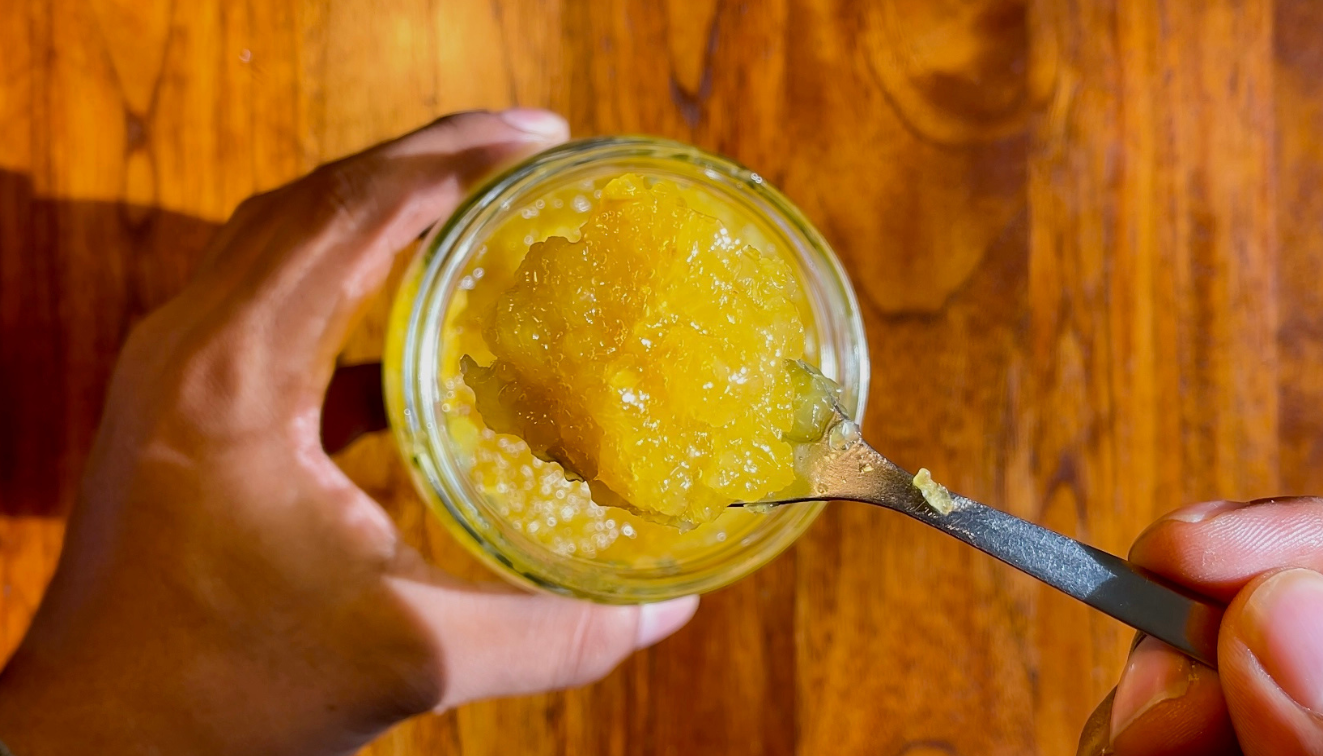
Pineapple, known scientifically as Ananas comosus, has a rich history dating back to the indigenous peoples of South America, particularly in the region that is now modern-day Brazil and Paraguay. The fruit was later spread to the Caribbean by the Carib tribes, where it became highly prized by European explorers. When Christopher Columbus encountered the fruit during his travels in 1493, he took it back to Europe, where it quickly gained popularity due to its sweetness and exotic appearance.
Pineapple preserves, a method of extending the fruit’s shelf life, likely developed in the tropical regions where the fruit thrived. The process of making preserves spread with the fruit itself as it traveled around the world. In the 17th and 18th centuries, preserving pineapple became a way to enjoy its taste year-round, particularly in areas where fresh pineapples were a luxury.
This pineapple preserve recipe offers a delightful way to enjoy the tropical flavors year-round. Whether spread on toast, used as a filling for pastries, or paired with savory dishes, it brings a touch of historical culinary tradition to your table.
What you will need:
| Ingredient | Measure |
| Fresh and Ripe Pineapple | 400-500g |
| Caster Sugar | 80-100g |
| Crystalline Citric Acid | 1/2 – 1 tsp |
| Pectin Powder (Optional) | 1-2% |

Time Required
Active Preparation: 15 minutes
Cooking Time: 20-30 minutes
Total Time: Approximately 45-50 minutes
Nutrition Profile
Pineapple is rich in vitamins, particularly Vitamin C, and contains manganese, dietary fiber, and bromelain, an enzyme that aids digestion. However, when preserved with sugar, its nutritional profile changes:
Energy: ~ 1000-1200 kJ per 100 grams
Carbohydrates: ~ 60-70 grams (mostly from added sugar)
Sugars: ~ 50-60 grams
Dietary Fiber: ~ 1-2 grams
Vitamin C: 10-15 mg
Manganese: 1-2 mg
Equipments:
- Heavy-bottomed Sauce pan
- Stirring spoon or spatula
- Sterilized jars and lids
- Ladle
- Water bath canner or large pot for boiling water bath
- Measuring scale and spoons
Instructions:
Prepare the Pineapple:
- Cut the peeled and cored pineapple into small, uniform pieces.
- Using a food processor turn the pineapple into coarse blend. This ensures even cooking and a consistent texture.

Preparing the Sugar:
- Add the sugar along with small amount of water.
- Over medium heat, stir the mixture until the sugar has dissolved completely.
- Add the citric acid and increase the heat to medium-high and bring the mixture to a boil, stirring frequently.

Cooking the Preserve:
- Add the pineapple and mix well.
- Once boiling, reduce the heat to medium-low and pectin powder at this step (if using).
- let the mixture simmer for 10-15 minutes, stirring occasionally. The preserve should thicken as it cooks.

Canning the Preserve:
- Sterilise your jars and lids by boiling them in water for 10 minutes.
- Carefully remove and let them air dry on a clean towel.
- Ladle the hot preserve into the sterilised jars, leaving about 1 cm of headspace at the top.
- Wipe the rims of the jars with a clean, damp cloth and place the lids on top.
- Screw on the bands until fingertip-tight.
- Process the jars in a boiling water bath for 10 minutes to ensure a proper seal.
- Remove the jars from the water bath and let them cool completely.
- Check the seals after 24 hours. If the lid pops when pressed, the jar is not sealed and should be refrigerated and used within a few weeks.

Use as a topping for pancakes, waffles, or yogurt.
Incorporate into desserts such as cakes, tarts, or ice cream.
Mix into oatmeal or porridge for a fruity twist.
Serve with cheese and crackers for a sweet-savory combination.
My Tips:
- Use a thermometer to ensure the mixture has reached 105°C, the gelling point for preserves. You can also do a plate test by placing a small amount on a cold plate and seeing if it sets.
- Use ripe but firm pineapples for the best balance of sweetness and acidity.
- Experiment with adding other spices such as star anise or cloves, or mix in other berries like raspberries or blackberries for a unique flavour profile.
- Adjust the amount of sugar to your taste. Using less sugar will result in a looser preserve, while more sugar will create a firmer set.
- Substitute citric acid with lime juice or a combination of citrus juices for a different flavor profile.
- Use honey, maple syrup, or agave nectar as a natural sweetener. Note that these may alter the flavour and consistency slightly.
Troubleshooting Guide:
Preserve is too runny
If your preserve is too runny, it may not have been cooked long enough. Return it to the pot and continue cooking until it reaches the correct consistency.
Crystallisation
If the sugar crystallizes, it might be due to undissolved sugar granules. Don’t skip adding the acid to prevent the sugar from crystallising. Stir continuously and ensure all sugar is dissolved before bringing the mixture to a boil.
Don’t forget to share your results and tag @bake.hows on instagram
