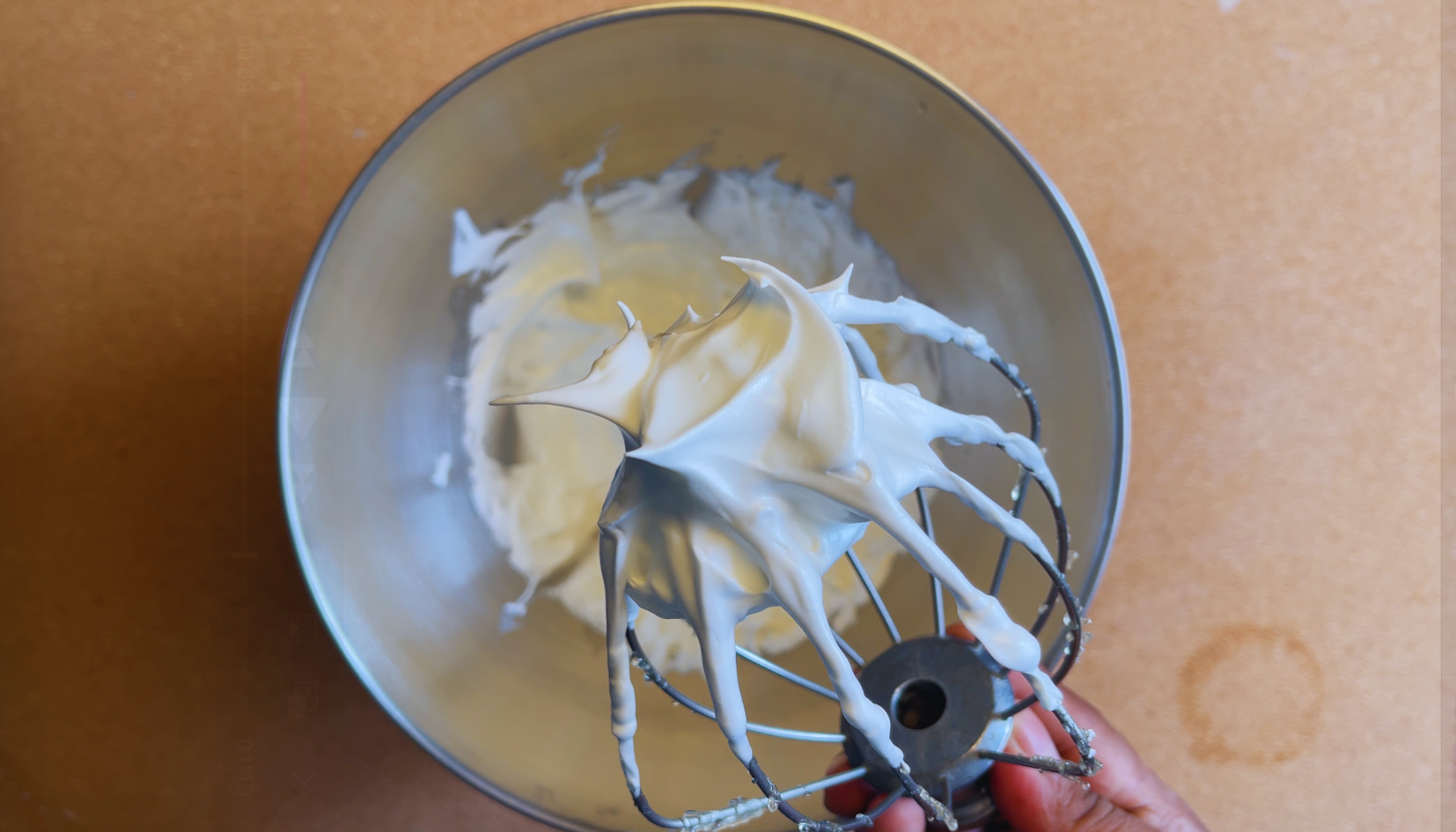
Italian meringue is the most stable and versatile of all meringue types. It’s made by whisking egg whites while slowly incorporating a hot sugar syrup, which cooks the whites during the mixing process. This cooked meringue is glossy, firm, and has a denser texture compared to French meringue.
This type of meringue may have been developed by Italian pastry chefs seeking a meringue that wouldn’t weep or collapse easily, even in more humid conditions or over time. This makes sense given that Italian cuisine was pioneering sugar-based confections like nougat and torrone, which also rely on cooked sugar syrups.
Note: Italian meringue is commonly used in pastry creams, mousses, buttercreams, or as a topping for pies like lemon meringue, where it doesn’t need further baking. It’s also the go-to meringue for making macarons due to its stability.
You will need:
| Ingredient | Measure |
| Egg White | 50g |
| Superfine Sugar | 50g |
| Water | 30g |
| Cream of Tartar (Optional) | 1/8 tsp |
| Vanilla (Optional) | 1-2g |

What is or are the USP of this technique?
Italian meringue lies in its unmatched stability and versatility. The meringue is stabilized by the incorporation of hot sugar syrup, which cooks the egg whites slightly during the whipping process. This results in a firm, glossy meringue that is more stable than both French and Swiss meringues. It can hold its shape for longer periods and doesn’t deflate.
The added cooking process makes it safer to consume raw compared to French meringue, as the hot syrup effectively pasteurizes the egg whites.
Preparation Time :
Prep Time: 15 minutes
Cooking Time: 5-7 minutes for sugar syrup preparation
Total Time: 20 minutes
Equipments:
- Weighing Scale
- Mixing bowl (if whipping manually by hand)
- Balloon Whisk (if whipping manually by hand)
- Hand mixer or A stand mixer with a whisk attachment
- Rubber spatula
- Sauce pan (for making sugar syrup)
- Candy thermometer
- Sieve (optional)
Instructions:
Prepare the equipment and ingredients:
- Ensure your bowl and whisk are immaculately clean.
- Separate the egg whites from the yolks carefully, ensuring no yolk contaminates the whites.
- Let the egg whites sit at room temperature for 30 minutes before whipping, as room temperature egg whites whip to greater volume.
Science Corner
Italian meringue is stabilized through the cooking of the sugar syrup, which essentially “pasteurizes” the egg whites while whipping. The heat from the syrup denatures the proteins in the egg whites, causing them to coagulate slightly and trap air more effectively. This makes the meringue denser, glossier, and much more resilient than its French counterpart. The cooked sugar syrup adds structure, preventing the meringue from deflating over time.

Make the sugar syrup:
- In a small heavy-bottomed saucepan, combine the sugar and water.
- Stir briefly to combine but avoid stirring after the sugar begins to dissolve to prevent crystallization.
- Heat the mixture over medium-high heat, using a candy thermometer to monitor the temperature.
- When it reaches 115–120°C, it’s ready to incorporate into the egg whites. (This is the “soft-ball stage” in sugar cooking.)

Whip the egg whites:
- Place the egg whites in your mixing bowl or stand mixer bowl. Start whisking them on low speed (if using stand mixer, start at 4) until they become foamy. Add a pinch of cream of tartar (optional) at this stage to stabilize the whites.
- Once the sugar syrup reaches temperature, increase the mixer speed to medium and begin pouring the syrup in a slow, steady stream down the side of the bowl (not directly onto the whisk to avoid splattering or scorching).

- After all the syrup is added, increase the mixer speed to high and whip the meringue until it cools down to room temperature. This process should take 5-7 minutes.
- Continue whisking on medium speed until the whites reach soft peak stage and then until the meringue reaches stiff, glossy peaks.
- Try to mix the meringue with the whisk, if you feel resistance, it is done.
- You can also pick the whisk up and see the peaks. They will hold no matter how thin.
- Avoid overwhipping, which will cause the meringue to look dry and curdled. The goal is a glossy, stiff foam that holds its shape.

My tips:
- Stainless steel or glass bowls are best choice; avoid plastic as it retains grease. Copper bowls are the best for making meringue as Copper ions stabilize the egg white proteins.
- Acidity helps in stabilising meringue, which is why you can use cream of tartar to lowers the pH of the egg whites, stabilizing the proteins and helping the meringue retain its structure.
- You can also wipe your whisking bowl and whisk with vinegar to remove any grease and prevent the meringue from deflating.
- Make sure the egg white is at room temperature before whisking it.
- Ensure there is no trace of egg yolks left in the egg white. Any trace of fat will not let the whites whip.
- Any trace of grease or fat will prevent the egg whites from whipping to stiff peaks.
- Make sure to add the syrup slowly and in a thin stream to avoid cooking the egg whites too quickly, which can cause lumps.
- The syrup must be added quickly once it reaches the temperature as it starts to cool once off the flame. If not added sooner, it will cool and not pour.
Troubleshooting Guide:
Meringue deflates after incorporating the syrup:
This could be due to adding the syrup too quickly or at the wrong temperature. Always pour the syrup in a thin, steady stream and ensure it is between 115-120°C.
Grainy Texture
Sugar may have crystallized during syrup preparation. To avoid this, use a pastry brush dipped in water to wash down any sugar crystals on the sides of the saucepan as the sugar heats.
Sticky or Runny Meringue
If the meringue turns out too soft or runny, it may be under-whipped or the sugar syrup was not heated enough. Ensure that the sugar syrup reaches the soft-ball stage (115–120°C) and that the meringue is whipped until stiff.
Meringue won’t reach stiff peak
This can happen if there’s fat or grease in the bowl or on the whisk. Make sure all equipment is thoroughly cleaned and free from any fat, including egg yolk.
Applications:
Buttercream base: Whisk softened butter into the cooled Italian meringue to create a luxurious, smooth buttercream ideal for cakes and cupcakes.
Pie topping: Use it as a topping for pies like lemon meringue or key lime pie. Toast the peaks with a blowtorch for a professional finish.
Macaron batter: Fold Italian meringue into almond flour and powdered sugar to make stable, reliable macaron shells.
Nougat: Incorporate nuts, dried fruits, and honey into Italian meringue to make nougat.
Baked Alaska: Coat a frozen cake and ice cream with Italian meringue and torch or bake briefly to achieve a caramelized crust.
Mousse or soufflé: Fold the Italian meringue into a flavored base (such as chocolate or fruit puree) for a light and airy mousse or chilled soufflé.
In the pastry world, Italian meringue holds a place of great importance due to its exceptional stability and versatility. It is the go-to meringue for many advanced pastry techniques, playing a foundational role in both classic and modern desserts.
Don’t forget to tag @namak.swadanusar on instagram with your results.
