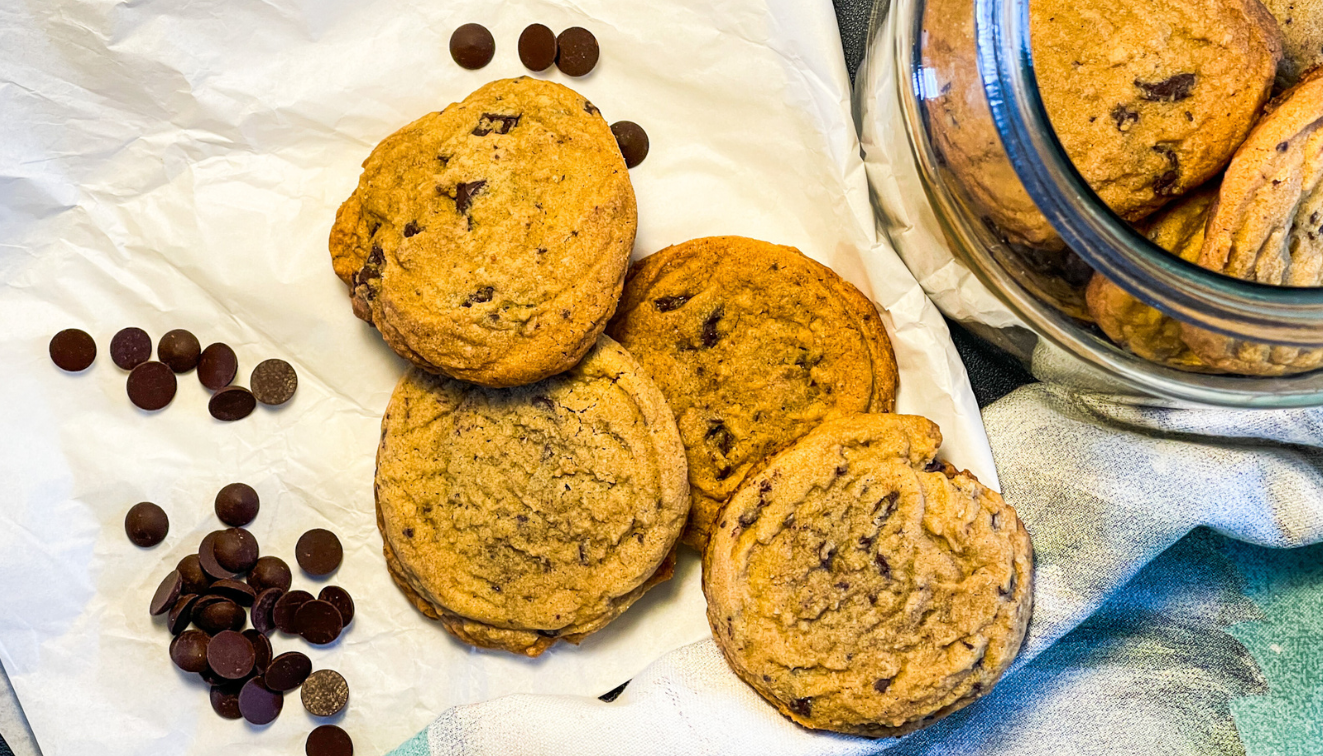
Chocochip cookies originated in the United States in the late 1930s when Ruth Wakefield of the Toll House Inn in Massachusetts accidentally invented the beloved treat. Initially called “Toll House Chocolate Crunch Cookies,” these cookies gained widespread popularity during World War II when soldiers shared them overseas.
Today, chocochip cookies are a cornerstone of dessert menus worldwide, offering a nostalgic indulgence that blends crunchy, chewy textures with the rich, melty allure of chocolate.
Chocochip cookies embody versatility and comfort. Their ability to suit diverse tastes makes them a staple in bakeries, cafés, and home kitchens worldwide. Techniques like creaming butter and sugar or folding flour are foundational in pastry arts, ensuring the recipe has educational as well as indulgent value.
What you will need:
| Ingredient | Measure |
| Unsalted Butter (Softened) | 150g |
| Pastry Flour (6-8 % protein) | 200g |
| Superfine sugar (White) | 50g |
| Brown Sugar | 160g |
| Baking soda | 2g |
| Kosher or table salt | 4g |
| Eggs | 44g |
| Vanilla essence | 4-7g |
| Corn Flour | 20g |
| Chopped Chocolate (70% dark) | 100-130g |

Time Required
Preparation time – 15 minutes
Chilling time – 8 hours (Overnight, recommended)
Baking time – 15 minutes
Cooling time – 10 minutes
Nutrition Profile / 100g
Calories: 460 kcal
Protein: 5.5 g
Fat: 24 g
Saturated Fat: 15 g
Carbohydrates: 55 g
Sugars: 36 g
Fiber: 1.5 g
Sodium: 250 mg
Equipments:
- Stand mixer or electric hand mixer
- Mixing bowls: At least two of medium size
- Digital kitchen scale and Measuring spoons
- Silicone spatula or wooden spoon for folding
- Baking trays: Flat, rimmed trays lined with parchment paper or silicone baking mats
- Wire cooling rack (if available)
- Sieve
- Ice cream scooper or a tablespoon
Instructions:
Prepare the Butter and Sugars – Creaming Method
- In a mixing bowl, cream the softened butter, caster sugar, and brown sugar until the mixture is pale, fluffy, and well-aerated (3-5 minutes on medium speed).
- This step ensures the cookies will have a good balance of chewiness and crispness.
- Scrape down the sides of the bowl with a spatula to incorporate evenly.

Fun Fact
The original recipe’s accidental invention stemmed from Ruth Wakefield running out of baker’s chocolate. She chopped up a Nestlé bar expecting it to melt evenly—it didn’t, giving us the gooey chocolate pockets we know today!

Add Wet Ingredients
- Add the egg and vanilla extract to the creamed mixture.
- Beat until fully combined and smooth.
- Avoid over mixing here; you only want the ingredients to emulsify.
Incorporate Dry Ingredients
- Sift the all-purpose flour, cornflour, baking soda, and salt into another bowl.
- Sifting ensures an even texture and aerates the flour for better blending.
- Gradually fold the dry ingredients into the wet mixture using a spatula or by a stand mixer.
- Do not overmix—just combine until no streaks of flour remain.

Add the Chocolate Chunks
- Fold in the chocolate chunks evenly.
- Ensure they are distributed well for consistent bites.
- For chunkier cookies, reserve some chunks to place on top of each cookie dough ball before baking.

Chill the Dough (Optional but Ideal)
- Cover the dough with cling film and chill it in the refrigerator for at least 8 hours.
- Chilling solidifies the fat and allows the flour to hydrate, resulting in a thicker cookie with a better flavor.
Shape and Bake
- Preheat your oven to 160°C (fan-forced).
- Line baking trays with parchment paper.
- Using a cookie scoop or your hands, portion the dough into 25-30g balls.
- Place them 5 cm apart to allow for spreading.
- Bake for 10-15 minutes or until the edges are golden and the centers appear slightly underdone.
- Remove the cookies from the oven and allow them to cool on the baking tray for 5 minutes. Transfer to a wire rack to cool completely.

Serving suggestions
Serve warm with a scoop of vanilla ice cream.
Accompany with a hot cup of coffee or a glass of chilled milk.
Drizzle melted chocolate over the cookies for added visual appeal and decadence.

Variations
Nutty Delight: Add 50g of chopped pecans, walnuts, or hazelnuts for a nutty crunch.
Spiced Cookies: Mix in 1 teaspoon of cinnamon or a pinch of nutmeg for a warm, spiced twist.
Double Chocolate: Replace 20g of flour with cocoa powder and use white chocolate chunks for a rich, chocolaty variation.
My Tips:
- Mixing method: Mixing the sugar and butter using the creaming method is crucial for the best result.
- Ingredient Temperature: Use room-temperature butter and eggs for easier mixing and optimal texture.
- Sugar Balance: Caster sugar promotes crispness, while brown sugar adds moisture and chewiness. Adjust ratios slightly to tweak texture.
- Chocolate Selection: Use high-quality chocolate chunks instead of chips for better melting and richer flavor.
- Texture Adjustment: For thinner cookies, skip chilling the dough. For thicker cookies, chill for longer (up to 24 hours).
- Salt Boost: Sprinkle a pinch of flaky sea salt on top of cookies post-baking for a sophisticated flavor boost.
Troubleshooting Guide:
Cookies Spread Too Much
Dough was too warm; always chill.
Incorrect butter-to-flour ratio; weigh ingredients precisely.
Dry or Crumbly Cookies
Overmixing develops gluten, leading to toughness.
Insufficient butter; double-check your measurements.
Burnt Edges, Raw Centers
Oven temperature is too high. Use an oven thermometer to ensure accuracy.
Bake smaller batches to avoid uneven heat distribution.
Flat Cookies
Old or inactive baking soda; replace every 6 months.
Dough wasn’t chilled; always cool before baking.
Cakey Cookies
A classic case of over mixing. Avoid over mixing and use low protein flour to reduce gluten development.
Don’t forget to share your results and tag @bake.hows on instagram
