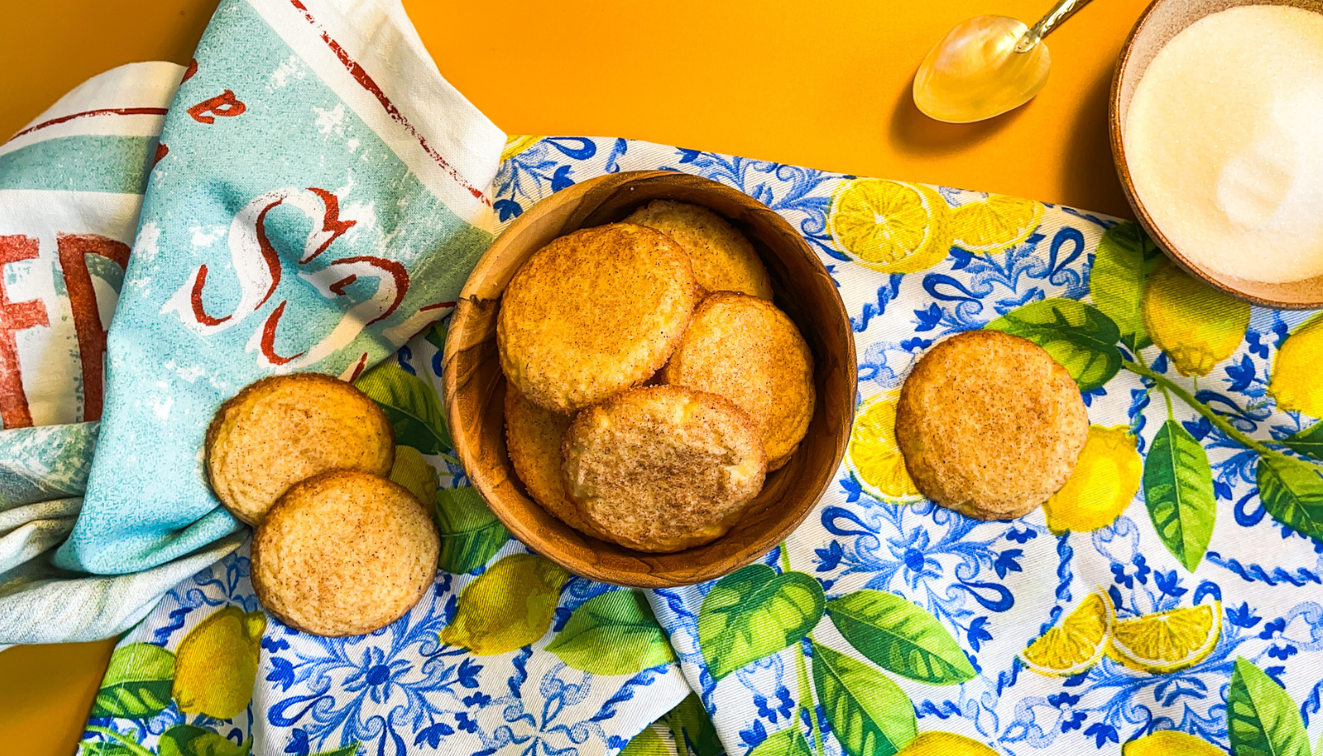
Snickerdoodles are a quintessential cookie with roots tracing back to German and Dutch baking traditions. The name likely stems from the German word “Schneckennudeln,” a cinnamon-laced pastry resembling modern cinnamon rolls.
Introduced to America through immigrants in the late 18th and 19th centuries, Snickerdoodles became popular in New England, where recipes often varied between regions.
Distinguished by their crackled surface and sweet cinnamon-sugar coating, Snickerdoodles are cherished for their tangy flavor derived from baking powder or cream of tartar. Today, these cookies symbolize comfort baking, offering a timeless treat for all ages.
The recipe gained widespread popularity in the 1890s, featured in newspapers and cookbooks of the time. These cookies are often compared to sugar cookies but stand out due to their cinnamon coating and slightly tangy flavor.
What you will need:
| Ingredient | Measure |
| Unsalted butter (Softened) | 113g |
| Bread Flour (High protein) | 150g |
| Superfine sugar (White) | 120g |
| Baking powder | 1.5g |
| Kosher or table salt | 1.2g |
| Eggs | 33g |
| Vanilla essence | 3.75g |
| Cinnamon Powder | 4g |
| Caster Sugar | 66g |

Time Required
Preparation time – 15 minutes
Chilling time – 1 hour
Baking time – 10-12 minutes
Cooling time – 10 minutes
Nutrition Profile / 100g
Energy: 457 kcal
Protein: 5.9 g
Fat: 21.1 g
Saturated Fat: 13.3 g
Carbohydrates: 60.5 g
Sugars: 28.2 g
Fiber: 0.9 g
Sodium: 136 mg
Equipments:
- Stand mixer or handheld electric mixer
- Large mixing bowls (2)
- Digital kitchen scale and measuring spoon
- Rubber spatula or wooden spoon
- Baking trays
- Parchment paper or silicone baking mat
- Cooling racks (if available)
- Small mixing bowl (for cinnamon-sugar mixture)
- Cling film
- Knife
Instructions:
Prepare the Butter and Sugars – Creaming Method
- In a mixing bowl, cream the softened butter and sugar until the mixture is pale, fluffy, and well-aerated (3-5 minutes on medium speed).
- This step ensures the cookies will have a good balance of chewiness and crispness.
- Scrape down the sides of the bowl with a spatula to incorporate evenly.

Add Wet Ingredients
- Add the egg and vanilla extract to the creamed mixture.
- Beat until fully combined and smooth.
- Avoid over mixing here; you only want the ingredients to emulsify.

Incorporate Dry Ingredients
- Sift the all-purpose flour, baking soda, and salt into another bowl.
- Sifting ensures an even texture and aerates the flour for better blending.
- Gradually fold the dry ingredients into the wet mixture using a spatula or by a stand mixer.
- Do not overmix—just combine until no streaks of flour remain.

Chill the Dough
- Cover the dough with cling film, roll dough into cylinders 1 1/2 inches (4 cm) thick in parchment.
- Refrigerate until firm for at least 2 hours.

Prepare the cinnamon sugar
- Sift the cinnamon powder and caster sugar through a fine mesh.

Shape and Bake
- Preheat your oven to 180°C (fan-forced).
- Cut into 2-oz (60-g) portions.
- Roll each piece into a ball and then roll in cinnamon sugar.
- Pan on parchment-lined sheets.
- Flatten with a weight dipped in cinnamon sugar.
- Bake for 10–12 minutes until the edges are set, and the tops crackle.
- Let cookies cool on the tray for 2–3 minutes.


Technique Corner – Molded Method
The molded method shapes cookie dough into uniform portions:
Chill Dough: Refrigerate if too soft, then roll into even cylinders (2–4 cm thick).
Cut & Portion: Slice into equal pieces and space 5 cm apart on baking sheets.
Shape & Flatten: Shape by hand if needed, roll in sugar, and flatten with a weight or fork.
Chill dough throughout if necessary for easier handling.

Serving suggestions
- Serve warm with a glass of chilled milk or hot coffee for a comforting treat.
- For an elegant presentation, stack the cookies on a plate, dust lightly with powdered sugar, and garnish with a cinnamon stick.
This Snickerdoodle recipe is a masterclass in classic cookie baking, blending nostalgia with professional techniques. Whether you’re a home baker or a chef, these cookies are a timeless treat adaptable for every palate!
My Tips:
- Chilling the Dough: Chill the dough to get the best results. This prevents excessive spreading during baking.
- Texture Control: For chewier cookies, substitute half the bread flour with all-purpose flour.
- Even Baking: Rotate trays halfway through baking to ensure even browning.
- Cinnamon Variation: Swap cinnamon for cardamom or pumpkin spice for a seasonal twist.
Troubleshooting Guide:
Cookies are too flat
Ensure proper butter consistency (softened but not melted). Overmixing can also lead to spreading.
Cookies are too puffy
Excess flour can hinder spreading. Weigh ingredients for precision.
Cracks missing
Bake at the correct temperature and roll generously in cinnamon-sugar for the signature crackle.
Don’t forget to share your results and tag @bake.hows on instagram
