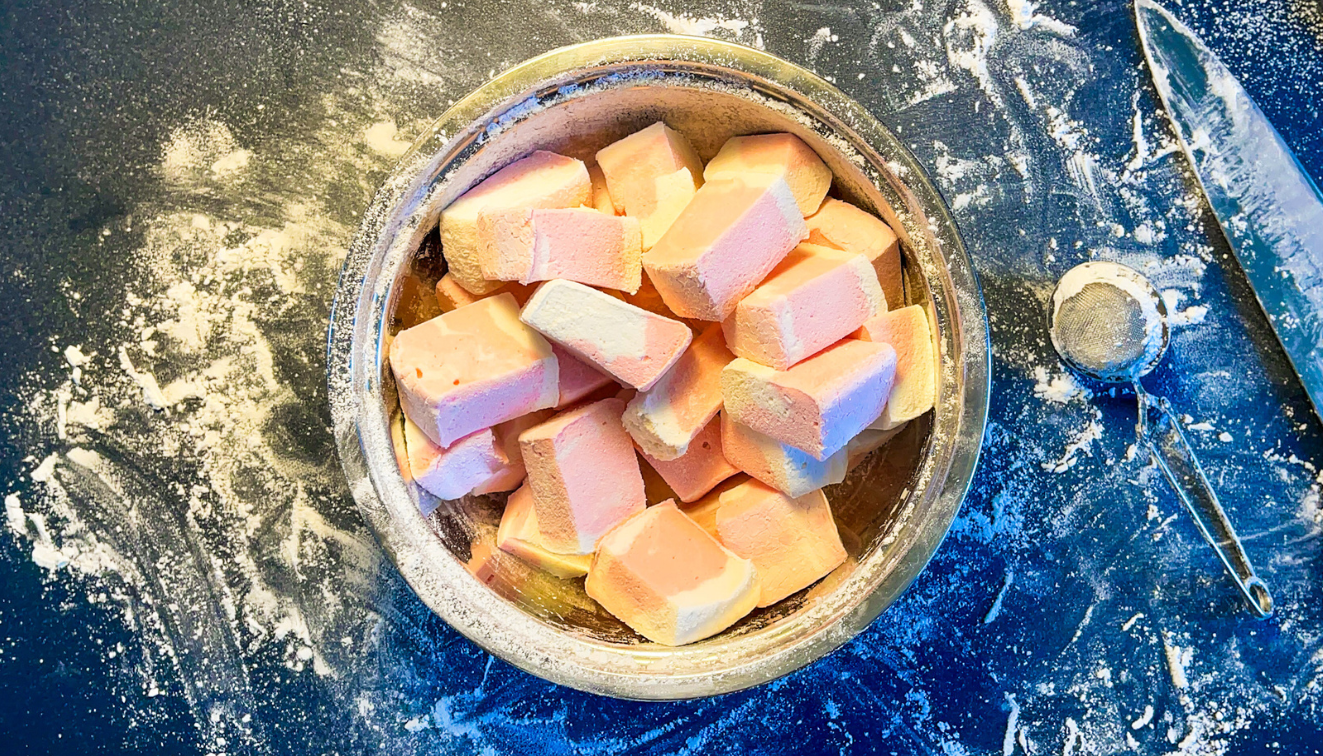
Marshmallows are a beloved confection with a rich history that dates back to ancient Egypt, where the sap of the mallow plant was combined with honey to make a chewy treat reserved for royalty and gods.
The modern marshmallow as we know it evolved in 19th-century France, where chefs used whipped egg whites, sugar, and mallow root to create a fluffy confection. In contemporary cuisine, marshmallows are made using gelatin for stability and are a staple in s’mores, hot chocolate, and desserts like rice crispy treats.
Marshmallows have become a symbol of comfort and celebration, finding their way into various culinary traditions and professional pastry settings. Their light, airy texture and sweet vanilla flavor make them versatile and a crowd favorite.
What you will need:

| Ingredient | Measure |
| Gelatin Powder | 22g |
| Water | 270g |
| Superfine sugar (W) | 450g |
| Kosher or table salt | 1/4 tsp |
| Vanilla essence | 2 tsp |
| Powdered sugar | 70g |
| Corn Starch | 30g |
Time Required
Preparation time – 30 minutes
Setting time – 4-6 hours or overnight
Nutrition Profile / 100g
Energy: 321 kcal
Protein: 3.4 g (from gelatin)
Carbohydrates: 78 g
Sugars: 71 g
Fat: 0.1 g
Fiber: 0 g
Sodium: 101 mg
Fun Facts
Marshmallows are one of the earliest candies to incorporate air as a key ingredient, making them pioneers in aerated confections.
In professional kitchens, marshmallows are used to stabilize mousses and add texture to plated desserts.
Equipments:
- Stand mixer with whisk attachment
- Medium saucepan
- Digital thermometer (for sugar syrup)
- Rubber spatula
- Mixing bowls
- Fine-mesh sieve
- Baking dish (20×30 cm) or tray
- Parchment paper
- Sifter
- Sharp knife or pizza cutter
Instructions:
Bloom the Gelatin
- Place the gelatin into a large bowl and pour 120 ml of cold water over it.
- Let it sit for 10 minutes to bloom fully, ensuring it absorbs all the liquid.

Prepare the Sugar Syrup
- In a medium saucepan, combine the sugar, rest of the water, and salt.
- Heat over medium heat, stirring gently until the sugar dissolves.
- Once dissolved, stop stirring and bring to a boil.
- Using a digital thermometer, heat the syrup to 115°C (soft-ball stage).
- Remove from heat immediately.


Mix the Gelatin and Syrup
- Slowly pour the hot syrup into the bloomed gelatin while the stand mixer runs on low speed to prevent splattering.
- Gradually increase the speed to high and whisk for 10–12 minutes until the mixture triples in volume, becoming thick, glossy, and white.
- In the final minute of whisking, add the vanilla extract.
- Do not over whip or it will turn dense. The final consistency would be thick, glossy slightly warm and will flow slowly.

Pour and Set
- Line a baking dish or tray with parchment paper and sift together the powdered sugar and cornstarch to lightly coat the surface.
- Pour the marshmallow mixture into the prepared dish, spreading it evenly with a rubber spatula.
- Dust the top with more of the powdered sugar-cornstarch mixture.
- Let the marshmallows set at room temperature for 4–6 hours or overnight.

Cut and Store
- Once set, turn the marshmallow slab onto a cutting board.
- Dust the surface and knife with the sugar-cornstarch mix to prevent sticking.
- Cut into desired shapes and toss the pieces in the remaining sugar-cornstarch mixture.

Serving Suggestions
- Classic: Serve marshmallows as a topping for hot cocoa.
- S’mores: Pair with graham crackers and chocolate for a classic campfire treat.
- Desserts: Use in layered desserts, rice crispy treats, or dipped in chocolate.
- Gourmet: Toast the marshmallows with a blowtorch for a caramelized surface.

My Tips:
- Temperature Control: Heating the syrup to exactly 115°C ensures the right consistency for marshmallows. Use a reliable digital thermometer.
- If the syrup exceeds 115°C, it can caramelize and create a firmer, less airy texture.
- Gelatin Blooming: Use cold water to bloom gelatin properly; hot water will dissolve it prematurely.
- Fluffing: Whip the mixture until glossy and stiff, but don’t overwhip, or it may become dense..
- The final consistency should be thick, glossy slightly warm and it should flow slowly.
- Flavor Variations: Experiment with almond extract, peppermint oil, or citrus zest for unique flavors.
- Must have ample amount of dusting sugar mixture handy to work with marshmallows.
Troubleshooting Guide:
Sticky Marshmallows
Ensure the sugar-cornstarch coating is evenly applied to all sides. Store in an airtight container with additional coating.
Runny Marshmallows
If the marshmallow mixture doesn’t set, the sugar syrup likely didn’t reach the correct temperature. Reheat and try again.
Dense Marshmallows
Under-whipping can cause dense marshmallows. Whip until the mixture holds stiff peaks.
Enjoy crafting these homemade marshmallows, and don’t hesitate to experiment with flavors, shapes, and applications to bring your creations to the next level!
Don’t forget to share your results and tag @bake.hows on instagram
