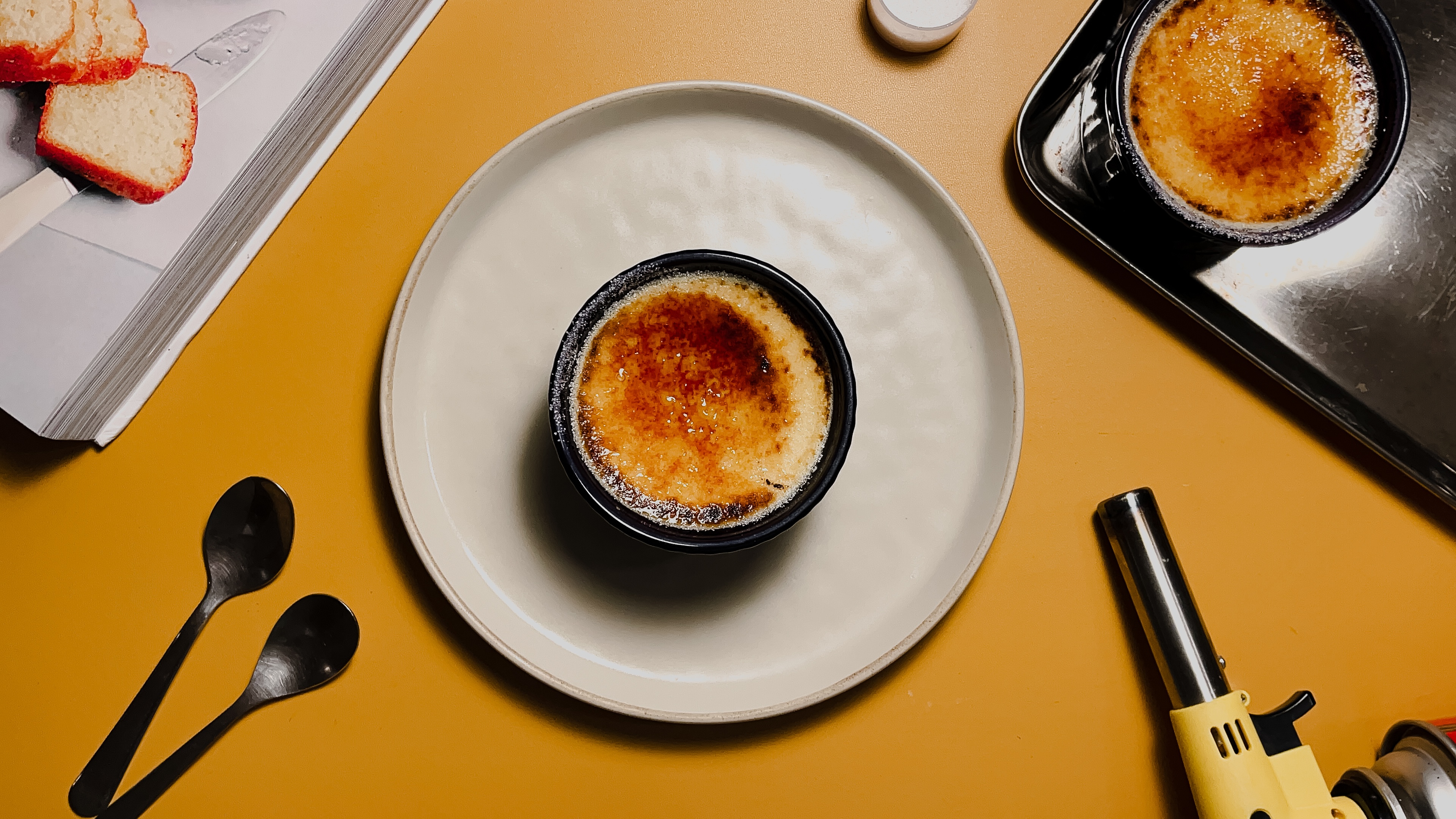
Crème Brûlée is a classic French dessert, characterized by its rich, creamy custard base and a thin layer of caramelized sugar on top. This elegant dish has a deep historical significance in French cuisine, believed to have originated in France, although some theories suggest influences from other European countries like Spain (Catalan cream) and England (Trinity cream). The dessert has been a symbol of French culinary finesse since the 17th century and is popular for its simple yet luxurious presentation.
The exact origin of crème brûlée is debated. The first known printed recipe dates back to 1691 in François Massialot’s “Le Cuisinier Royal et Bourgeois”. Massialot was a French chef serving at the court of Louis XIV. The name literally translates to “burnt cream,” referring to the caramelized sugar topping.
What you will need:

| Ingredient | Measure |
| Heavy Cream | 250g |
| Whole Milk | 90g |
| Egg Yolks | 70g |
| Superfine Sugar | 40g |
| Vanilla | 4g |
| Caster Sugar (For caramel top) | As needed |
Time Required
Prep Time: 15 minutes
Cooking Time: 30–40 minutes
Chilling Time: 4 hours (minimum)
Total Time: 4 hours 55 minutes
Nutrition Profile/100g
Calories ~318 kcal
Carbohydrates ~16g
Sugars ~15g
Protein ~5g
Fat ~27g
Saturated Fat ~15g
Cholesterol ~220mg
Sodium ~35mg
Equipments:
- Mixing bowls: 2
- Whisk or spatula
- Saucepan
- Oven-safe ramekins: 4 (each around 125-150 mL in capacity)
- Kitchen torch or oven broiler
- Baking tray
- Strainer
- Measuring cups and spoons
- Electric scale
Instructions:
Prepare the Custard Base:
- In a medium saucepan, heat heavy cream, milk, and vanilla over medium heat until steaming (around 70°C), but do not let it boil.
- In a separate bowl, whisk together egg yolks and sugar until pale and slightly thickened.


Temper the Egg Yolks:
- Slowly pour the hot cream mixture into the egg yolk mixture while whisking constantly.
- This prevents the eggs from scrambling.
- Strain the mixture through a fine-mesh sieve to remove any curdled bits and ensure a smooth custard.

Bake the Custard (Bain-Marie Method):
- Preheat the oven to 150°C (300°F).
- Place ramekins into a deep baking dish.
- Divide the custard mixture evenly among the ramekins.
- Pour hot water into the baking dish until it reaches halfway up the sides of the ramekins (this creates a water bath for gentle cooking).
- Bake for 30–40 minutes, or until the edges are set but the centers are slightly jiggly.
- Remove from the oven, cool to room temperature, then refrigerate for at least 4 hours (preferably overnight).

Caramelize the Sugar:
- Sprinkle 1 teaspoon of caster / granulated sugar over each chilled custard.
- Using a kitchen torch, melt and caramelize the sugar until it forms a golden, crisp layer.
- Allow the caramel to cool for 1 minute before serving.

Serving Suggestions
Classic: Serve as-is for a perfect contrast between the creamy custard and crisp caramel.
Garnished: Top with fresh berries or a sprig of mint for elegance.
Flavored Variations: Infuse the cream with coffee, citrus zest, or spices for unique twists.
Variations
Chocolate Crème Brûlée: Add 50g melted dark chocolate to the custard.
Espresso Crème Brûlée: Infuse the cream with 1 tbsp espresso powder.
Citrus Crème Brûlée: Add zest of one orange or lemon to the cream for a fresh twist.
My Tips:
- Do not overheat the cream: Keep it below boiling to prevent a grainy texture.
- Temper the yolks slowly: This prevents curdling and ensures a smooth custard.
- Use a fine-mesh strainer: This removes any lumps for the silkiest texture.
- Bake in a water bath (bain-marie): This ensures even cooking and prevents cracks.
- Caramelize the sugar just before serving: The crisp topping is best enjoyed fresh.

Troubleshooting Guide:
| Issue | Possible Cause | Solution |
|---|---|---|
| Custard is scrambled or lumpy | Added hot cream too quickly to yolks | Temper the eggs slowly, whisking constantly |
| Custard is too runny | Undercooked or not chilled enough | Bake longer until just set; chill for at least 4 hours |
| Custard has cracks | Oven temperature too high | Bake at a lower temperature (150°C) with a water bath |
| Sugar won’t caramelize | Using too much sugar or low heat | Use a thin layer of sugar and a high-heat torch |
Don’t forget to share your results and tag @bake.hows on instagram
