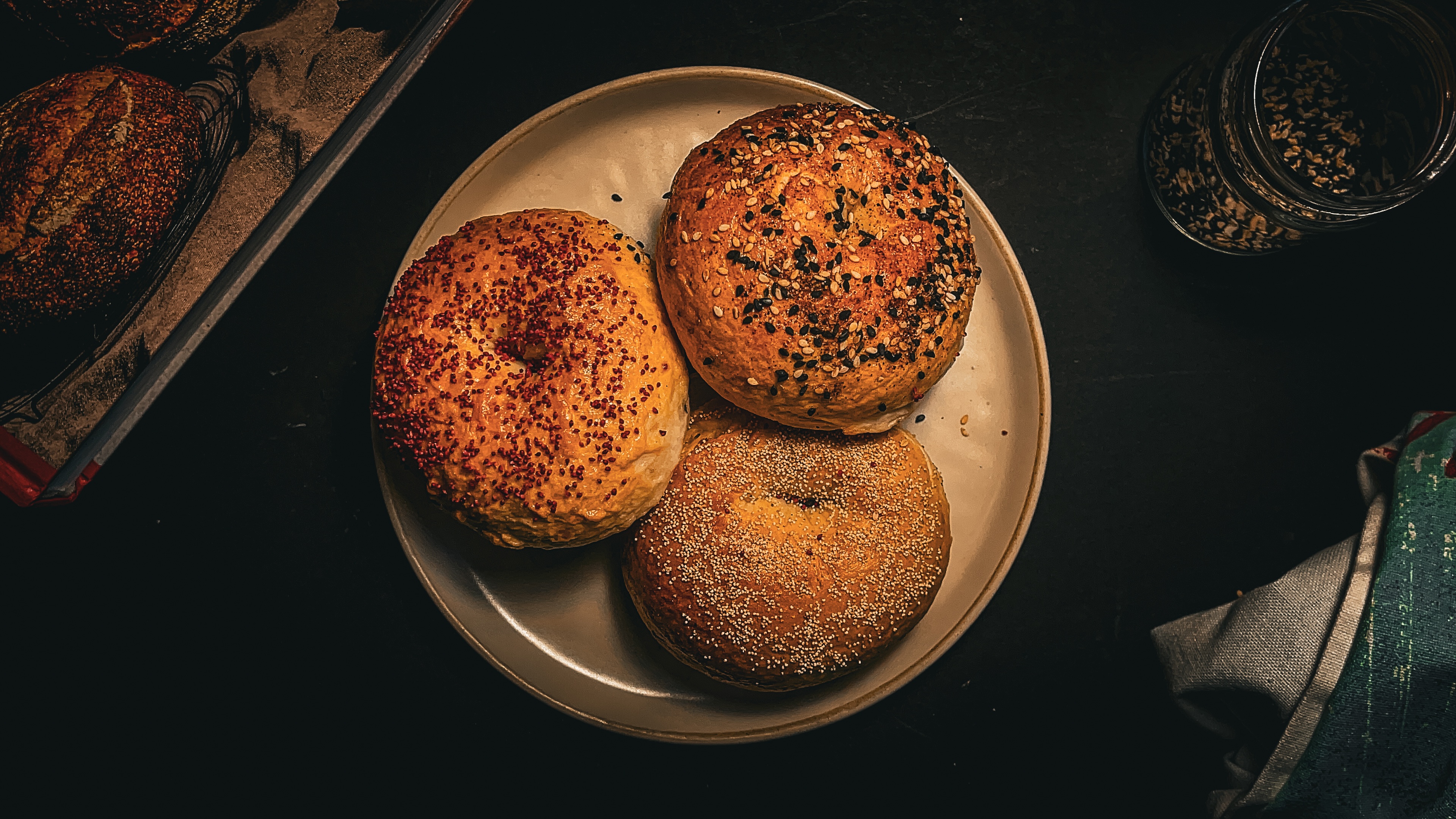
Bagels are a beloved staple, known for their chewy texture, golden crust, and slight sweetness. Originally from Jewish communities in Poland, bagels have spread worldwide, becoming a breakfast favorite. Their distinctive texture comes from boiling before baking, which gelatinizes the starches on the surface, creating a crispy crust.
In 17th-century Poland, anti-Semitic laws banned Jewish bakers from making bread—so they found a way around it by boiling the dough before baking, creating the bagel we know today!
The word “bagel” comes from the Yiddish word for “ring” or “bracelet”, and its distinct chewy texture sets it apart from other breads. Its round shape is believed to symbolize continuity, the cycle of life, and renewal.
What you will need:

Dough Ingredients
| Ingredient | Measure |
| Bread Flour (10% protein or more) | 500g |
| Water (Filtered, lukewarm) | 300 |
| Brown Sugar or Honey | 20g |
| Salt | 5 |
| Yeast | 5 |
Egg Wash
| Ingredient | Measure |
| Regular Cream | 10-20g |
| Whole Egg | 1 |
Bagel Mix
| Ingredient | Measure |
| White Sesame seeds | 10g |
| White Sesame seeds | 10g |
| Dried Garlic Flakes | 5g |
| Dried Ginger Flakes | 5g |
| Flaky Sea Salt | 5g |
| Poppy Seeds | 10g |
Time Required
Yeast Activation – 10 minutes
Autolyse Time – 10 minutes
Mix Time – 10 minutes
First Proofing – 50 minutes
Shaping time – 10 minutes
Second Proofing – 15-20 minutes
Boiling Time – 10 to 20 seconds each side
Baking time – 15-20 minutes (Until golden)
Resting time – 30 minutes
Nutrition Profile / 100g
Calories: ~255 kcal
Carbohydrates: ~50g
Sugars: ~5g
Protein: ~8g
Fat: ~3.5g
Saturated Fat: ~1.5g
Fiber: ~2g
Sodium: ~350mg
Equipments:
- Digital Scale
- Flour sifter
- Large mixing bowl
- Dough scraper
- Stand mixer with dough hook (optional)
- Clean kitchen towel or plastic wrap
- Baking sheet lined with parchment paper
- Large pot for boiling
- Slotted spoon
- Small bowl and brush for egg wash
- Clean bench Space
Instructions:
Prepare the Dough:
- Yeast Activation : In a mixing bowl, combine 1/3 of the total lukewarm water, yeast, small portion of the flour and sugar. Let sit for 5 minutes until the yeast activates and becomes foamy.
- Autolyse : Combine the remaining flour and rest of the water to the bowl. Mix light and let it sit.
- Combine the flour-water mixture to the activated yeast along with the salt and mix until a rough dough forms.

- Knead by hand for 10–12 minutes (or use a stand mixer with a dough hook on medium speed for 8 minutes) until the dough is smooth and elastic.
- Cover the dough with a damp towel.
- Let the dough rise at room temperature for 50 minutes, or until doubled in size.


Shaping the Bagels:
- Punch down the dough to release air and divide it into portions (about 120g each).
- Roll each piece into a smooth ball and let them rest under the damn towel.
- To shape the bagels, use one of these methods:

Bagel Shaping Techniques
Rope & Loop Method – Roll the dough into an 8–10 inch rope, overlap the ends, and roll to seal for a smooth ring.

Poke & Stretch Method – Shape the dough into a ball, poke a hole in the center, and stretch to 1.5–2 inches wide.

Roll & Seal Method – Roll into a rope, flatten one end, and fold it over the other to form a ring.


- Place shaped bagels on a baking sheet lined with parchment paper.
- Cover loosely with a towel and let them rise for 15-20 minutes.
Boil the Bagels:
- Bring a large pot of water to a boil and add 20g (per 500g of water) brown sugar (optional, for a shinier crust) and 1 tsp (per 500g of water) of baking soda.
- Drop bagels one at a time, boiling for 10 seconds or more per side.
- Remove with a slotted spoon and place them back on the baking sheet.

Bake the Bagels:
- In a small bowl, whisk together 1 egg and 10g heavy cream.
- Brush the tops of the boiled bagels with the egg wash.
- Sprinkle generously with the homemade bagel seasoning mix.
- Preheat oven to 220°C (430°F).
- Bake for 18–22 minutes or until golden brown and crisp.
- Let cool on a wire rack for 30 minutes before serving.


Variations
Beetroot Bagels: Replace 4-10% of the flour with beetroot powder for beetroot bagels.


Matcha Bagels: Add 10-15g matcha powder (per 500g) for matcha bagels.


Serving Suggestions
Classic: Spread with cream cheese, thinly sliced tomatoes, basil leaves and some pickled onion.
Breakfast Style: Slice and serve with scrambled eggs and avocado.
Sweet Version: Spread with honey butter or Nutella.
Bagel Seasoning
Combine 1 part black sesame, white sesame, poppy seeds, dried ginger flakes and dried garlic flakes with half part sea salt. Turn the dried ginger and garlic into a coarse powder before mixing. You can also add onion flakes.


My Tips:
- Bloom yeast with lukewarm water to activate it and maintain the right dough temperature for better proofing.
- Make a sponge with the yeast, sugar, water, and a portion of the flour to jumpstart yeast activation.
- Rest half-mixed dough for 10 minutes to allow the gluten to hydrate.
- Use brown sugar or honey for a richer, deeper flavor in your bagels.

Troubleshooting Guide:
| Issue | Possible Cause | Solution |
|---|---|---|
| Bagels are dense and heavy | Under-kneaded dough, insufficient proofing | Knead until smooth & elastic; ensure the dough rises until doubled |
| Bagels deflate after boiling | Over-proofing before boiling | Shorten second proofing time; bagels should be slightly puffy but not over-expanded |
| Cracked or uneven crust | Dough was too dry, not enough gluten development | Ensure proper hydration and knead well |
| Bagels lack shine | No egg wash applied | Always apply egg wash before baking |
| Soft or pale crust | Oven temperature too low | Bake at 220°C and ensure oven is fully preheated |
| Bagels are too tough | Boiled too long | Boil for only 30 seconds per side |
Don’t forget to share your results and tag @bake.hows on instagram
