What is the technique?
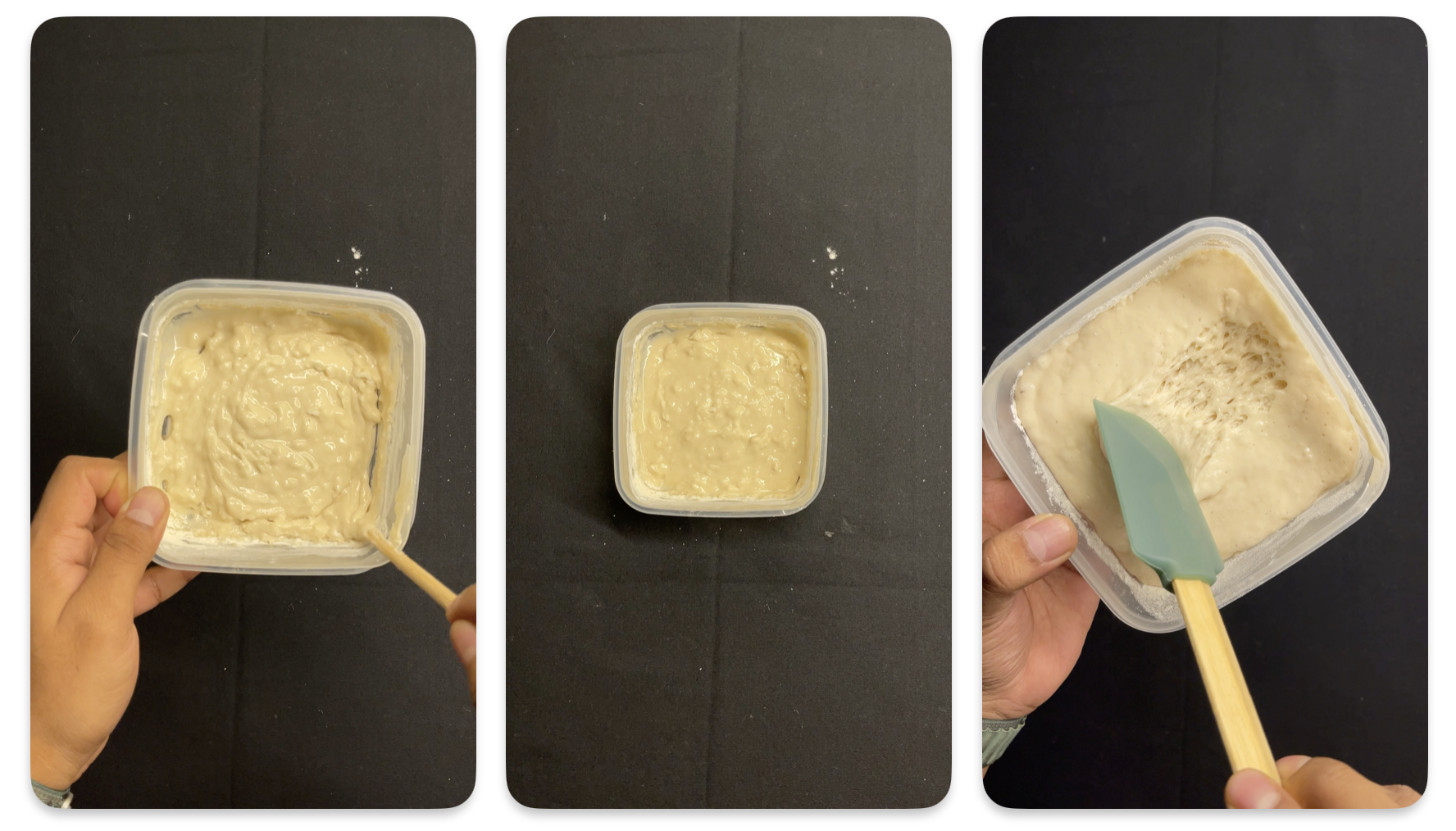
The Sponge Method, also known as a pre-ferment or indirect fermentation method, involves creating a preliminary dough (the “sponge”) from a portion of flour, water, and yeast. This is allowed to ferment for several hours before combining with the rest of the dough ingredients.
Used for centuries in both commercial and artisanal baking, the sponge method allows controlled yeast development, enhanced dough maturity, and exceptional flavor complexity.
Using a sponge helps achieve:
- More consistent fermentation, especially in variable kitchen environments.
- Open crumb and moist interior, perfect for pan breads and rustic loaves.
- Enhanced crust browning due to pre-developed sugars and acids.
It’s especially effective in soft sandwich breads, challah, focaccia, and country-style boules.
Science Corner
When yeast is given time in a high-moisture, starch-rich environment:
It multiplies rapidly, increasing leavening power.
Organic acids and alcohols form, contributing to flavor depth and aroma.
Glutenin and gliadin begin forming gluten bonds ahead of final mixing.
This advance fermentation creates a mature foundation for dough with superior texture, shelf life, and crust development.
What is or are the USP of this technique?
| Feature | Benefit | Best Used In |
|---|---|---|
| Time-buffered fermentation | Greater control and scheduling flexibility | Commercial bakery and home baking |
| Natural flavor development | Tangy, aromatic bread with longer shelf life | Pan loaves, rye blends, sourdough hybrids |
| Yeast activation | Shorter final proof times, better rise | Sweet or enriched doughs with butter/sugar |
Time Required: 30 minute or more at room temperature / Overnight in fridge
Instructions:
- Mix a sponge using a percentage of total flour (20-25 %), water (equal weight), sugar (if included in the recipe) and yeast.
- Ferment the sponge covered at room temperature for 30 minutes (if instant yeast) (or overnight in the fridge).
- Incorporate the sponge into final dough along with remaining ingredients.


Notes:
- Use a stiff sponge (60% hydration) for crusty loaves, and a loose sponge (100% hydration) for softer breads.
Troubleshooting Guide:
| Problem | Cause | Solution |
|---|---|---|
| Sour taste too strong | Over-fermented sponge | Reduce fermentation time or refrigerate it |
| Sponge not rising | Yeast inactive or too cold | Use fresh yeast; ferment in warmer place |
| Dense final loaf | Under-fermented sponge or weak mixing | Ensure sponge is bubbly before final mixing |
Don’t forget to share your results and tag @bake.hows on instagram
