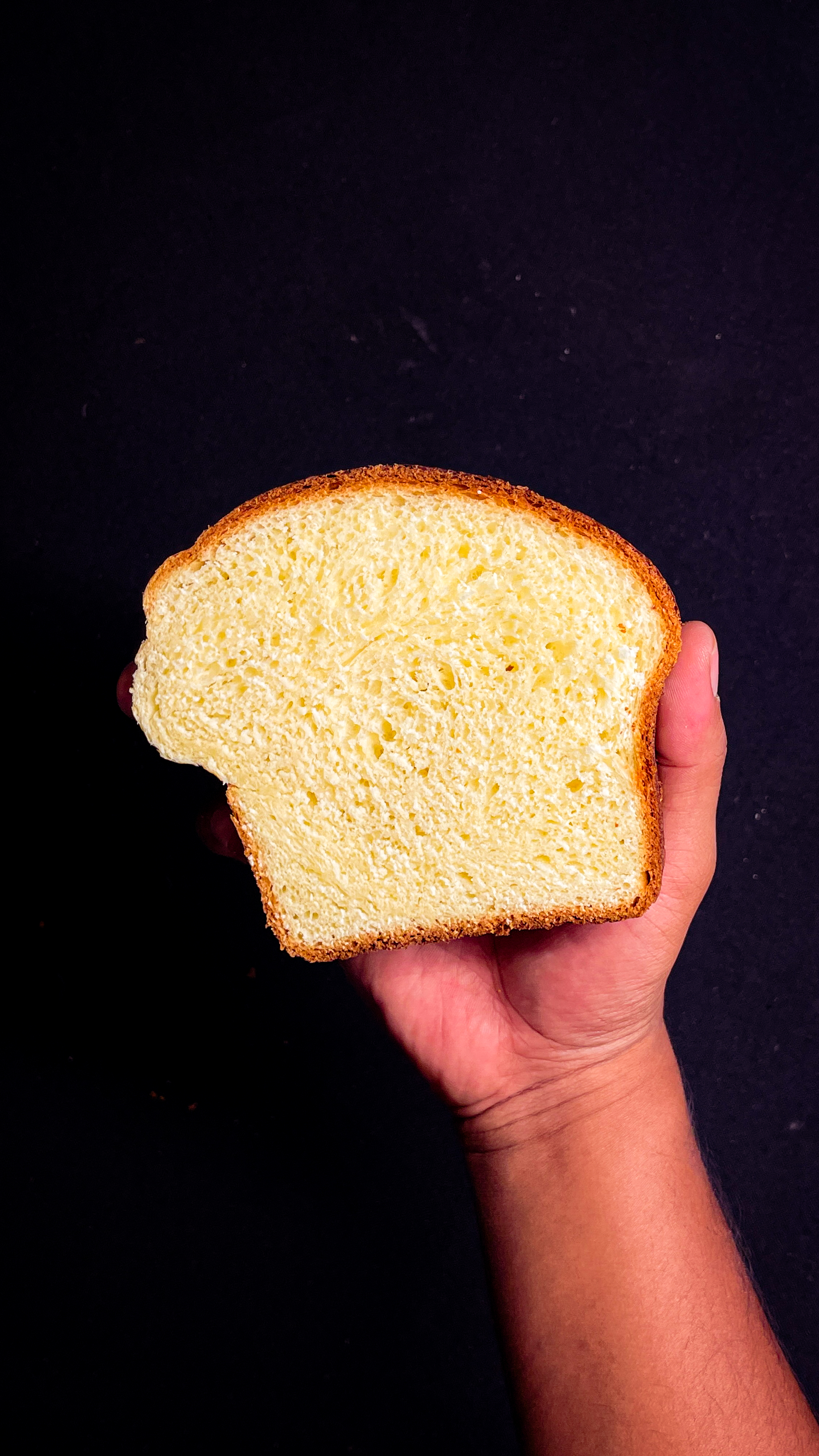
Basic Enriched Bread
Brioche is one of France’s most beloved breads — often described as “a pastry disguised as bread.” Its origins trace back to Normandy in the 15th century, where the region’s rich butter and dairy culture inspired the first enriched doughs. The earliest known written reference appears in 1404, and by the 17th century, brioche had evolved into the luxurious, egg- and butter-rich dough we recognize today.
Traditionally, brioche was made to celebrate special occasions — Easter, weddings, and religious feasts. Its unique texture bridges the worlds of bread and viennoiserie, sitting alongside croissants and pains au lait as the foundation of French baking education. In modern kitchens, it’s valued for its versatility — perfect for buns, loaves, and even desserts like brioche perdue (French toast).
What you will need:

| Ingredient | Measure |
| Bread Flour (T55) | 400g |
| Milk | 80g |
| Eggs | 150g |
| Salt | 8g |
| Sugar (Caster) | 50g |
| Yeast | 12g |
| Unsalted Butter | 150g |
Equipments:
- Digital kitchen scale
- Stand mixer with dough hook attachment
- Mixing bowls
- Dough scraper
- Plastic wrap or damp cloth
- Pastry brush (for egg wash)
- Loaf tin, brioche mold, or baking tray
- Digital thermometer (optional, for internal temp)
Time:
Preparation time : 15 minutes
Bulk Fermentation time : 1-2 Hours
Final Fermentation : 30-60 minutes
Baking time : 20-25 minutes
Instructions:
Prepare the Base Dough
- In a stand mixer bowl, combine the T55 flour, milk, eggs, yeast, sugar, and salt.
- Mix with a dough hook on low speed (2–3 minutes) until a rough mass forms.
- Then increase to medium speed (5–6 minutes) until the dough turns smooth and elastic.


Add Butter
- Brioche dough is high in fat, so proper gluten development at this stage is essential to create strength before adding butter.
- With the mixer on low, add softened butter piece by piece.
- Once incorporated, increase the speed again and knead for 10–12 minutes.
- The dough should become silky, shiny, and elastic — it should stretch into a thin windowpane without tearing.

First Proof (Bulk Fermentation)
- Transfer the dough into a lightly greased bowl. Cover with plastic wrap or a damp towel.
- Let rise for 30-60 minutes at room temperature (26–28°C) or until doubled in size.

Degas & Cold Rest
- Punch down gently to release gas.
- Shape as desired:
- Loaf: Roll into a tight oval and place in a loaf tin.
- Nanterre: Divide into 6 equal balls and place side-by-side in a loaf tin.
- Buns: Divide into 60g pieces and shape into smooth balls.
- Cover and proof at 28–30°C for 1½–2 hours, until doubled and pillowy.
- The dough should lightly spring back when touched — a sign it’s ready to bake.

Egg wash and Bake
- Preheat oven to 180°C.
- Brush gently with egg wash (1 egg + 1 tbsp milk) for a deep golden finish.
- Bake for 20–25 minutes, until the crust is burnished gold and the loaf sounds hollow when tapped.
- Internal temperature should reach 92–94°C.
- Cool on a wire rack before slicing.

Variations
Brioche Nanterre: Classic loaf shape made with 6 small domes.
Brioche à tête: Traditional fluted molds with a small “head” on top.
Chocolate Brioche: Fold in chopped dark chocolate before shaping.
Savory Brioche: Reduce sugar to 20g, add herbs or cheese.

Serving Suggestions
Toasted slices with butter and jam.
Base for French toast or bread pudding.
Brioche buns for gourmet burgers or sliders.
Filled versions: custard, praline, or fruit compote.

Nutrition Profile / 100g
| Nutrient | Approx. Value |
|---|---|
| Energy | 360 kcal |
| Protein | 9 g |
| Fat | 17 g |
| Saturated Fat | 10 g |
| Carbohydrates | 42 g |
| Sugars | 8 g |
| Fiber | 1 g |
| Sodium | 180 mg |
Note: These values are approximate and can vary based on the specific brands and types of ingredients used, as well as portion sizes.

Tips for Best Results:
- Flour Selection: T55 yields the authentic fine crumb of French brioche. If unavailable, mix 70% bread flour + 30% all-purpose flour.
- Ensure butter is soft, not melted — this emulsifies fat evenly without collapsing the gluten.
- Dough Temperature: Keep final dough below 26°C. Overheating will cause the butter to split from the dough.
- Overnight Rest: Cold fermentation = complex flavor + easier shaping.
Troubleshooting Guide:
| Problem | Likely Cause | Fix / Prevention |
|---|---|---|
| Dough is greasy or splits during mixing | Butter added too early or dough too warm | Develop gluten before adding butter. Keep dough ≤ 26°C. Chill briefly if greasy. |
| Dough too sticky to handle | Butter too soft / over-hydration | Chill 15 min, then knead again. Avoid adding excess flour. |
| Dough doesn’t rise well | Yeast inactive or dough over-cooled | Check yeast frothiness. Warm gently (not > 30°C) for next rise. |
| Crumb feels dense | Under-kneading or under-proofing | Knead till windowpane; ensure dough doubles before baking. |
| Butter leaks during baking | Overproofing or butter not emulsified | Watch proof closely — it should spring slowly, not collapse when poked. |
| Crust too pale | Oven temperature too low / single wash | Bake at full 180°C and apply two thin egg washes. |
| Crumb tastes yeasty | Overproofed or too much yeast | Use exact yeast weight and proof only till doubled. |
| Loaf collapses post-bake | Underbaked or over-rich dough structure | Bake till internal temp = 92–94°C and cool fully before unmolding. |

Don’t forget to share your results and tag @bake.hows on instagram
