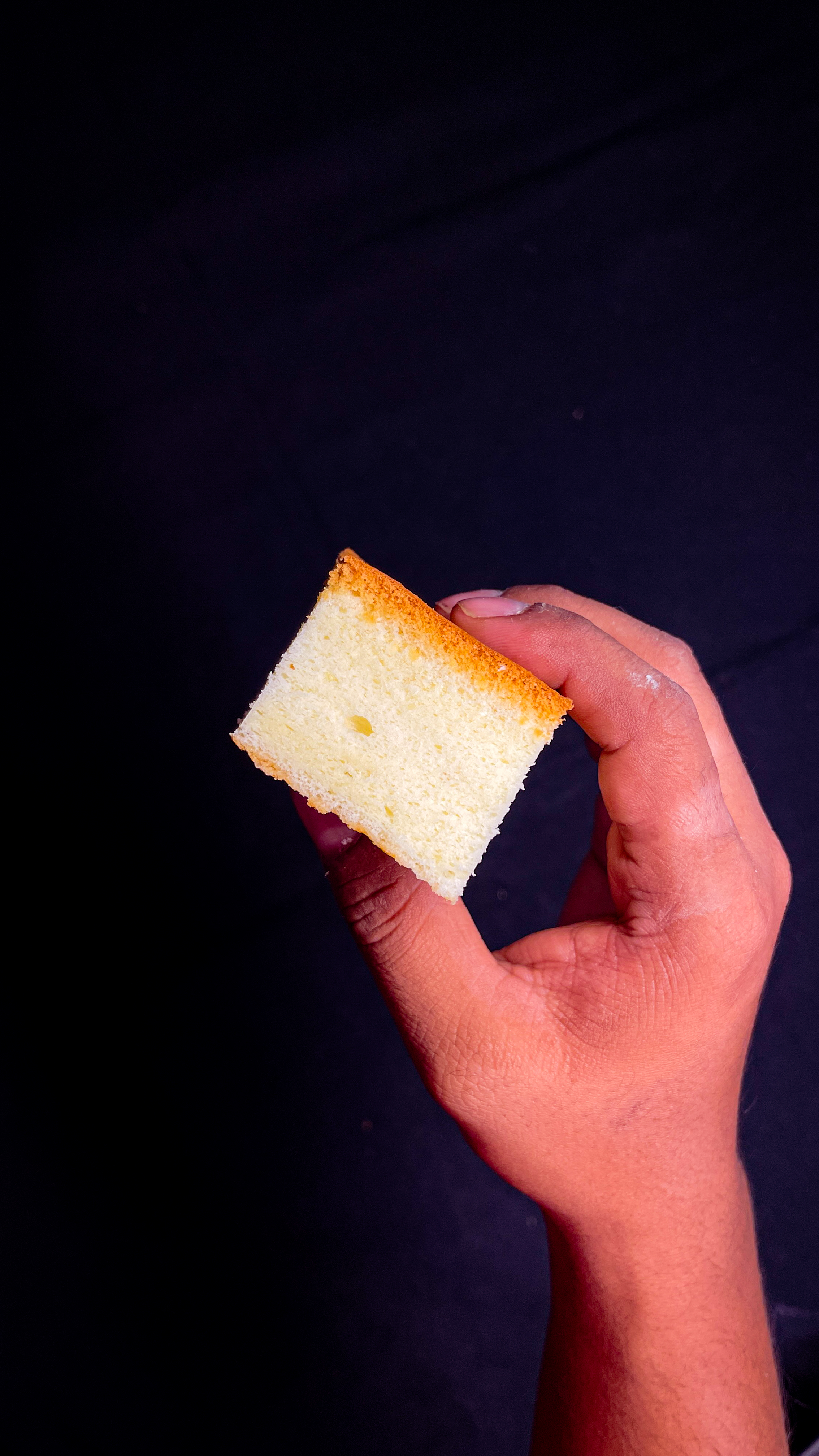
Taiwanese Cake
Delicate, airy, and incredibly moist, Taiwanese castella cake is a luxurious sponge cake that melts in your mouth with every bite. Unlike its Japanese counterpart, this version is less sweet, more custardy, and often made with a vegetable oil base for a tender, bouncy texture. Perfected through technique and patience, it’s a masterclass in minimalist baking.
Originating from Portuguese “Pão de Castela” (bread from Castile), castella made its way to Japan and then evolved further in Taiwan. The Taiwanese interpretation, popularized by bakeries like Le Castella, became known for its pillow-soft texture, subtle sweetness, and signature jiggle—a mesmerizing trait that delights pastry lovers worldwide.
Technique Corner – Taiwanese Castella is a type of chiffon cake, built on the same principle: whipped egg whites folded into a yolk-oil base to create a light, moist texture. Like all chiffon cakes, it combines the lift of a meringue with the tenderness of oil, yielding a soft, airy crumb without baking powder.
What you will need:

| Ingredient | Measure |
| Eggs (Whites and yolks separated) | 4 whole |
| Flour (Low Gluten) | 100g |
| Milk | 100g |
| Corn Starch | 5g |
| Salt | 1-2g |
| Sugar (Caster) | 80g |
| Vegetable Oil | 70g |
| Vanilla essence | 1g |
Equipments:
- Digital Scale
- Flour sifter
- 20×20×7 cm square cake pan (or equivalent volume)
- Stand mixer with whisk attachment
- Large mixing bowls (x2)
- Balloon whisk
- Sifter or fine mesh sieve
- Silicone spatula
- Baking thermometer (optional, for water bath)
- Roasting pan for water bath
- Parchment paper (to line base and sides)
- Cooling rack
Time:
Prep Time: 30 minutes
Baking Time: 65–75 minutes
Cooling Time: 1 hour
Instructions:
Prepare the Cake Base
- Preheat oven to 150°C (302°F). Line cake pan with parchment on all sides.
- In a bowl whisk egg yolks and warm milk.
- Add flour, corn starch, vanilla extract and mix to a smooth paste.
- Add oil and mix until the batter is glossy and smooth. Set aside.


Make the Meringue
- Whip egg whites with the sugar and salt to prepare a french merignue.
- Follow the instructions from this recipe.

Combine and Bake
- Incorporate the meringue:
- Add ⅓ of the meringue to the yolk batter and fold gently.
- Add remaining meringue in two batches, folding until no white streaks remain.
- Pour batter into lined pan. Tap gently to release air bubbles.

- Place cake pan into roasting pan. Add hot water (~70°C) halfway up the sides.
- Bake at 150°C for 60 minutes, then reduce to 140°C for 10–15 minutes until golden and fully set.
- Remove from water bath. Tap the pan lightly on the counter to prevent shrinking.
- Invert onto cooling rack and peel off parchment. Let cool completely.


Variations
Cheese Castella: Add a layer of cream cheese filling before baking for savory contrast.
Matcha Castella: Substitute 10g of cake flour with matcha powder; pair with red bean.
Brown Sugar Castella: Replace white sugar with Taiwanese muscovado for depth.
Lemon-Honey: Add lemon zest to yolk batter and drizzle with honey before serving.
Serving Suggestions
Slice into thick cubes and serve warm with fresh fruit.
Dust lightly with powdered sugar or brush with a glaze.
Pair with genmaicha, hojicha, or unsweetened soy milk for balance.

Further Application
Technique reuse: This yolk-paste + meringue method is ideal for chiffon cakes and soufflé pancakes.
Batter base: Use as a base for Swiss rolls with slight modification.
Layered desserts: Cut into cubes for layering in Asian-style trifles with taro or coconut cream.

Nutrition Profile / 100g
| Nutrient | Amount |
|---|---|
| Energy | 287 kcal |
| Protein | 5.6 g |
| Total Fat | 17.2 g |
| • Saturated Fat | 2.5 g |
| Carbohydrates | 27.1 g |
| • Sugars | 11.6 g |
| Fiber | 0.4 g |
| Sodium | 110–220 mg |
Note: These values are approximate and can vary based on the specific brands and types of ingredients used, as well as portion sizes.
Tips for Best Results:
- Use anodized aluminum pans without a non-stick coating to help the batter climb evenly and prevent collapsing.
- Use cake flour for maximum tenderness. Do not substitute with all-purpose.
- If using all purpose flour, add corn starch to turn it into cake flour.
- Keep oven and water bath temperatures stable to avoid cracking or collapsing.
- Soft peaks ensure proper rise; stiff peaks cause separation or dryness.
- Avoid overfolding the batter; fold just until incorporated.
- Let cool slowly to prevent drastic temperature shock.

Troubleshooting Guide:
| Issue | Possible Cause | Solution |
|---|---|---|
| Cake collapses after baking | Underbaked or overwhipped meringue | Check internal temp (should be ~95°C); whip to soft peaks only |
| Dense bottom layer | Poor folding or batter separation | Fold evenly and gently to avoid deflation |
| Cracked top | Oven too hot | Bake at controlled lower temperature |
| Rubbery texture | Overmixed batter or too much liquid | Measure precisely and fold gently |
| Pale color | Underbaking or low oven temperature | Extend bake time slightly or use oven thermometer |

Don’t forget to share your results and tag @bake.hows on instagram
