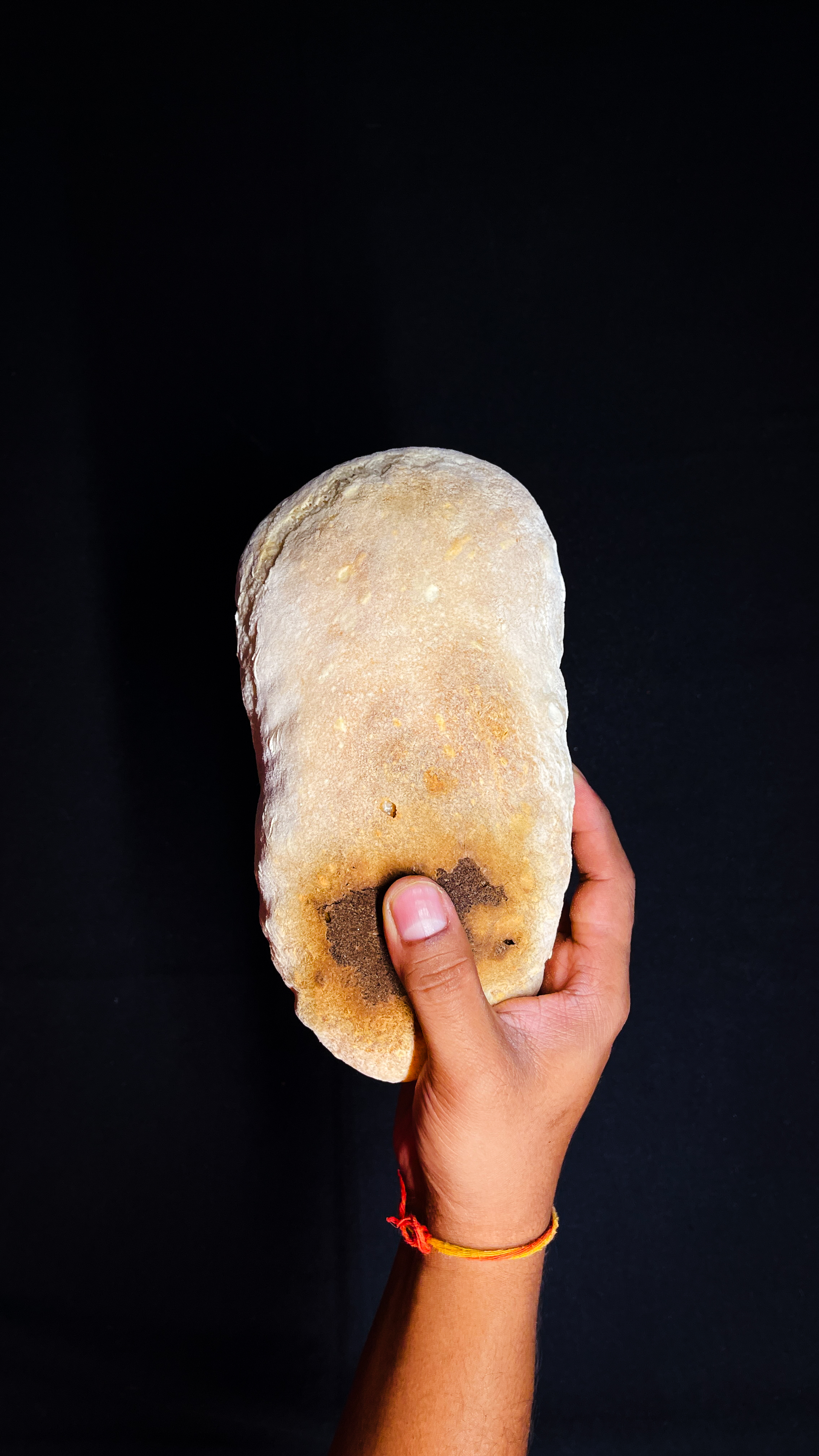
Classic Italian Slipper Bread
Ciabatta, meaning “slipper” in Italian, was created in 1982 by baker Arnaldo Cavallari in Adria, Veneto, as Italy’s answer to the French baguette. It is defined by its open, glossy crumb, paper-thin crust, and mildly tangy flavor from a pre-fermented sponge. The hallmark of this bread lies in its high hydration and gentle handling — producing a light, aerated loaf that’s ideal for sandwiches or enjoyed simply with olive oil.

While modern in invention, ciabatta embodies Italian rusticity. The dough’s high hydration and stretch-and-fold technique mirror traditional pane casareccio, yet its elongated form and minimal shaping borrow from industrial artisan trends. Over the decades, ciabatta has become a global symbol of Italian simplicity — a versatile bread bridging country and café.
What you will need:

| Ingredient | Measure |
| Bread Flour (T55) | 210 + 200 |
| Water | 126 + 190 |
| Salt | 8g |
| Instant Dry Yeast | 2g |
Equipments:
- Digital Scale
- Mixing bowl (medium & large)
- Silicone spatula or dough scraper
- Bench scraper
- Digital scale
- Proofing container with lid
- Couche cloth or parchment paper
- Baking steel or pizza stone, or heavy sheet
- Cooling rack
Time:
| Process | Duration | Temperature |
|---|---|---|
| Preferment (sponge) | 12 h | 20–22°C |
| Mixing & Kneading | 30 min | 24°C |
| Bulk Fermentation | 1-2 h | 26°C |
| Proofing | 20–30 min | 26°C |
| Baking | 30 min | 260°C |
Instructions:
Day 1 – Preferment (Biga)
- Mix bread flour, lukewarm water, and instant yeast.
- Stir until smooth, cover loosely, and ferment overnight (12 h) at 20–22°C until bubbly and domed.

Day 2 – Final Dough
- In a bowl, combine all of the preferment, remaining bread flour, and half of the remaining water .
- Mix gently until cohesive and smooth.
- Add salt to the remaining water, then gradually incorporate while kneading gently to develop elasticity.
- Dough should feel supple, slightly sticky, and elastic — do not over-knead.


Bulk Fermentation
- Place dough in a lightly oiled container.
- Ferment at 26°C for 1-2 hours.
- Perform 1–2 stretch-and-folds in the first hour to strengthen the gluten.
- Once doubled, turn out onto a floured surface and pre-shape loosely. Rest 15 minutes.

Shaping and Proofing
- Gently shape into two rustic rectangles — avoid deflating the structure.
- Transfer to a floured couche or parchment.
- Proof for 20–30 minutes at room temperature.

Baking
- Preheat oven with the pizza stone to 260°C (500°F) for at least 30 minutes.
- Transfer dough carefully onto the hot surface.
- Bake with steam or under a baking dome for 10 minutes.
- Remove cover and bake another 10 minutes until deep golden and light.
- Cool 45 minutes before slicing.

Variations
Whole Wheat Ciabatta: Substitute 20% flour with whole wheat; increase water by 10 g.
Herbed Ciabatta: Add rosemary, oregano, or roasted garlic during mixing.
Sourdough Ciabatta: Replace sponge with 100 g active sourdough starter; ferment 14–16 h.

Serving Suggestions
Serve warm with extra virgin olive oil, sea salt, and balsamic vinegar.
Slice horizontally for panini with mozzarella, prosciutto, and basil.
Toast with garlic and olive oil for crostini or bruschetta bases.
Nutrition Profile / 100g
| Nutrient | Per 100 g (baked) |
|---|---|
| Energy | 241 kcal |
| Protein | 8.3 g |
| Carbohydrates | 47.6 g |
| Total Fat | 0.9 g |
| Fiber | 1.8 g |
| Sodium | 390 mg |
Note: These values are approximate and can vary based on the specific brands and types of ingredients used, as well as portion sizes.

Tips for Best Results:
- Keep hands and tools damp, not floured, to handle sticky dough.
- Wet your hands lightly to while doing stretch and fold.
- Steam ensures crust elasticity; lack of it causes premature setting.
- Resist overhandling — minimal shaping preserves gas pockets.
- Opt for high-gluten bread flour (12–13%) to support hydration above 75%.
- Use this dough base to craft focaccia, pizza al taglio, or rustic sandwich loaves. The preferment technique enhances depth of flavor across Italian-style breads.

Troubleshooting Guide:
| Issue | Likely Cause | Solution |
|---|---|---|
| Dense crumb | Overmixing or insufficient fermentation | Increase bulk rise, limit handling |
| Flat loaf | Weak gluten or overproofing | Add folds early, reduce proofing time |
| Tough crust | Insufficient steam | Introduce steam in first 10 min |
| Uneven color | Poor oven preheat | Extend preheat to 45 min |
| Dough tears | Low hydration or weak mixing | Gradually incorporate water during knead |
Don’t forget to share your results and tag @bake.hows on instagram
