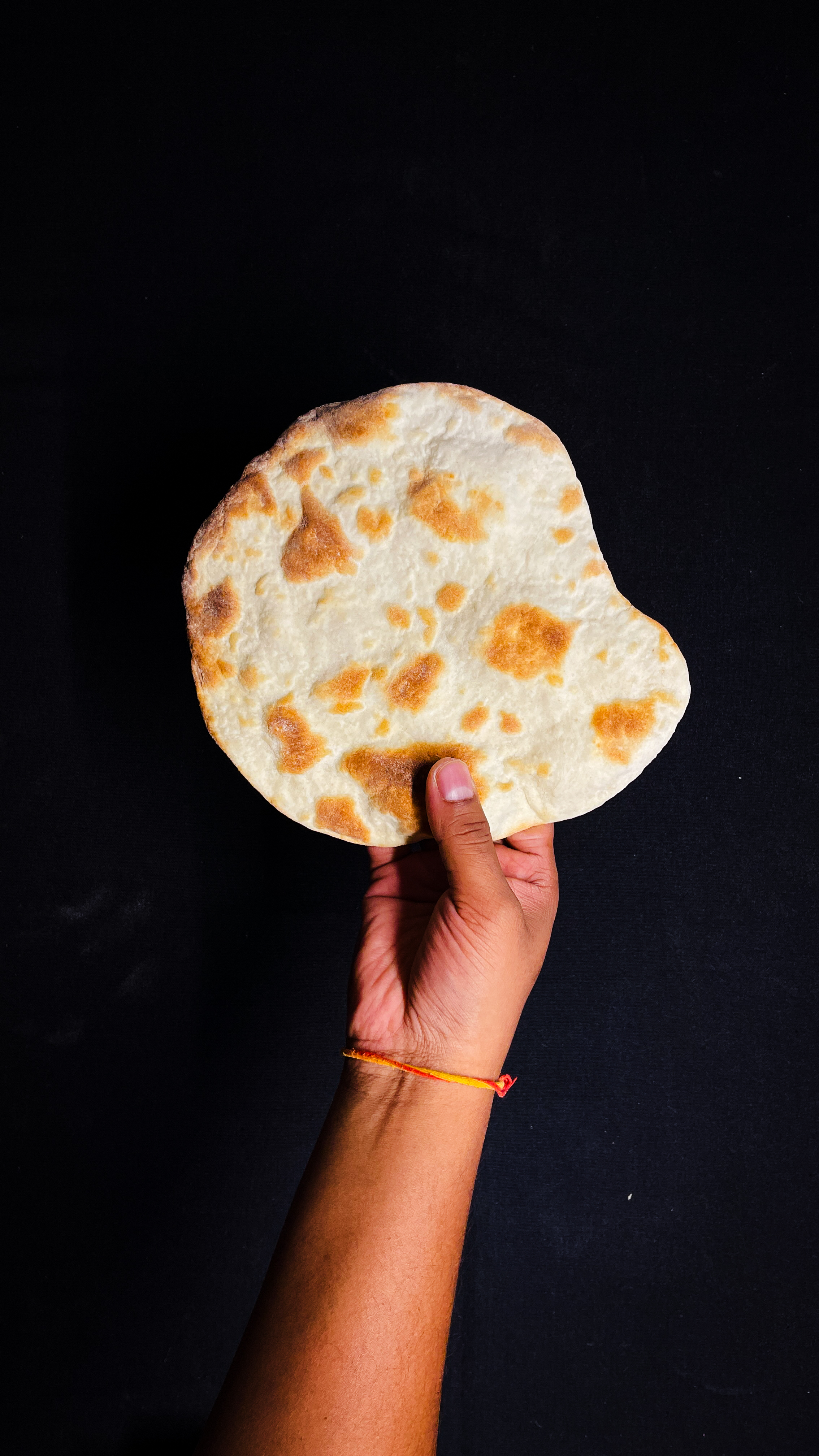
Armenian Flatbread
Lavash is Armenia’s culinary signature — a paper-thin, soft yet elastic flatbread baked in traditional tonir ovens. Its graceful texture and neutral flavor make it one of the most versatile flatbreads in the world, used for wraps, kebabs, and festive meals alike. When baked to crispness, it transforms into delicate shards that keep for weeks.

Lavash’s history stretches back millennia, inscribed on UNESCO’s list of Intangible Cultural Heritage. Traditionally, Armenian women prepared it communally — slapping thin sheets of dough onto the walls of a clay tonir oven. The bread symbolized life and family unity, often stored in large stacks that sustained households throughout winter. Its spread across the Middle East inspired regional variants like Persian sangak and Turkish yufka.
What you will need:

| Ingredient | Measure |
| Bread Flour | 350g |
| Hot Water | 225g |
| Salt | 7g |
| Oilve Oil | 20g |
Equipments:
- Digital Scale
- Mixing bowl
- Rolling pin or long dowel
- Wide baking pan or grill
- Dough Scraper
- Damp towel
- Cooling rack
Time:
| Process | Duration | Temperature |
|---|---|---|
| Mixing & Resting | 35 min | Room temp |
| Rolling & Baking | 40 min | 250°C–260°C |
| Steaming/Softening | 15 min | — |
| Total: ~1.5 hours |
Instructions:
Dough Preparation
- In a bowl, combine bread flour, boiling water, olive oil, and salt.
- Mix for 3–5 minutes until cohesive; the dough should be soft but not sticky.
- Cover and rest 30 minutes to allow full flour hydration.

Dividing and Resting
- Divide into 50 g portions.
- Shape into smooth balls.
- Cover and rest for 15 minutes.

Rolling
- Generously flour your surface.
- Roll each ball into a thin sheet (2–3 mm or thinner) — almost translucent.
- Diameter can reach 50 cm (20 in).
- Keep sheets covered to prevent drying.


Baking
- Preheat oven or grill to 500°F (260°C) with a large pan or stone.
- Bake each lavash for 15–20 seconds per side until lightly blistered and golden.
- Remove, spray with water, and stack.
- Cover with a damp towel for 10–15 minutes to soften.

Variations
Whole Wheat Lavash: Substitute 30% whole wheat flour for nuttier flavor.
Seeded Lavash: Sprinkle sesame or nigella seeds before baking.
Herb Lavash: Add dried mint or dill to dough for aromatic nuance.
Use lavash sheets as a base for flatbread pizzas, cannelloni-style wraps, or edible canapé cones. Dried lavash can also serve as pane carasau-style crisps for antipasti platters.

Serving Suggestions
Use warm lavash as a wrap for kebabs, falafel, or grilled vegetables. Serve crisp as flatbread chips with hummus or baba ghanoush. Layer with herbs, feta, and olive oil for lavash rolls or appetizers.
Nutrition Profile / 100g
| Nutrient | Per 100 g (baked) |
|---|---|
| Energy | 307 kcal |
| Protein | 8.9 g |
| Carbohydrates | 46.5 g |
| Total Fat | 7.4 g |
| Fiber | 1.9 g |
| Sodium | 540 mg |
Note: These values are approximate and can vary based on the specific brands and types of ingredients used, as well as portion sizes.

Tips for Best Results:
- Boiling water pre-gelatinizes starch, yielding a pliable yet elastic dough.
- Work swiftly — thinness determines quality.
- Soften post-bake with steam; omit for cracker-style lavash.
- Once softened, wrap tightly in plastic; lasts 2–3 days fresh or up to a month dried.

Troubleshooting Guide:
| Issue | Likely Cause | Solution |
|---|---|---|
| Dough cracking | Insufficient rest | Extend resting period to relax gluten |
| Too thick | Incomplete rolling | Continue thinning until translucent |
| Brittle texture | Overbaked or not rehydrated | Reduce bake time, spritz and cover |
| Lacks flavor | Under-salted dough | Increase salt to 8 g for deeper taste |
| Uneven browning | Uneven heat source | Rotate halfway during bake |
Don’t forget to share your results and tag @bake.hows on instagram
