
Breton Butter Cake
Gâteau Breton, or Breton Butter Cake, hails from the coastal region of Brittany in northwestern France, famous for its deeply golden pastries made with high-fat salted butter. Unlike fluffy cakes, this one boasts a dense, crumbly shortbread-like texture, rich with egg yolk and layered with either fruit jam or left plain for purists. Often scored in a cross-hatch pattern and brushed with egg yolk for a shiny finish, it’s the kind of pastry that ages beautifully — if it isn’t devoured first.

This cake reflects Brittany’s culinary identity: rustic, deeply flavorful, and rooted in local dairy traditions. Salted butter, once a regional preservation necessity due to Brittany’s access to sea salt, became a defining flavor. Gâteau Breton was originally made as a celebratory cake, designed to travel well and keep for several days without drying out — perfect for sailors and farmworkers alike. Today, it’s a staple in French pâtisseries, offered with prune, cherry, or apricot jam, or plain to highlight the butter itself.
What you will need:
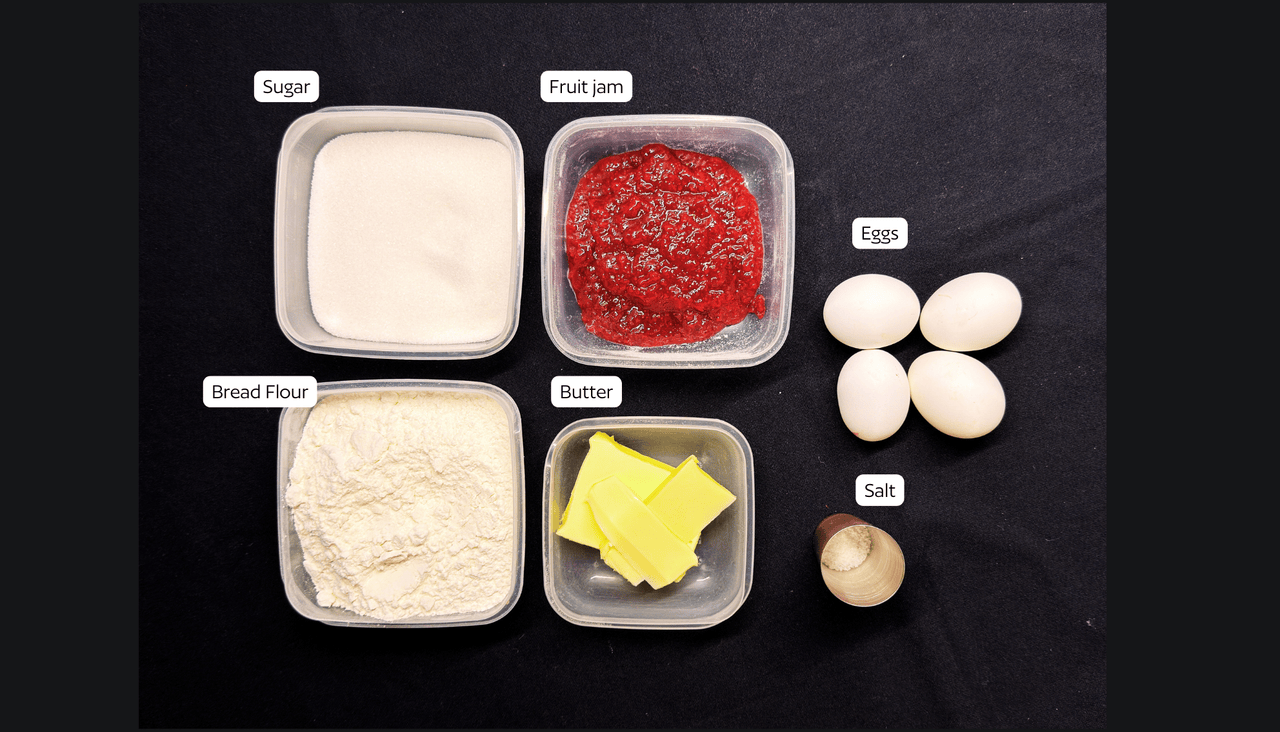
| Ingredient | Measure |
| Pastry Flour | 500g |
| Cold Salted Butter | 250g |
| Sugar (Caster) | 300g |
| Eggs | 275g |
| Vanilla essence | 6g |
| Fruit Jam | 120-150g |
Equipments:
- Digital Scale
- Flour sifter
- Stand mixer with paddle attachment
- Buttered tart ring or cake mold
- Offset spatula or spoon
- Rolling pin (if using jam)
- Parchment paper
- Pastry brush
- Fork (for scoring)
- Aluminum foil (to line oven base)
- Cooling rack
Time:
Mixing Time: 10–12 minutes
Shaping & Filling: 10–15 minutes
Baking Time: 42–45 minutes
Cooling Time: 1 hour
Instructions:
Mix the Dough
- Add all dry ingredients and cubed butter to the mixer bowl.
- Mix on low speed using the paddle attachment until the mixture becomes sandy and crumbly.
- Add the eggs and continue mixing just until the dough comes together into a smooth ball.
- Avoid overmixing; this is a short, crumbly dough.


Prepare the Mold and Fill
For Plain Gâteau Breton:
- Transfer all of the dough into a buttered 24 cm mold.
- Use a spatula or spoon to press and spread the dough into a flat, even layer.

For Gâteau Breton with Jam:
- Divide the dough into two equal portions.
- Press the first half evenly into the base of the buttered mold.
- Spread a thin layer of jam, keeping it 1 cm away from the edges.
- Roll the remaining dough on a lightly floured surface or between two sheets of parchment.
- Transfer and lay the rolled dough over the jam, then use a spatula to gently spread and shape it until it seals the top with an even layer.

Finishing
- Brush the surface of the cake with egg yolk for gloss.
- Use a fork to lightly score a traditional crosshatch pattern on the surface.
- Sprinkle a touch of raw sugar over the top for texture and sparkle.

Bake
- Preheat oven to 200°C.
- Place foil underneath the mold in the oven to catch any butter drips and prevent smoking.
- Bake at 200°C for 20 minutes.
- Reduce heat to 180°C and continue baking for 20–22 minutes, or until deep golden and fragrant.
Cut and Serve
- Let the cake cool in the mold for 10–15 minutes.
- Then unmold and allow to fully cool on a wire rack for at least 1 hour before slicing.

Variations
Traditional prune jam or cherry preserves for authentic Breton flavor
Almond cream in place of jam for a frangipane-style version
Add a dash of rum or orange blossom water to the dough for aromatic depth
Finish with flaky sea salt instead of sugar for a sweet-savory twist
Further Application
The base dough doubles as a rich shortbread crust for fruit tarts.
Use this dough to create individual Breton tartlets with compote fillings.
Score different patterns (e.g., concentric rings or diamonds) for visual distinction.

Serving Suggestions
Slice into wedges and serve with black coffee or a glass of cider.
For dessert, pair with crème fraîche and fresh fruit.
Ideal for gifting or travel — it stores beautifully.
Nutrition Profile / 100g
| Nutrition | Amount (per 100g) |
|---|---|
| Energy | ~428 kcal |
| Carbohydrates | ~51.2 g |
| Sugars | ~30.4 g |
| Protein | ~5.2 g |
| Fat | ~23.6 g |
| Saturated Fat | ~14.7 g |
| Fiber | ~0.9 g |
| Sodium | ~260 mg |
Note: These values are approximate and can vary based on the specific brands and types of ingredients used, as well as portion sizes.
Tips for Best Results:
- Use European-style butter (min. 82% fat) for authentic flavor and texture.
- Measure and chill all ingredients in advance for consistent dough texture.
- Don’t skip the foil under the pan — excess butter may leak during baking.
- Cool completely before slicing to prevent crumbling.
- For neater layering with jam, chill the dough briefly before rolling.

Troubleshooting Guide:
| Issue | Likely Cause | Solution |
|---|---|---|
| Greasy bottom | Butter leaked into oven | Always line oven with foil beneath mold |
| Tough texture | Overmixed dough | Mix only until combined |
| Dry cake | Overbaked or too thin | Watch closely in final 10 minutes |
| Uneven top crust | Uneven dough layering | Spread with spatula to level surface |
| Jam oozes out | Spread too close to edge | Keep 1 cm border and don’t overfill |
Don’t forget to share your results and tag @bake.hows on instagram
