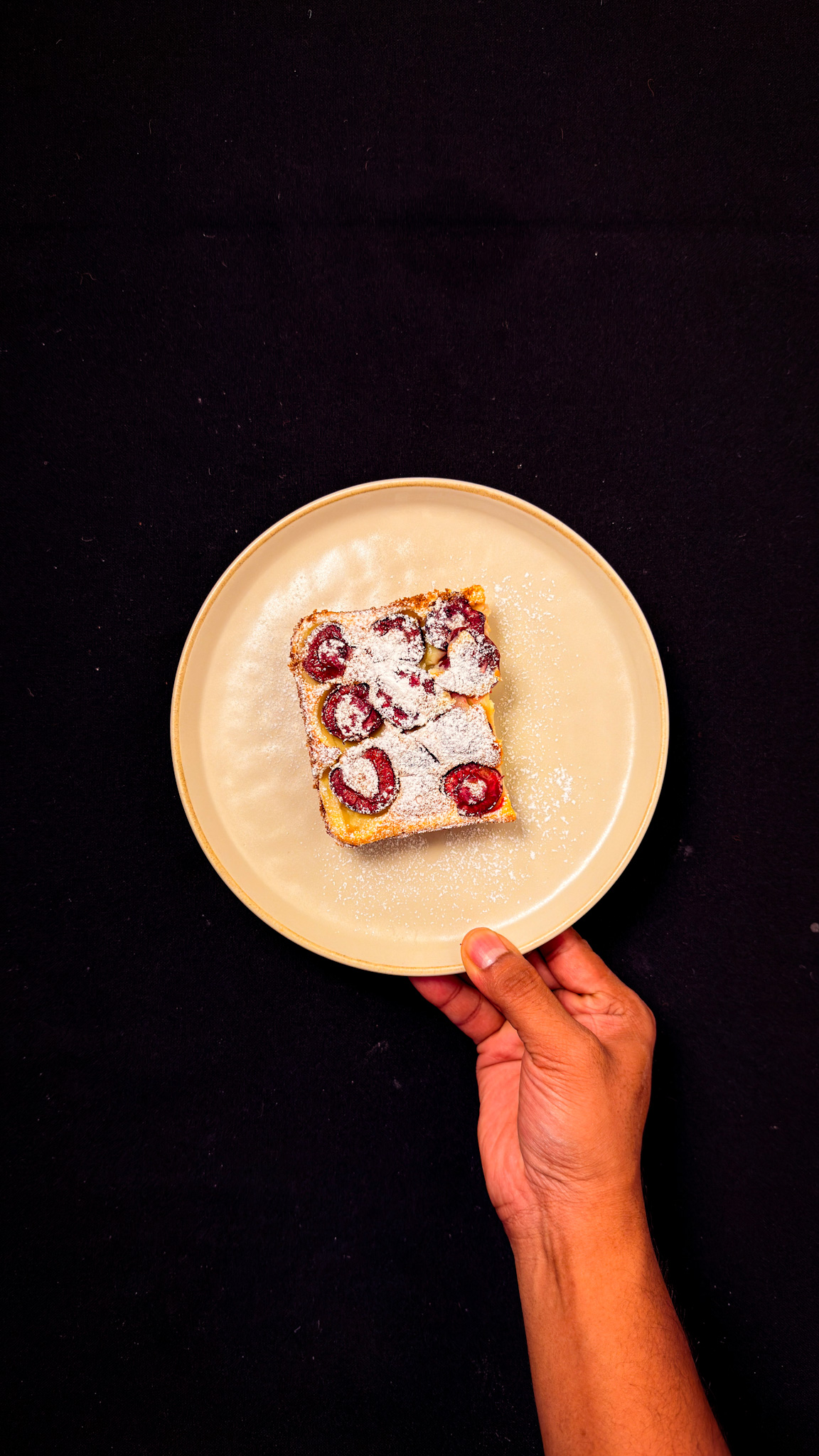
Classic French Custard Cherry Bake
This cherry clafoutis recipe produces the classic French dessert that sits somewhere between a custard and a cake, a shallow layer of sweet cherries suspended in a silky, eggy batter and baked until just barely set. It is a study in restraint, a handful of pantry staples, one glorious pan of fruit, and almost no technique beyond whisking and pouring.

The dish traces back to the Limousin region in south-central France, where it was traditionally made with unpitted black cherries, sometimes called clafoutis aux cerises or clafoutis Limousin. The pits were left in deliberately, believed to release a faint almond note into the batter as it baked, and practically, to keep the fruit’s juices from bleeding out too quickly. The name likely comes from the Occitan word clafir, meaning “to fill” or “to fasten,” a nod to how generously the fruit fills the pan. When made with other fruits, the same custard technique is called a flaugnarde.
What you will need:
Cherry Clafoutis
| Ingredient | Quantity |
| Whole Eggs | 70g |
| Milk | 115g (115mL) |
| Sugar | 38g |
| Salt | 1g |
| Flour (all-purpose) | 38g |
| Butter, melted | 8g |
| Cherries, pitted | 230g |
For the Pan
| Ingredient | Quantity |
| Butter, for greasing | ~15g |
| Brown sugar, for dusting | ~15-20g |

Equipments:
- Digital Scale
- 20cm x 11.5cm x 6cm loaf pan
- Mixing bowls
- Whisk
- Fine-mesh sieve (for the flour)
- Pastry brush (for buttering the pan)
- Cherry pitter (optional)
General Details:
Prep Time: 15 minutes
Cook Time: 35-45 minutes
Total Time: 55 minutes, plus 10 minutes cooling
Yield: 1 loaf-pan clafoutis (about 500g), 4 servings
Difficulty: Beginner
Cuisine: French
Category: Dessert
Storage: Best the day it’s baked; keeps covered in the refrigerator up to 2 days, serve slightly warmed or at room temperature
Instructions:
Prepare the Pan
- Preheat the oven to 180°C (350°F), top and bottom heat.
- Grease the loaf pan generously with butter.
- Dust the buttered pan with brown sugar, tapping out the excess.

Make the Batter
- Whisk the whole eggs, milk, sugar, and salt together until just combined.
- Sift in the flour and whisk until smooth, without overmixing.
- Gradually whisk in the melted butter, until the batter is smooth and pourable.


Assemble and Bake
- Arrange the pitted cherries evenly in the prepared pan.
- Pour the batter evenly over the cherries.
- Bake for 35-45 minutes, until golden brown and only slightly wobbly in the center.
- Cool in the pan at least 10 minutes before slicing and serving.

More Variations
- Flaugnarde (Mixed Stone Fruit) – Swap the cherries for a mix of plums, apricots, and pears for a version suited to early autumn
- Boozy Cherry Clafoutis – Macerate the cherries in kirsch or brandy for 30 minutes before baking, a nod to the traditional Limousin approach
- Almond Clafoutis – Replace a portion of the flour with almond flour and add a few drops of almond extract to echo the pit’s natural flavor
- Chocolate Cherry Clafoutis – Whisk 1-2 tablespoons of cocoa powder into the batter for a mocha-cherry combination
- Citrus-Kissed Clafoutis – Add lemon or orange zest to the batter for brightness against the sweet cherries
Serving Suggestions & Further Uses
- Dust with powdered sugar just before serving.
- Serve warm with a scoop of vanilla ice cream or a dollop of crème fraîche.
- Pair with a chilled glass of rosé or a light dessert wine for an afternoon gathering.
- Finish with a few fresh mint leaves for color contrast against the deep red cherries.
- Repurpose the base batter with other stone fruits like plums or apricots for a flaugnarde-style bake.
Nutrition Profile / 100g
| Nutrient | Amount |
| Calories | 140 kcal |
| Total Fat | 3.9 g |
| Saturated Fat | 1.8 g |
| Carbohydrates | 23.2 g |
| Sugars | 15.8 g |
| Protein | 4.1 g |
| Fiber | 1.2 g |
| Sodium | 92 mg |
Note: Calculated from the 500g batch formula only (whole milk, unsalted butter, fresh pitted sweet cherries assumed); the pan-greasing butter and dusting sugar are outside the formula and not included. Assumes approximately 5% moisture loss during baking, yielding about 475g finished, with values normalized to 100g of finished clafoutis. Approximate values based on recipe formula. Actual nutrition may vary.
Approximate values based on recipe formula. Actual nutrition may vary.

Tips for Best Results:
Use fresh, ripe sweet cherries at peak season; if using frozen, thaw and pat very dry to avoid a watery batter.
- Traditional Limousin-style clafoutis leaves the cherries unpitted for a subtle almond note during baking; pitting simply makes for easier eating.
- Whisk the batter gently. Overmixing develops gluten in the small amount of flour and can toughen the custard.
- Let melted butter cool slightly before whisking it in, so it doesn’t scramble the eggs on contact.
- A generously buttered and sugared pan matters. It caramelizes against the pan wall for a light crust and clean release.
- Judge doneness with the jiggle test: the center should wobble slightly like a set custard, not ripple like liquid.
- Bring the eggs and milk to room temperature before mixing for a smoother, more homogenous batter.

Troubleshooting Guide:
| Issue | Possible Cause | Fix |
| Watery or soggy center | Underbaked, or juicy fruit released excess liquid during baking | Bake until only a slight wobble remains; tent with foil if browning too fast and continue baking |
| Rubbery, eggy texture | Overbaked, or oven running too hot | Verify oven temperature and pull the clafoutis as soon as the center is just set |
| Clafoutis deflates dramatically after baking | Normal behavior; trapped steam escapes from the egg-based custard as it cools | Serve slightly warm; the deflation is expected and doesn’t affect flavor or texture |
| Batter stays liquid or doesn’t set | Underbaked, or oven temperature too low | Verify oven temperature with a thermometer and extend baking in 5-minute increments |
| Clafoutis won’t release cleanly from the pan | Insufficient butter and sugar coating on the pan | Butter generously and dust thoroughly with sugar before adding the fruit; run a thin knife around the edge before unmolding |
| Cracked or overly domed top | Oven too hot, or clafoutis overbaked | Bake at 180°C and remove as soon as the center is just set; a slight dome that settles as it cools is normal |
| Lumpy batter | Flour added all at once without sifting, or whisked in too quickly | Sift the flour before adding and whisk in gradually to fully hydrate before adding the milk |
| Fruit clusters on top instead of settling through the batter | Batter poured too quickly, or fruit added after too much batter was already in the pan | Place the fruit in the pan first, then pour the batter over the top |

You Might Also Like
This French cherry cake is a wonderful make-ahead centerpiece for a summer lunch or afternoon coffee, equally at home warm from the oven or at room temperature a few hours later.
Don’t forget to share your results and tag @bake.hows on instagram
